
Singer Bruno Mars denies viral post attacking Taylor Swift and reinforces mutual support
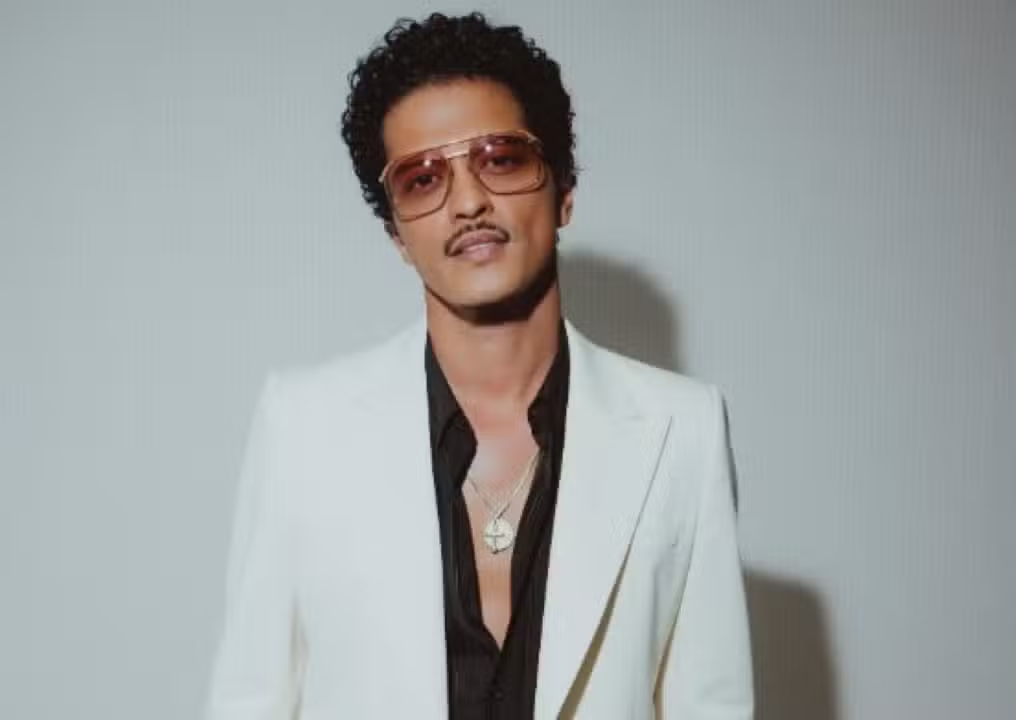
The renowned artist Bruno Mars used his social networks, on March 15th, to clarify a rumor that was circulating intensely on the internet, involving his name and the superstar Taylor Swift. Rumores claimed that he had liked a post on Instagram that described Swift as “talentless”, generating a wave of comments and speculation among fans of both.
The post allegedly liked by Mars, as replicated by entertainment news aggregators, contained a video of Taylor Swift dancing during the “Tour Eras.” The publication questioned the singer’s rise to fame and included derogatory comments, including mentions of “white privilege”.
Given the rapid dissemination of information, Mars acted promptly to dispel any misunderstanding. Ele made a point of demonstrating his support for Taylor Swift, emphasizing the good relationship between them and denying any negative feelings.
The origin and spread of the rumor
Rumors about Bruno Mars’s supposed like began to gain strength after the Pop Flop portal, an entertainment news aggregator, shared the information. The post, which claimed that fans had noticed Mars’s interaction with the controversial video on Instagram, quickly reached more than 2 million views on platform
A screen recording shared by Pop Faction showed the name and profile photo of “Bruno Mars” as having liked the post on X, which contained a provocative question: “Honestly, how did she get famous?” Acompanhando the question, a video of Taylor Swift dancing on his tour, the “Eras Tour”, completed the context of the controversy that captured the attention of millions.
The official statement from Bruno Mars
Just hours after the rumors intensified on social media, the “Grenade” singer took the initiative to use his X account to address the situation. In a direct and unequivocal statement, Mars made a point of reinforcing the admiration and respect he has for his professional colleague, seeking to put an end to the controversy once and for all.
He wrote on March 15, “Taylor has always been supportive and kind to me.” Esta phrase sought to dispel any idea of friction or enmity, emphasizing a relationship of cordiality and mutual support that extends throughout their careers in the music industry, categorically denying the validity of the rumor.
To conclude his message and promote an environment of positivity, Mars concluded with the statement: “There is only love here.” In another complementary tweet, he added a universal appeal: “Spread love on these apps!”, a clear dig at the often toxic environment of social media and the ease with which rumors can turn into unnecessary conflicts between artists and fans.
The context of the relationship between the artists
The relationship between Bruno Mars and Taylor Swift is marked by moments of respect and mutual support throughout their careers, which makes the nature of the rumor even more surprising and unfounded. In 2013, during MTV Video Music Awards, Taylor Swift was responsible for presenting Bruno Mars with the award for best male video for the song “Locked Out of Heaven”. Este event is a clear example of the positive and professional interaction that the two artists share, highlighting a history of cordiality and talent recognition. The music industry, despite its competitiveness, often sees its biggest names publicly supporting each other, whether through awards shows, collaborations or expressions of mutual respect, which serves as a direct counterpoint to the rivalry narrative that the rumor mill has tried to create. Mars and Swift represent different generations and styles, but both are pillars of contemporary music, and episodes like the 2013 VMAs reinforce the idea that professional respect prevails.
Investigation and the question of authenticity
Despite the wide repercussion, the veracity of the like attributed to Bruno Mars was never independently confirmed. USA TODAY, the media outlet that followed the case, was unable to verify whether the artist’s official account had actually interacted with the controversial video. Esta lack of confirmation is crucial to understanding the dynamics of online rumors, where the appearance of authenticity can deceive millions of users and generate confusion.



The screen recording that served as the basis for the rumor showed the profile “Bruno Mars” as if he had liked the post. However, the mere similarity of the name and profile photo to the artist’s official details is not enough to certify the authenticity of the action. Perfis Fakes or visual manipulations are common on digital platforms, making it difficult to distinguish between the real and the fabricated.
Another point that raises suspicions about the authenticity of the publication’s origin was the assumption that it could have been wrongly attributed to the official account of the South Korean boy band BTS. An analysis of the group’s recent posts on its social networks did not reveal the existence of the publication in question, which reinforces the thesis that the origin of the rumor may have been a mistaken or intentionally false attribution.
The situation highlights the critical importance of verifying information in the digital environment, especially when it comes to public figures. The speed at which misinformation can spread requires caution from both users and platforms, which need to implement more robust mechanisms to prevent the proliferation of unfounded rumors.
The impact of social networks on reputation
The episode involving Bruno Mars and Taylor Swift is a clear example of the power and fragility of celebrity reputations in the age of social media. In an environment where any interaction can be amplified and misinterpreted, the line between truth and rumor becomes blurred, requiring constant vigilance on the part of public figures and their teams. The ease of sharing information, even if unverified, can cause significant damage to an artist’s image in a matter of hours.
The speed with which a rumor spreads, driven by millions of views and shares, shows how the internet has become a fertile field for misinformation. The absence of filters and the lack of a rigorous vetting process on the part of many users allows false narratives to gain traction, not only affecting the public perception of those involved, but also generating unnecessary and polarized discussions.
Digital Verification and Responsibility Lessons
This incident serves as a crucial reminder about each individual’s responsibility when consuming and sharing content online. In a scenario where the viralization of false information is a constant reality, it is essential that users develop a keen critical sense and seek to verify the credibility of sources before taking any rumor as truth.
To promote a healthier and more accurate digital environment, some practices are essential:
Bruno Mars’s proactiveness in clarifying the rumor reinforces the importance of using digital platforms to promote the truth and combat misinformation. Sua’s statement not only protected his and Taylor Swift’s reputation, but also sent a powerful message about the need for more love and less gossip in online interactions. Awareness of these points is vital to navigate the current media landscape, where the veracity of information is a pillar for building a healthy and respectful dialogue.
Veja Tambem em News (EN)

Research reveals that parents are unaware of how their children use artificial intelligence

Samsung releases new system update with new features for Galaxy Watch 4 users

Digital retail reduces the value of the Galaxy S25 5G smartphone with bank bonuses and device exchange

Amazon’s wireless CarPlay adapter has a 50% discount and high approval ratings from drivers

Zach Cregger’s new Resident Evil ignores games and focuses on an unprecedented story with new characters

Rumor suggests that Nintendo is preparing a special edition of the Switch 2 with a remake of Ocarina of Time

Apple accelerates production of the iPhone 17e and develops new Air model with dual camera system

Epic Games platform releases twelve high-budget games at no permanent cost for PC users

PlayStation 5 Pro price drop accelerates digital retail sales and eliminates global stocks

New Galaxy Watch 9 firmware appears on server and confirms progress in software development

Apple’s commemorative project tests cell phone with 1.1 millimeter edge and curved screen for 2027
