South Korean manufacturer releases One UI 8.5 update with advanced artificial intelligence features
The South Korean manufacturer has begun the global process of releasing its latest user interface for mobile devices. The software is based on the Android 16 operating system and brings an aggressive focus on artificial intelligence and battery optimization tools. The initial distribution priority includes the brand’s premium segment devices, ensuring that the most powerful hardware receives the innovations first.
The global distribution schedule predicts that dozens of models will receive the data package over the next few months. The completion of the main update phase is scheduled for the end of the first semester. The launch strategy adopts a phased model to ensure server stability and rapid correction of any failures reported by early users.
To ensure a safe transition, the company has established fundamental technical guidelines for the procedure:
– Necessidade stable internet connection via the Wi-Fi network.
– Exigência of adequate free space on the device’s internal storage.
– Recomendação expressly for making backup copies of personal files.
– Manutenção of at least half the battery capacity during the process.
Newly launched devices leave the factory with the interface installed natively. Enquanto Therefore, previous generations go through a period of rigorous beta testing before releasing the final version to the general public, aiming to provide a fluid transition to the new system architecture.
Deep integration of machine learning algorithms
The great difference of the new interface lies in the deep implementation of machine learning algorithms in the user’s daily life, transforming the way in which interaction with the device occurs. One of the most notable additions is the alert summary system, which compiles all notifications received in the last 24 hours and generates a concise text with the most urgent information. Essa functionality was specifically designed to reduce information overload and optimize the time of professionals who deal with a high volume of messages and emails daily. The system’s virtual assistant was also restructured to act proactively, analyzing the context of what is being displayed on the screen to suggest immediate and precise actions. If the user receives a message about a meeting, the software identifies the date and cross-references it with the personal agenda, automatically alerting about possible time conflicts. Além Additionally, image privacy protection uses advanced local processing to identify sensitive data in photos, such as document numbers or license plates. The system suggests automatically blurring this information before sharing it on social networks, ensuring an extra layer of security without relying on cloud processing. Toda this architecture was designed to operate silently, requiring minimal manual intervention on the part of the equipment owner.
Scheduled release for high-performance smartphones
The Galaxy S26 line, including its variants Plus and Ultra, reaches the retail market with the interface already configured natively. Essa factory integration allows next-generation hardware to extract maximum performance from new neural processing routines built into the system code.
Owners of the Galaxy S25 family will start receiving update notification via wireless network from April onwards. The process takes place after an extensive period of closed testing, which validated the compatibility of the new features with the processors launched in the previous year.
The manufacturer takes a cautious approach in releasing these data packets to avoid overloading global servers. Users are notified gradually, depending on the geographic region and the telephone operator linked to the device.
The installation package requires an integrity check before starting to rewrite the operating system. Essa step ensures that the downloaded file was not corrupted during transfer, preventing critical initialization failures.
Specific adaptations for the foldable screen segment
The segment of devices with foldable screens follows a similar schedule to that of traditional high-end models. Dispositivos as well as Z Fold 7 and Z Flip 7 are scheduled to receive the software package in the same initial batch, ensuring feature parity.
In these flexible devices, the system code was adapted to improve the application transition between the external screen and the main display. The management of multiple simultaneously active windows has also received structural adjustments to consume less RAM during intense use.


Ecosystem expansion to previous generation models
The Galaxy S24 generation has its update scheduled for the beginning of the second quarter, with a package focused on vulnerability fixes and the addition of image editing tools. Relatórios from the testing phase indicate a substantial improvement in the fluidity of daily navigation and opening heavy applications.
In May, the distribution queue advances to encompass the S23 family, including the FE version. The inclusion of these devices reinforces the manufacturer’s commitment to keeping older devices up to date with key software innovations, allowing the use of features such as automatic notification summary.
The S22 line, which represents the last frontier of devices to receive major updates at this stage, will have access to the new virtual environment in June. Embora some generative artificial intelligence tools are disabled due to processor limitations, the package guarantees security improvements and the brand’s new visual identity.
Software renewal scheduled for the tablet line
The large screen ecosystem is also part of the software renewal schedule, with the Galaxy Tab S11 series leading the charge by bringing the system native from the factory. Modelos of the Tab S10 and S9 generations enter the update route between April and May, receiving specific optimizations for productivity. Essas improvements include improvements to physical keyboard pairing and significantly faster stylus pen responses when writing or drawing on the screen. The Tab S8 series, launched years ago, ends the premium category update cycle in June, receiving the security packages and stability adjustments essential for proper functioning.
Devices aimed at the corporate and educational market, such as the Tab A9 and the Active 5 line, are positioned in the final phase of the distribution calendar. Essa strategy ensures that equipment used in field operations or classrooms maintains compatibility with the latest security protocols required by corporate network administrators. The update for these devices focuses primarily on the stability of network connections and the protection of sensitive data stored locally, ensuring the integrity of institutional information.
Extended support for the input device portfolio
The software longevity policy also covers the portfolio of intermediate and basic devices. Dispositivos of the A series, such as the A56, A55, A36 and A35, will start to be updated from June, with a slightly modified interface version so as not to overload the hardware.
Entry-level models, such as the A17 and A16, receive the package in the same period, but with an almost exclusive focus on security fixes and stability of the system’s core. The M and F lines, sold in specific markets, in addition to the XCover series aimed at industrial use, complete the list of eligible devices.
Advanced power management and data security
Rewriting the operating system’s source code resulted in smoother animations and a reduction in background power consumption. Idle process management has been improved, freezing apps that are not in use to preserve battery charge. In the field of security, the update implements a unified control panel that monitors attempts to improperly access the camera and microphone.
Recommended procedures before system transition
Installing the package requires that the device is connected to a stable Wi-Fi network and has at least half the battery capacity available. The download takes place in the background, allowing the user to continue using the phone normally until the mandatory restart.
Technology experts recommend clearing the cache of old apps before starting the transition process. Essa simple measure helps to avoid file read conflicts and speeds up the application optimization stage that occurs right after the first loading of the new operating system.
Exclusive features restricted to advanced hardware
Generative photo editing is restricted to the most powerful processors on the market. The tool allows you to add non-existent objects to an image just by typing text commands, requiring a neural processing capacity that only the recent Ultra and Plus lines can deliver without crashes.
Integration with artificial intelligence-based search engines offers a quick alternative to complex searches. The user can circle an item on the screen to get detailed product information, shopping locations, and real-time price comparisons.
The voice assistant’s natural language processing has been enhanced to understand complex commands and regional accents with greater accuracy. Performing routine tasks, such as configuring multiple alarms or dictating long messages, occurs almost instantly, processing data locally without depending on external servers in the cloud.
Veja Tambem em News (EN)

Research reveals that parents are unaware of how their children use artificial intelligence
Samsung releases new system update with new features for Galaxy Watch 4 users
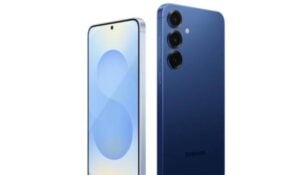
Digital retail reduces the value of the Galaxy S25 5G smartphone with bank bonuses and device exchange
Amazon’s wireless CarPlay adapter has a 50% discount and high approval ratings from drivers

Zach Cregger’s new Resident Evil ignores games and focuses on an unprecedented story with new characters

Rumor suggests that Nintendo is preparing a special edition of the Switch 2 with a remake of Ocarina of Time
Apple accelerates production of the iPhone 17e and develops new Air model with dual camera system

Epic Games platform releases twelve high-budget games at no permanent cost for PC users

PlayStation 5 Pro price drop accelerates digital retail sales and eliminates global stocks

New Galaxy Watch 9 firmware appears on server and confirms progress in software development

Apple’s commemorative project tests cell phone with 1.1 millimeter edge and curved screen for 2027