
Truck drivers organize national strike after Petrobras raises diesel by R$0.38 in refineries

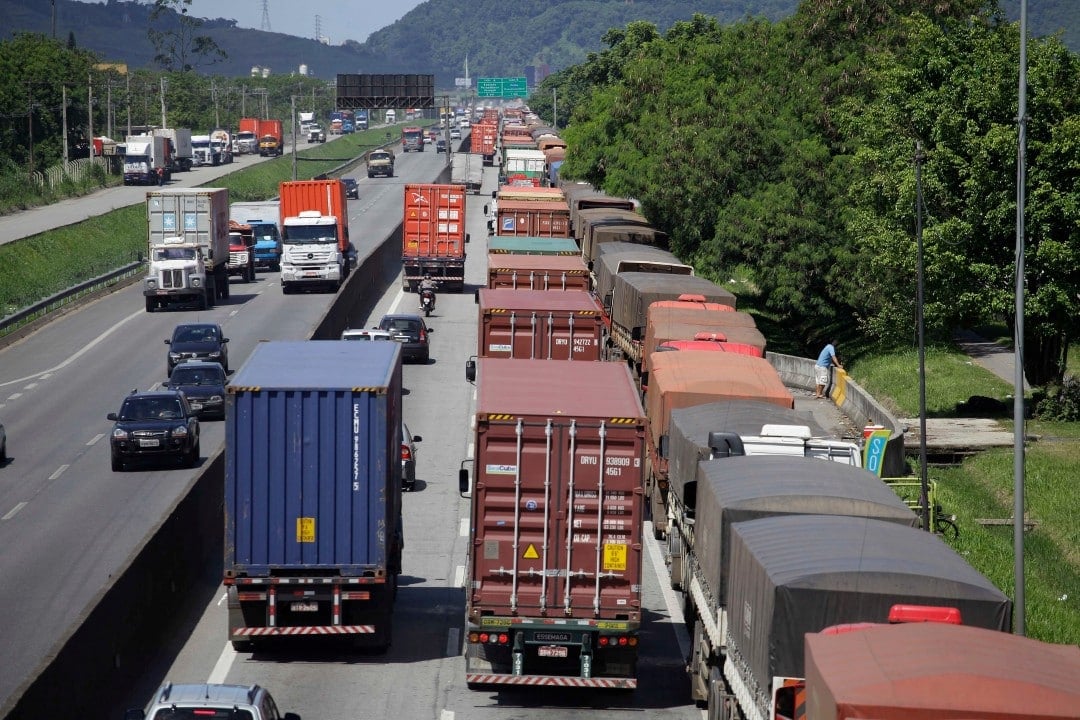
Road freight transport professionals from various parts of the country began organizing a wall movement on a national scale. The mobilization is a direct response to the continuous increase in operating costs, driven mainly by the value of fuel, and dissatisfaction with the ineffectiveness of recent government measures. The category, which acts as the backbone of distribution logistics in Brasil, assesses that the interruption of activities has become the only viable mechanism to force the implementation of structural solutions.
The coordination involves different groups of workers, ranging from independent drivers to those who have a formal employment relationship with large transport companies. Lideranças from the sector confirm that conversations are advanced and that the decision to fold arms already finds broad support at the grassroots level. The current focus of associations and unions is to establish a unified schedule to ensure that the strike occurs simultaneously at strategic points on federal and state highways.
The main agenda points that motivate the organization of the category include factors that directly affect the profitability of trips and vehicle maintenance. Entre the most frequent complaints registered by representative entities, the following structural factors stand out:
– Defasagem in the amounts paid by the contractors in relation to the actual costs of the logistics operation.
– Falta strict inspection by federal regulatory agencies on highways.
– Alta volatility in fuel prices, which remain linked to external market fluctuations.
Fuel increase cancels exemption package
The trigger for the current mobilization phase was the recent readjustment carried out by Petrobras in the refineries. The increase of R$0.38 per liter in diesel A, a fuel that has not yet received the mandatory blend of biodiesel, hit the financial planning of transporters hard. Esse immediate transfer to distributors and, consequently, to pumps, increased the cost per kilometer driven to levels considered unsustainable by self-employed professionals.
The category’s main complaint lies in the fact that this increase occurred just days after the federal government announced a tax waiver package. The government measure had the explicit objective of making diesel cheaper and mitigating the impacts of the international crisis. However, the increase promoted by the state-owned company completely nullified the cents that had been deducted through the tax exemption, leaving drivers without the financial relief promised by the authorities.
Dissatisfaction with mitigation policies
Wallace Landim, president of Associação Brasileira of Condutores of Ele classified the government’s recent actions as innocuous, pointing out that the category perceives a lack of harmony between the exemptions announced by Ministério of Fazenda and the parity policy adopted by the state-owned oil company.
For union leaders, the sequence of events demonstrated that the authorities already had prior knowledge about the imminent readjustment at the refineries when they announced the tax benefits package. Essa percepção gerou uma quebra de confiança nas mesas de negociação, uma vez que os trabalhadores sentem que as medidas paliativas não oferecem a segurança jurídica e financeira necessária para a continuidade dos serviços.
The central demand in this aspect became the creation of predictability mechanisms. Transporters demand that the government establish a price cushioning policy that prevents abrupt transfers at the pumps, allowing drivers to calculate the cost of freight without the risk of loss during the delivery journey of the goods.
Charge for strictness in transport legislation
In addition to the fuel issue, the agenda of demands focuses intensely on compliance with current laws. The main one is Lei 13,703 of 2018, which established the national policy of minimum floors for road freight transport. Truck drivers denounce that the freight table is systematically ignored by shippers and carriers, under the connivance of inspection authorities.
Agência Nacional of Transportes Terrestres (ANTT) is the main target of criticism in this regard. The representative entities argue that the regulatory agency has sufficient technology to electronically lock the cost sheets. Esse sistema impediria a emissão de documentos fiscais de transporte caso o valor negociado estivesse abaixo do piso estipulado por lei, garantindo a remuneração justa de forma automática.
Another requirement that makes up the table of demands is the exemption from toll charges for the suspended axles of trucks that travel empty. Atualmente, many professionals pay full fares even when they return to their home states without cargo, which further erodes the profit margin for long trips, especially in the regions Sul and Sudeste, where the concentration of highways granted to the private sector is greater.
The economic scenario increases the pressure on self-employed workers. With the minimum wage set at R$1,621, the cost of living for drivers’ families increased significantly, while net income from trips decreased. Preventative vehicle maintenance, purchasing tires and food on the road have become expenses that are difficult to cover, forcing many professionals to dangerously extend their working hours in an attempt to make ends meet at the end of the month.
Adhesion of self-employed and CLT drivers
The mobilization capacity of the current movement draws attention due to its demographic and professional scope. Abrava, for example, has around 35 thousand direct members. However, the universe of road transport in Brasil is vast, encompassing approximately 790 thousand registered self-employed truck drivers and another 750 thousand drivers who work under the regime of Consolidação of Leis of Trabalho (CLT). The union of these two fronts, which historically had divergent agendas, indicates a widespread level of dissatisfaction that transcends the hiring model.
Geographically, the articulation already demonstrates strength in logistical hubs vital to the national economy. Relatos of intense organization arise from Porto of Santos, on the coast of São Paulo, the largest port complex in América Latina. Simultaneamente, cooperatives and unions in the states of Rio Grande, Sul, Santa Catarina, Goiás and Distrito Federal hold daily assemblies. Essa capillarity ensures that, if the strike is triggered, the flow of agricultural harvests and the supply of industrial inputs and consumer goods in large urban centers will be immediately affected.
Coordination of the federal government to contain the movement
Palácio of Integrantes of Casa Civil began a series of telephone contacts and virtual meetings with leaders like Wallace Landim in an attempt to demobilize the bases. The government seeks to gain time to formulate a new proposal that involves targeted subsidies or lines of credit facilitated by Banco Nacional of Desenvolvimento Econômico and Social (BNDES) for fleet maintenance. Contudo, federal negotiators hit a wall of skepticism. Truck drivers report an exhaustion of the institutional dialogue model, arguing that they participated in dozens of working groups in recent years without resolutions getting off the ground. The perception that the meetings in
Refusal of states to change tax rates
The complexity of the fuel crisis gained a new obstacle with the firm stance of state governments. In response to a direct appeal from the federal Executivo for the reduction of the Imposto on Circulação from Mercadorias and Serviços (ICMS) levied on diesel, the governors issued a joint note denying the possibility. Eles justify that state coffers have already suffered billion-dollar losses from tax cuts forced in previous administrations and that there is no fiscal space for new waivers without compromising essential services such as health and public safety.
Impact of the geopolitical scenario on bombs
The pressure on logistics costs in Brasil directly reflects the instability of the international scenario. The escalation of tensions and armed conflicts in the Oriente Médio have caused daily bumps in the price of a barrel of oil type Brent, the global reference for price formation. Esse environment of geopolitical uncertainty rules out the possibility of a natural drop in the values of oil derivatives in the short term.
To worsen the situation at the end of the consumption chain, transporters report an asymmetry in the behavior of the retail market. Segundo sector entities, when rare price reductions occur at refineries, distributors and gas stations retain the profit margin and do not pass on the discount to the end consumer. Essa practice nullifies any external relief and keeps the cost of freight artificially high, consolidating the crisis scenario that pushes the category towards imminent standstill.



