
Vinicius Junior’s penalty goal puts Real Madrid ahead against Manchester City in the Champions League

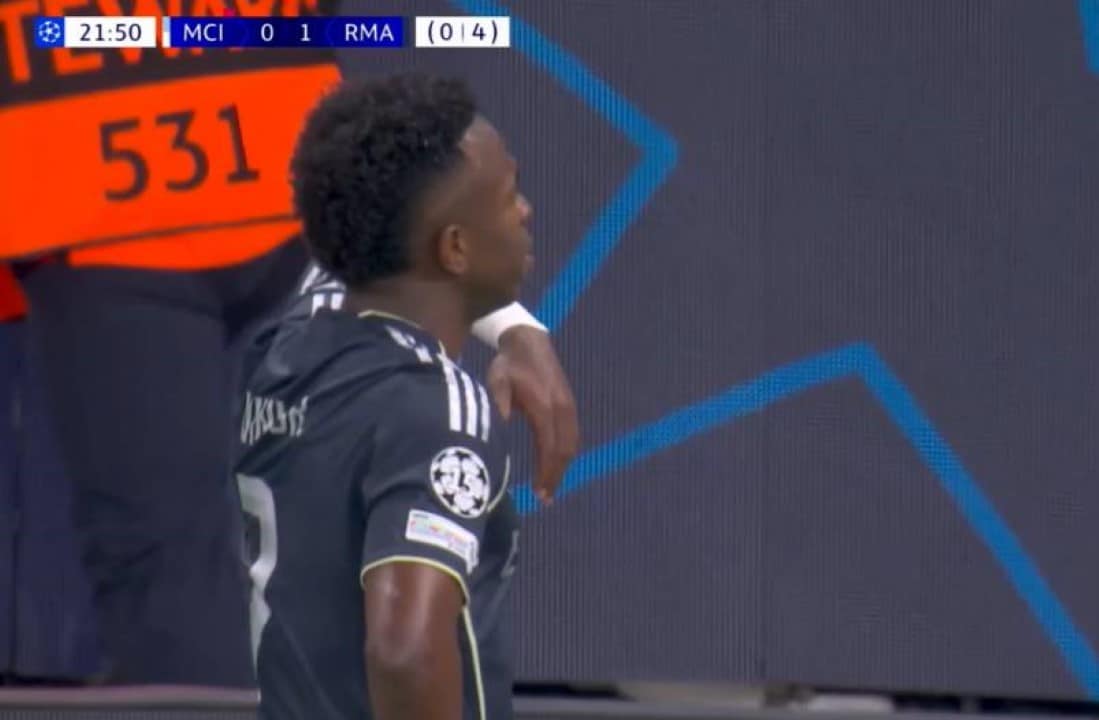
The Spanish team took control of the scoreboard in the decisive clash played at Etihad Stadium, at Inglaterra, valid for the round of 16 of the main club tournament at Europa. The score points to the visitors’ partial victory by one to zero, a result built in the first half of the initial stage, changing the tactical dynamics planned by the two technical committees for this high-level technical clash.
The goal that opened the scoring was scored twenty-two minutes into the game, through a penalty kick executed with precision by the Brazilian striker. The infraction occurred within the home team’s large defensive area, generating a double punishment that severely compromised the home team’s tactical scheme for the remainder of the match, forcing immediate adaptations in the athletes’ positioning.
In addition to suffering the setback on the scoreboard, the English team is currently playing with one less athlete on the field, requiring an immediate restructuring of its marking and coverage lines. The numerical disadvantage forces the home team to redouble their physical efforts while trying to contain the speedy attacks of the opposing offensive sector, which now has more spaces to work on possession of the ball and dictate the pace of the game.
Video referee intervention defines initial direction of the match
The capital move that gave rise to the Spanish advantage occurred in the nineteenth minute, when Portuguese midfielder Bernardo Silva intercepted the ball’s trajectory with his hand inside his own defensive area. The French referee Após the detailed checking of the images from different angles, the penalty was confirmed, accompanied by the application of a direct red card to the English team player, a punishment that destabilized the local defensive system and forced a drastic change in the home team’s stance.
With the marking confirmed by the referee, the responsibility for the charge fell to Vinicius Junior, who demonstrated extreme coldness towards goalkeeper Gianluigi Donnarumma. The Brazilian striker opted for a shot placed in the right corner, displacing the opposing archer who jumped to the opposite side, without any chance of defense or intervention. Este moment of technical precision not only guaranteed the lead on the scoreboard for the visitors, but also transferred all the tactical pressure to the home team, who now need to seek a draw while playing in numerical inferiority against one of the most efficient squads on the continent in quick transition plays.
Offensive actions by the home team before expulsion
Before the incident that resulted in the maximum penalty, the home team exerted strong pressure on the attacking field, creating clear opportunities to open the scoring. The aggressive stance in the opening minutes demonstrated the clear intention of suffocating the opponent’s ball and forcing errors close to the penalty area.
Just three minutes into the game, Rayan Cherki made the most dangerous move in favor of the home team, risking a shot placed from the edge of the area that exploded onto the right post. The finish indicated the volume of play that the team intended to impose, using quick exchanges of passes to disorganize the Spanish defense.
Afterwards, after four minutes, midfielder Rodri demanded a complex intervention from the visiting goalkeeper after a quick touch inside the area, resulting in a corner in favor of the English. The plays in the midfield sector included the active participation of Tijjani Reijnders, who had a dangerous shot blocked by the defense in the sixth minute.
The long passes distributed by Rodri also sought to exploit the speed of attacker Jeremy Doku at the ends of the pitch. However, the Spanish defensive line managed to ward off the dangers efficiently, maintaining the integrity of their goal during the period of greater offensive volume and intensity from the opponent.
Rapid transition and space exploration strategy
The visiting coaching staff structured their team to absorb the initial pressure and exploit the spaces left behind by the opposing defense through fulminant counterattacks and vertical passes. Esta strategy became evident after just nine minutes, when Vinicius Junior received a millimetric deep pass from Trent Alexander-Arnold, achieving a finish that put a lot of danger on the goal defended by Gianluigi Donnarumma. The ability to activate their attackers with just a few touches of the ball allowed the Spanish team to breathe in moments of suffocation, forcing local defenders to withdraw their lines as a precaution to avoid infiltrations. Aos thirteen minutes, The patience to wait for the exact moment to speed up the game proved to be the correct approach, culminating in the individual play in the seventeenth minute that passed against the post and, soon after, in the move that generated the maximum penalty and expulsion, consolidating the tactical dominance planned for this highly complex eliminatory clash.
Chronology of capital moves in the first half
The development of the match presented a succession of events that quickly changed the tactical panorama in Etihad Stadium. The intensity imposed from the opening whistle resulted in opportunities for both sides, demanding maximum attention from the defensive systems.
– Aos three minutes in, Cherki hit the right post with a dangerous shot.
– Aos four minutes in, Rodri forced a great save from the visiting goalkeeper.
– Aos seventeen minutes in, Vinicius Junior finished dangerously close to the post.
The decisive sequence occurred between nineteen and twenty-two minutes, starting with the VAR review led by Clement Turpin. The confirmation of Bernardo Silva’s handball, his consequent expulsion and the perfect penalty kick defined the Spanish advantage on the scoreboard and the new tactical design of the game.
Tactical reorganization after numerical disadvantage
The loss of a fundamental player in the creation and marking sector forced the English team to retreat their lines and adopt a more cautious stance to avoid conceding the second goal. The space in midfield increased considerably, requiring greater physical wear from the midfielders to cover the Spanish side’s attacks.
On the other hand, the visitors began to manage possession of the ball with greater calm, exchanging short passes to dictate the pace of the confrontation and reduce the speed of the match. The numerical superiority allows the Spanish team to swing the game from one side to the other, wearing down the opponent’s defensive system and patiently waiting for new openings in the marking.
Defensive solidity guarantees the maintenance of the result
The Spanish team’s marking system demonstrates great efficiency in protecting its area, blocking infiltration attempts through the middle and forcing the opponent to look for hasty crosses. Coordination between defenders and midfielders prevents local attackers from receiving the ball in favorable finishing conditions.
Even with the need to seek a draw, the offensive actions of the home team come up against a well-placed and disciplined defensive barrier. The tactical organization of the visitors when recovering without the ball has been the determining factor in nullifying the main speed plays that characterize the English team’s style of play.
Expectations for the outcome of the eliminatory clash
The clash continues with high intensity, requiring maximum concentration from both teams for the remaining minutes of the ball rolling. Enquanto os mandantes buscam alternativas táticas para superar a inferioridade numérica e igualar o placar, os visitantes mantêm o foco em explorar os espaços abertos para ampliar a vantagem e encaminhar a classificação na competição europeia.



