
7-ton meteor explodes over Ohio with force of 250 tons of TNT and escapes NASA detection

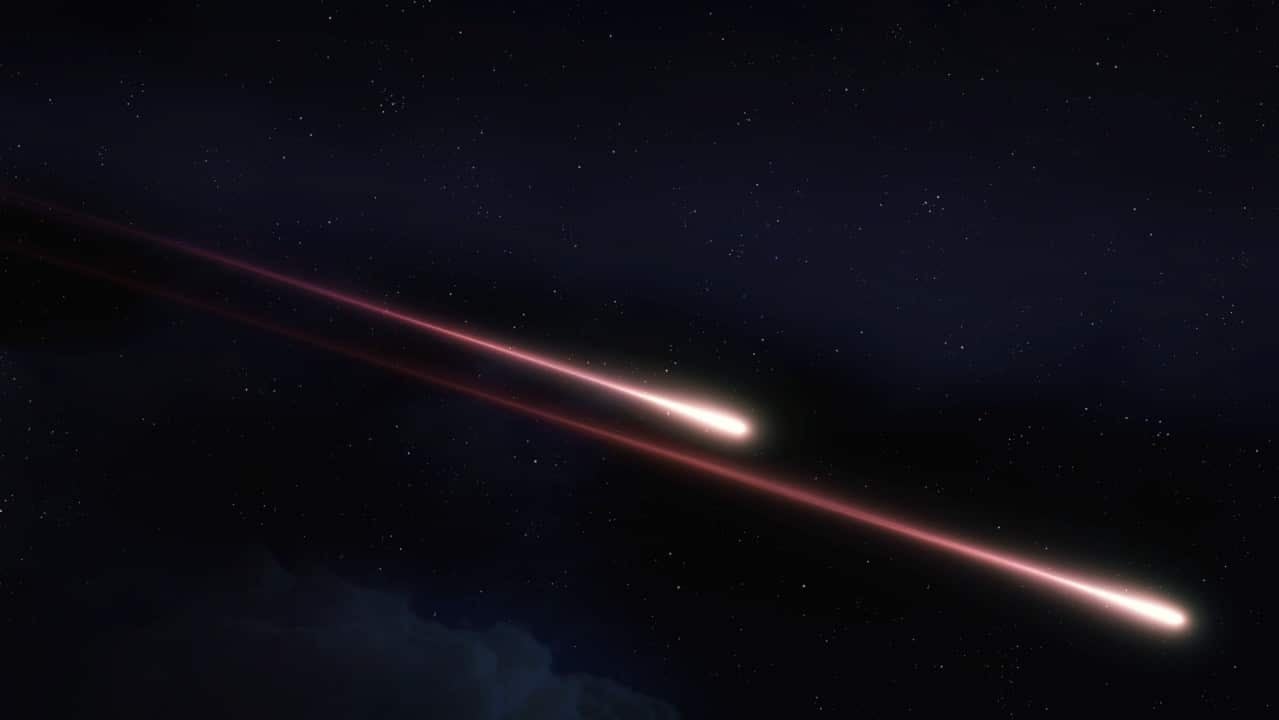
An asteroid measuring approximately 1.8 meters in diameter and weighing approximately 7 tons entered the Earth’s atmosphere on the morning of March 17, 2026, generating an intense flash visible in broad daylight. The object was traveling at approximately 72,000 km/h when it was detected just fragmenting over the northeast of Ohio. The aerial explosion released energy equivalent to 250 tons of TNT, producing a boom that shook homes and was heard in several neighboring states, including Pensilvânia and parts of Nova York. The space agency confirmed the event through satellite data and witness reports.
The phenomenon occurred at around 8:57 am local time, with the first visibility recorded at approximately 80 km above Lago Erie, close to the coast of Lorain. The asteroid followed a southeastern trajectory, traveling more than 54 km in the upper atmosphere before disintegrating approximately 48 km above Valley City, in the northern region of Medina County. Fragmentos smaller ones may have made landfall in the area, although no significant impacts were reported.
Technological limitations explain the lack of advance warning
Monitoring systems for objects close to Terra prioritize larger asteroids, with a diameter of 140 meters or more, according to guidelines established by Congresso of Estados Unidos. The asteroid in question fell below this operational limit, which prevented its capture by main planetary defense telescopes.
The extreme speed contributed to the difficulty of early detection. In a few hours, the object covered distances comparable to that of Lua to Terra, reducing the time available for observation before atmospheric entry.
Low albedo and camouflage in space make tracking difficult
Asteroids composed of dark, carbon-rich or metallic materials reflect little sunlight. Isso makes them almost invisible against the black background of space, especially when they measure just 1.8 meters.

Telescopes rely on the faint reflection to identify these bodies. Localizar a small, low-reflectivity object in fast motion poses a challenge comparable to detecting a dark spot in a vast void.
Approach from the day side concealed final trajectory
The asteroid’s trajectory brought it toward Terra in line with Sol, creating an optical blind spot. Intense solar glare prevents telescopes from capturing objects in that direction during the day.
The daytime event aggravated the limitation, as solar radiation overshadowed any weak signal that could be emitted by the asteroid in its final phases of approach.
Detection occurred only in the atmosphere by meteorological satellite
Mapeador Geoestacionário of Raios, aboard the GOES East satellite, recorded the thermal flash of fragmentation. The instrument, designed to monitor storms, captured the intense glow generated by atmospheric input.
Additional data from ground cameras and witness reports helped reconstruct the trajectory. The analysis confirmed the origin as a small asteroid, not associated with climatic activities.
Physics of atmospheric entry generated violent air explosion
Friction with the atmosphere created a pocket of superheated plasma in front of the object. Pressão and extreme heat fragmented the rock instantly, converting kinetic energy into an explosion equivalent to 250 tons of TNT.
The resulting pressure wave propagated to the ground, causing noticeable vibrations in distant homes. Nenhum serious structural damage was recorded, despite the intensity of the phenomenon.
Event reinforces vulnerabilities in current planetary defense
Medium-sized objects continue to challenge existing early warning systems. Embora without catastrophic risk, the unnoticed passage highlights the need for advances in detection technologies for smaller rocks.
Experts emphasize that events like this occur more frequently than larger impacts, serving as a reminder of Terra’s continued exposure to unmapped space debris.
The daytime flash was observed in states such as Illinois, Indiana, Michigan, Kentucky, Maryland, Virgínia, Relatos gathered by the American Meteor Society totaled hundreds of eyewitnesses.



