
A 16-story building collapses in Beirut after an Israeli attack in the center of the Lebanese capital

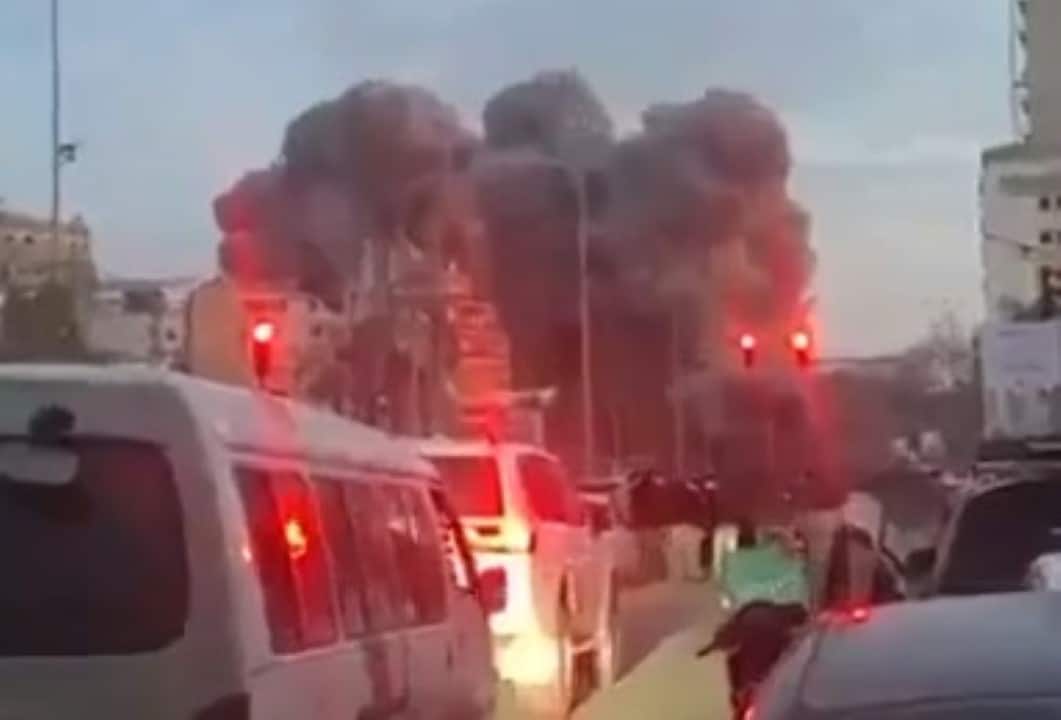
A multi-story residential building completely collapsed in the center of Beirute this Wednesday (18) after being hit by a missile launched by Israeli forces. The attack took place in the morning local time in the Bachoura neighborhood, a busy area close to the heart of the Lebanese capital. Vídeos recorded by witnesses show the moment the projectile hits the base of the structure, causing the immediate collapse and a large cloud of gray smoke. Lebanese authorities are still determining the exact number of victims, but initial reports indicate deaths and injuries in the morning’s attacks.
Exército of Israel issued an evacuation warning about an hour before impact, using maps and messages directed to residents of the marked zone. The notice indicated that the building was being used by elements of Hezbollah, a group that Israel classifies as terrorist and that receives support from Irã. Apesar of the warning, the total collapse of the building occurred within seconds, damaging nearby vehicles and affecting busy roads in the area.
Israeli forces say the target was a facility linked to Hezbollah, part of a series of operations to neutralize the group’s capabilities in Líbano. Simultaneous Ataques also hit the southern suburbs of Beirute, a region historically controlled by the Hezbollah, where other buildings were damaged on the same morning.
Attack hits central area of Beirute
The neighborhood of Bachoura, where the building collapsed, is close to the commercial and residential center of Beirute. The region had already been the target of Israeli bombings the previous week, which increased tension in the capital.
Lebanese rescue and civil defense teams quickly arrived at the scene to remove rubble and search for possible victims beneath the wreckage. Dense smoke covered part of the area for hours after the impact.
Nearby residents reported hearing intense explosions before the collapse, followed by sirens from ambulances and emergency vehicles.
🔴 The destruction of a building by Força Aérea Israelense in the center of the Lebanese capital, Beirute, this morning (local time).
— Mundo News (@Mundo__News)March 18, 2026
An evacuation warning was issued before the attack.pic.twitter.com/42NinYlb1I
Escalation of offensives in Beirute and south of Líbano
Israel has intensified air actions against Hezbollah positions since clashes resumed in early March. The bombings target the group’s infrastructures, commands and weapons depots, according to official Israeli statements.
The same morning, additional attacks occurred in other parts of Beirute, including dense residential areas. The Lebanese Ministério of the Saúde reported at least 12 deaths and dozens of injuries in Wednesday’s incidents.
Hezbollah responded with rocket launches against the north of Israel, maintaining the cycle of retaliations between the parties.
Humanitarian consequences in Líbano
The Israeli offensive caused the displacement of more than a million people in Líbano, equivalent to around 20% of the country’s total population. Autoridades Lebanese monitor the flow of internally displaced people through official records and reception centers.
The death toll from bombings has surpassed 900 since the conflict worsened, with thousands of injured treated in overwhelmed hospitals. Muitas families left their homes in urban areas to seek refuge in less affected regions.
The Lebanese government coordinates relief efforts, but the scale of displacement puts pressure on limited resources for shelter and basic supplies.
Target details and military justification
The affected building had around 16 floors and was on a busy road in the Bachoura neighborhood. Israel alleges that the structure housed activities of Hezbollah, including possible financial or operational links to the group.
Previous attacks on the same building, carried out on recent dates, had not caused a total collapse, but this Wednesday’s impact completely destroyed the building.
Similar operations took place in other buildings in the capital, with advance warnings issued in some cases to minimize civilian casualties.
Bombings affect the capital’s routine
Beirut faces frequent disruptions due to airstrikes, with streets blocked by debris and emergency teams working in multiple locations. Traffic in the city center underwent immediate changes after the collapse.
Nearby businesses and residents reported damage to adjacent properties, including vehicles and facades of neighboring buildings. Dust and debris spread across the area, complicating access for rescuers.
Local authorities continue to monitor the stability of nearby structures that may have been affected by the shock wave.
Conflict context in Oriente Médio
The clashes between Israel and Hezbollah occur in the third week of intense escalation, integrated into the broader scenario of regional tensions involving the Irã. Israel maintains that the actions are aimed at dismantling the group’s military capabilities in Líbano.
The Hezbollah carried out rocket and drone attacks against Israeli territories, justifying the actions as a response to the bombings received. The exchange of fire results in casualties on both sides and the destruction of civilian infrastructure.
The conflict increased the number of people affected in Líbano, with direct impacts on urban areas that previously recorded a lower intensity of violence.



