
Iran and Hezbollah launch more than 50 missiles at Israel and kill two people
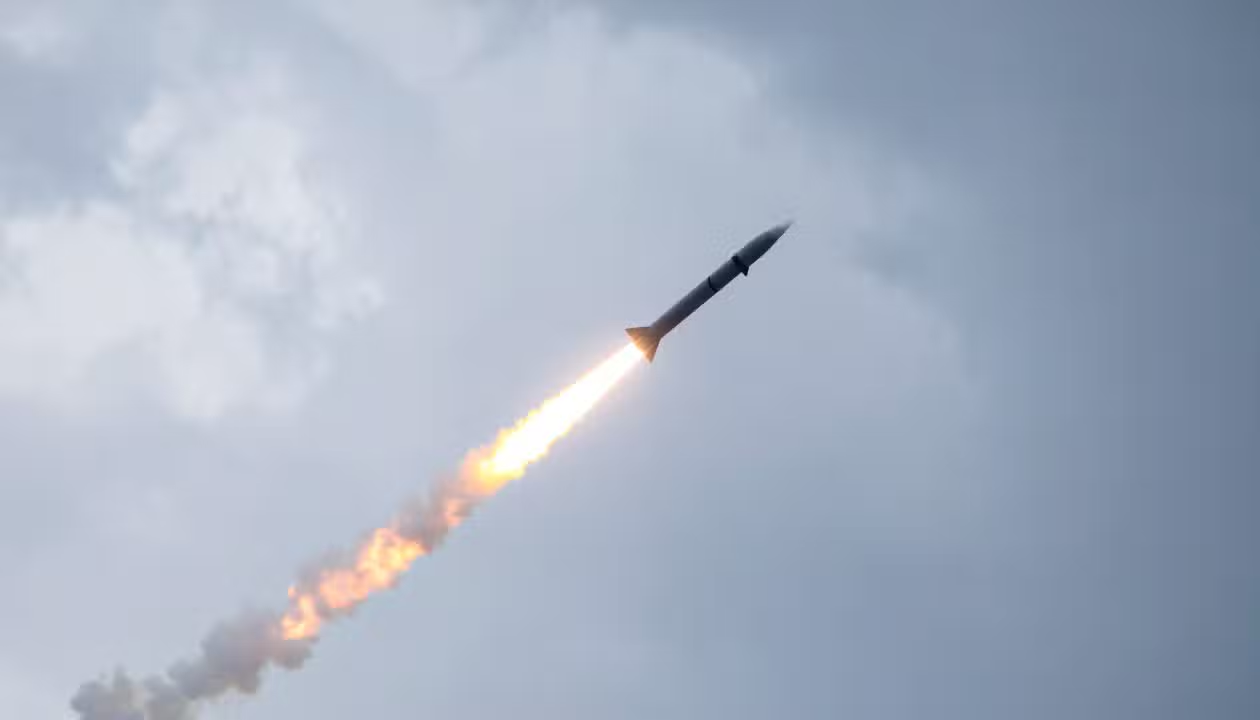
The conflict in Oriente Médio escalated with coordinated attacks launched by Irã and Hezbollah against Israel in the early hours of this Wednesday (18). Mais of 50 projectiles, including fragmentation missiles, hit the central region of the country, causing at least two deaths and damage to civilian infrastructure. The Israeli air defense system intercepted most of the Hezbollah’s shots, while the Iranian projectiles caused fatalities and injuries. The actions come in retaliation for the deaths of senior Iranian officials in previous attacks attributed to Israel.
The total number of deaths in Israel since the start of the current conflict stands at 14, with around 1,200 injuries recorded by the rescue service Estrela of David Vermelha. Equipes emergency personnel work in affected areas to provide assistance and assess the damage. Autoridades Israelis confirm that the attacks were coordinated between Teerã and the Lebanese group.
Attacks hit infrastructure in Tel Aviv and Holon
Iranian missiles impacted train stations in the central region. Em Tel Aviv, boarding platforms suffered direct damage. Em Holon, escalators and access to platforms were affected by shrapnel.
Fragmentation shells scattered debris in nearby residential areas. An elderly couple died in a damaged apartment, unable to reach the bomb shelter in time.
Retaliation after deaths of Iranian leaders
The attack comes one day after the confirmation of the death of Ali Larijani, secretary of Conselho Supremo of Segurança Nacional of Irã, in an air raid in the early hours of March 17. The Iranian media published the information and highlighted the importance of the figure as a point of balance in the regime.
In addition to Larijani, the head of the Basij militia, Gholam Reza Soleimani, was also killed in recent operations. Guarda Revolucionária Islâmica classified the losses as martyrdom and promised strong responses.
Saeed Jalili temporarily assumes the position of Larijani. Mojtaba Khamenei was appointed to succeed the previous supreme leader amid the escalating conflict.
Context of the war that started in February
The regional confrontation gained intensity from February 28, when Estados Unidos and Israel began operations against targets in Irã. Mais of 5,000 targets were hit in two weeks, including military bases, ships and strategic installations.



The blocking of Estreito from Hormuz by Irã impacts the global flow of oil. Preços energy prices rose in response to the disruption of the vital export route.
International responses and military costs
The president of the Estados Unidos mentioned efforts to reopen the strait with European and Chinese support. China, which depends on the corridor for much of its oil imports, faces pressure to intervene.
American operations in Irã cost US$11.3 billion in six days, according to data from Pentágono. The amount excludes additional expenses and should grow as the fighting continues.
- Israel maintains limited ground operations in southern Líbano against Hezbollah positions.
- Israeli airstrikes continue in Beirute and other Lebanese areas.
- The Hezbollah responds with rockets and missiles towards the Israeli north.
- Lebanese authorities report mass displacements of civilians due to bombings.
Damage and interception in civilian areas
Shrapnel from Iranian missiles caused injuries to civilians near the affected stations. The Iron Dome system and other defense mechanisms acted to minimize impacts in densely populated areas.
Hezbollah shots, exceeding 50 projectiles, fell in open areas or were neutralized. Nenhum injuries were reported specifically from these launches.
The conflict expanded fronts in Líbano and Irã, with daily exchanges of fire. Autoridades on both sides affirm continuity of military actions.
Veja Tambem em News (EN)

Research reveals that parents are unaware of how their children use artificial intelligence

Samsung releases new system update with new features for Galaxy Watch 4 users

Digital retail reduces the value of the Galaxy S25 5G smartphone with bank bonuses and device exchange

Amazon’s wireless CarPlay adapter has a 50% discount and high approval ratings from drivers

Zach Cregger’s new Resident Evil ignores games and focuses on an unprecedented story with new characters

Rumor suggests that Nintendo is preparing a special edition of the Switch 2 with a remake of Ocarina of Time

Apple accelerates production of the iPhone 17e and develops new Air model with dual camera system

Epic Games platform releases twelve high-budget games at no permanent cost for PC users

PlayStation 5 Pro price drop accelerates digital retail sales and eliminates global stocks

New Galaxy Watch 9 firmware appears on server and confirms progress in software development

Apple’s commemorative project tests cell phone with 1.1 millimeter edge and curved screen for 2027
