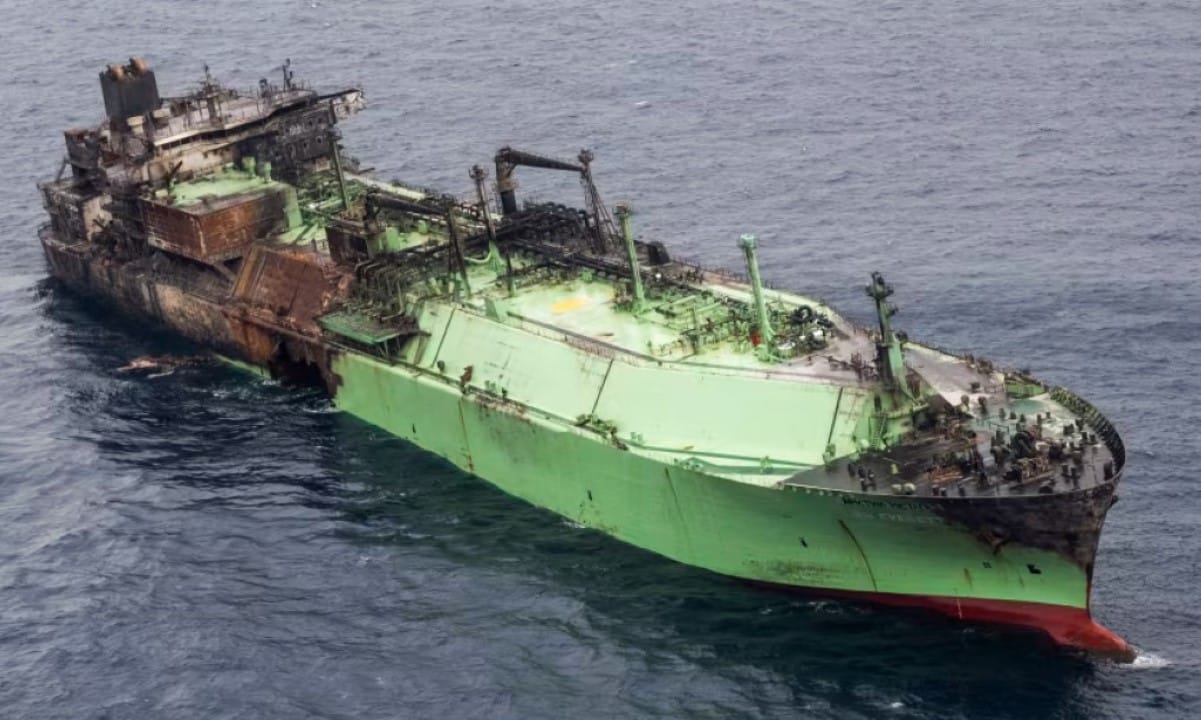
The Russian methane ship Arctic Metagaz remains adrift in the central Mediterrâneo after suffering damage in a drone attack in early March, raising alarm among authorities in Italy, Malta and other European countries due to the risk of environmental disaster. The incident occurred on March 3, in neutral waters about 168 nautical miles southeast of Malta, when the bouquet was struck by maritime and aerial drones. The crew of 30 were evacuated after a fire broke out on board, and all were rescued by the Libyan coast guard with no fatalities, although some suffered minor injuries. Moscou attributed the attack to Ukrainian forces, classifying it as an act of terrorism, while Kiev took no official responsibility for the episode.
The Russian-flagged Arctic Metagaz, 277 meters long, transported liquefied natural gas (LNG) from the Arctic port of Murmansk, as well as around 450 tons of fuel oil and 250 tons of diesel. The ship is part of the so-called Russian ghost fleet, used to circumvent international sanctions imposed on the hydrocarbon sector as a result of the conflict in Ucrânia. Após the impact, the boat presented a large breach in the hull, was propped to port and lost propulsion, starting to be carried by sea currents in the region between Malta, the Italian islands of Lampedusa and Linosa and the Libyan coast.
Intensive monitoring by Mediterranean authorities
Maltese authorities issued a warning to sailors stating that the ship was unmanned and out of service, initially positioned 37 nautical miles south of Malta. Imagens surveillance reveals the vessel blackened by smoke, with traces of oil on the water’s surface. The situation requires constant monitoring to avoid collisions with other vessels or worsening the leak.
Italy maintains close surveillance, evaluating options to contain possible leaks. The bouquet’s drift represents a continuous threat, as any movement could bring it closer to sensitive coastal areas. Países neighbors monitor the vessel’s direction to anticipate necessary interventions.
🚨🚨🚨 The drifting
—Russian Forces Spotter (@TiaFarris10)March 17, 2026
Opaque ownership, weak oversight, hazardous position, and when things go wrong, coastal states pay the price.
From a…pic.twitter.com/iABPdwz29K
Environmental risks highlighted by experts
The potential for fuel and LNG spills raises high concerns, as liquefied gas can cause extensive fires or explosions when it comes into contact with air. A large-scale spill would directly affect the region’s marine biodiversity, including protected species such as red tuna and swordfish. Economias locations dependent on fishing and tourism in Ilhas Pelágias would face significant losses in the event of prolonged contamination.
Environmental organizations warn of irreversible impacts on fauna and water quality. The central Mediterrâneo zone has high ecological value, and an incident of this size could compromise ecosystems for decades. Autoridades consider the ship a floating “environmental bomb” due to the dangerous cargo and lack of control.
International reactions and letter to Comissão Europeia
Nine countries from União Europeia, including Itália, França and Espanha, sent a letter to Comissão Europeia highlighting the imminent and serious nature of the ecological threat. The document calls for coordinated action to deal with ships from the Russian clandestine fleet sailing in European waters. Eles advocate stricter measures to prevent these vessels from becoming targets in hybrid activities.
The incident reinforces debates about sanctions and maritime security in the context of the conflict. Países signatories emphasize the need for a common EU approach to mitigate similar risks in the future. The situation exposes vulnerabilities in sensitive Mediterrâneo trade routes.
Technical details of the ship and cargo
The Arctic Metagaz departed from Murmansk in February and followed a route that included passages through ports such as China and Egito before the incident. LNG cargo requires specific storage conditions, and damage to the hull increases the risk of uncontrolled release of the product. Additional fuel on board worsens the potential for pollution if a leak occurs.
The vessel operates under sanctions of Estados Unidos, União Europeia and Reino Unido, which complicates direct interventions. Especialistas seafarers monitor their position via satellite to predict trajectories. Qualquer attempted towing or neutralization depends on international coordination.
Russian position on the episode
The Russian Ministério of the Relações Exteriores released a statement on March 11 confirming the attack and the evacuation of the crew. Autoridades in Moscou described the act as maritime piracy and international terrorism. The Russian president described the incident as a deliberate action against a commercial ship that followed international standards.
The official Russian narrative points to the launch of drones from the Libyan coast. Equipes Russian rescue teams collaborated with local authorities to rescue the crew. The government maintains that the bouquet posed no threat before the attack.
A long paragraph on the broader implications of the incident for global maritime trade and sanctions enforcement: the episode with the Arctic Metagaz illustrates the challenges faced by vessels carrying Russian hydrocarbons under international restrictions, as alternative routes expose these ships to greater risks in waters far from the main conflict.
The persistence of drift without immediate resolution highlights the difficulty of coordination between nations to deal with incidents on the high seas, especially when they involve dangerous cargo and fleets that evade controls. Países of Mediterrâneo press for more effective inspection and rapid response mechanisms, aiming to protect exclusive economic zones and biodiversity areas. The case could influence future discussions about joint patrols and emergency protocols for abandoned ships.
