
Motorola expands portfolio and launches air conditioning with artificial intelligence starting at R$1,650
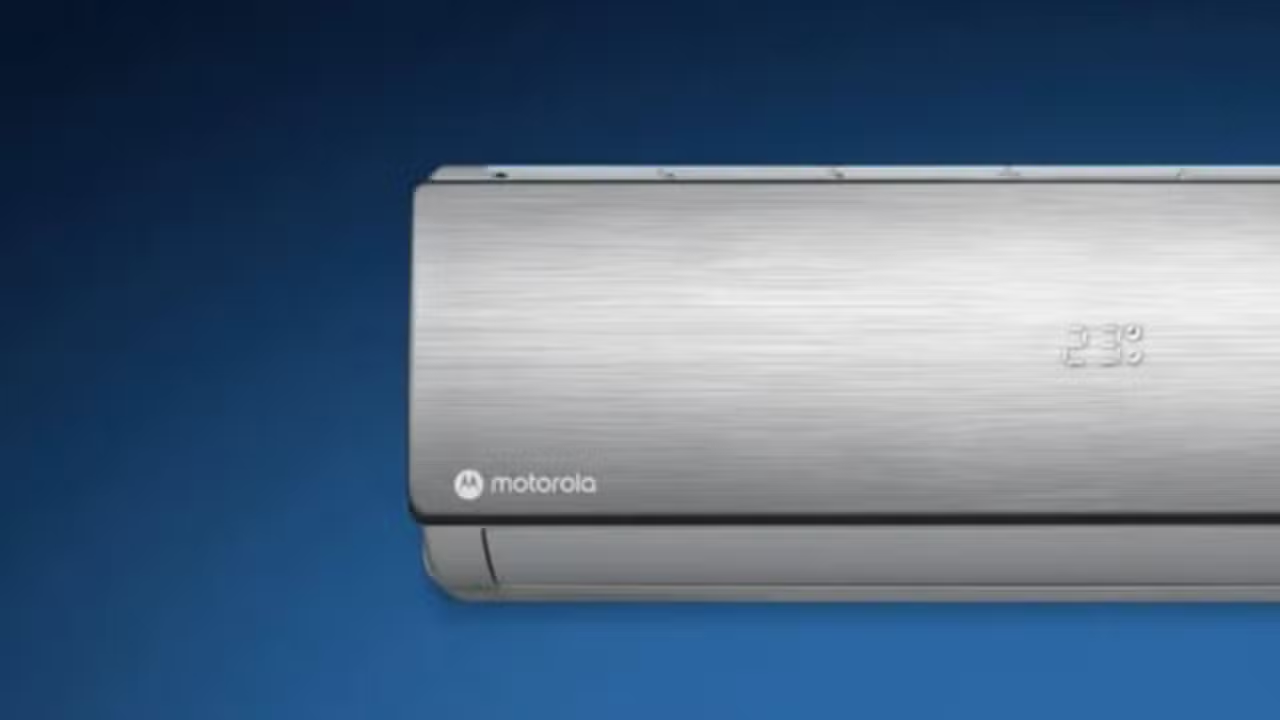
The traditional mobile device manufacturer Motorola has officially entered the smart home appliance sector aimed at home automation. The North American company presented a new line of air conditioning equipment that combines high cooling capacity with advanced machine learning algorithms.
The initial launch takes place in the Asian market, with a strategic focus on Índia, a region characterized by extreme weather conditions and high demand for refrigeration. The company’s proposal is to offer an ecosystem where devices operate autonomously, adjusting the environment’s climate without the need for constant human intervention.
This commercial move represents a significant diversification in the brand’s portfolio, which seeks to integrate its knowledge in mobile connectivity to the white goods sector. The central objective is to create more energy-efficient homes, ensuring thermal comfort through continuous communication between devices via the internet.
Pricing strategy and financial positioning
The new family of air conditioning equipment arrives at retail with an aggressive financial positioning for the smart appliances segment. Sales values in the Indian market start at ₹ 28,990, which represents approximately R$ 1,650 in direct conversion.
This amount places the product at a highly competitive level, approaching the value of the current minimum wage of R$1,621. The manufacturer’s strategy is to democratize access to cutting-edge technologies, such as variable speed compressors and integrated automation systems, for the expanding middle class.
To accelerate the adoption of the new technology, the company established exclusive partnerships with large local e-commerce networks. Essas commercial alliances include direct benefits to consumers, such as exemption from installation fees, facilitating users’ transition to the new connected home ecosystem.
System architecture and thermal engineering
The mechanical functioning core of the new devices is driven by compressors equipped with Twin Rotary Inverter technology, designed to guarantee extreme operational stability. Essa engineering innovation allows the external condensing unit to maintain refrigeration thermal performance even when subjected to ambient temperature peaks reaching up to 55°C. Engine workload management is carried out by microprocessors that adjust the rotation frequency in real time, eliminating electrical consumption peaks common in traditional models and reducing wear on moving parts.
The durability of the machinery is reinforced by the use of coils made entirely from copper alloy, a material recognized for its high thermal conductivity. Esses heat exchangers receive specialized chemical treatment with an anti-corrosion protection bath, creating a robust barrier against oxidation caused by external humidity. Essa Structural protection is critical to preventing premature refrigerant gas leaks, ensuring the system maintains its energy efficiency and cooling capacity over multiple years of continuous use.
Integration with networks and data processing
The equipment’s operating system uses sensors based on artificial intelligence to monitor minute climate variations in physical space. The internal software collects data continuously to automatically calibrate the ventilation flow intensity.
Durante a operação, o dispositivo avalia simultaneamente a temperatura do momento e os índices de umidade relativa do ar no cômodo. Essa processing capacity allows hardware to transition between multiple thermal capacities, operating at full power to cool crowded rooms and reducing rotation to maintain single-person comfort.



Data communication occurs through native support for dual-band wireless networks, operating at 2.4 GHz and 5 GHz frequencies.
Integration with market virtual assistants allows control of functions through direct voice commands. The system also makes it possible to configure routines based on geolocation, triggering the cooling of the environment minutes before the user arrives at home.
Air purification and respiratory health
The company’s development engineering paid special attention to the quality of the air circulating indoors, implementing a filtration system made up of three distinct layers of physical and biological protection. Este mecanismo inclui elementos do tipo HEPA e malhas tratadas quimicamente com íons de prata, atuando de forma incisiva na retenção de partículas microscópicas de poeira, pólen e diversos alérgenos suspensos. Além from blocking solid impurities, the onboard technology can inactivate microorganisms, making ventilation safer for people with respiratory sensitivities. To maintain the effectiveness of this complex system over time, a fully automated self-cleaning function has been developed. The procedure performs thermal shock cycles in the evaporator unit, freezing and defrosting the aluminum fins sequentially. Este physical process removes debris, accumulated dust and residual moisture from inside the machine, preventing the proliferation of mold colonies and blocking the emission of unpleasant odors.
Minimalist design and control panel
The visual design of the internal evaporator units followed a minimalist aesthetic approach, with a matte white finish. The objective of this design choice is to ensure that the equipment integrates discreetly into the most diverse contemporary architectural projects.
The front panel stands out for the inclusion of a bright LED display hidden under the main housing made of injected plastic. The digital interface remains invisible when the device is turned off, activating only to display instant information about the selected temperature and network connection status.
Preventive maintenance and technical support
The physical structure of the chassis was entirely redesigned by the engineering team to optimize preventive and corrective maintenance procedures. The new arrangement of internal components ensures quick and safe access to specialized technicians during periodic inspections and refrigerant gas refills.
Consumers also benefit from this simplified architecture when carrying out basic equipment cleaning. Removing the front panel and replacing the filter elements can be carried out without the use of complex tools, facilitating daily maintenance.
Expansion of the home appliance portfolio
The manufacturer’s entry into the air conditioning segment establishes a new level of technological requirements for the global white goods industry. Este strategic movement forces competing companies to accelerate the development of connectivity features in their entry-level products, intensifying the competition for innovations in the domestic sector.
Veja Tambem em News (EN)

Research reveals that parents are unaware of how their children use artificial intelligence

Samsung releases new system update with new features for Galaxy Watch 4 users

Digital retail reduces the value of the Galaxy S25 5G smartphone with bank bonuses and device exchange

Amazon’s wireless CarPlay adapter has a 50% discount and high approval ratings from drivers

Zach Cregger’s new Resident Evil ignores games and focuses on an unprecedented story with new characters

Rumor suggests that Nintendo is preparing a special edition of the Switch 2 with a remake of Ocarina of Time

Apple accelerates production of the iPhone 17e and develops new Air model with dual camera system

Epic Games platform releases twelve high-budget games at no permanent cost for PC users

PlayStation 5 Pro price drop accelerates digital retail sales and eliminates global stocks

New Galaxy Watch 9 firmware appears on server and confirms progress in software development

Apple’s commemorative project tests cell phone with 1.1 millimeter edge and curved screen for 2027
