
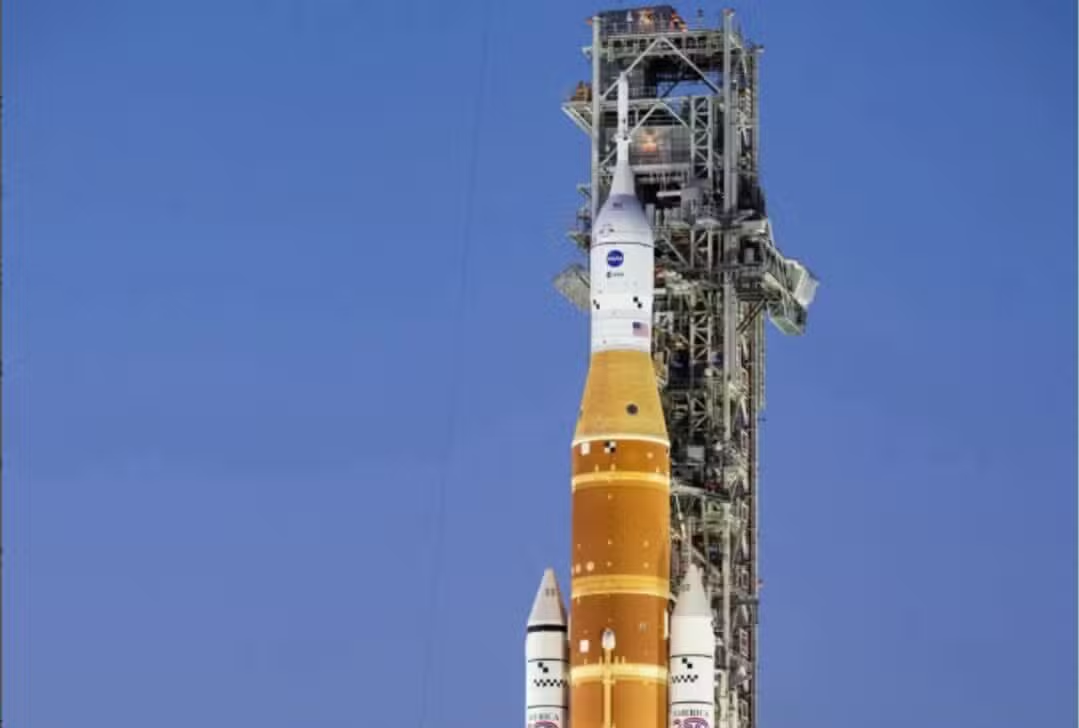
NASA plans to position the Artemis II mission’s SLS rocket on launch pad 39B on Friday, March 20, maintaining the liftoff attempt on April 1. Equipes completed final activities on Centro Espacial Kennedy, on Flórida, after replacing an electrical harness in the flight termination system of the rocket’s core stage. Transport of Edifício, Montagem, Veículos to the platform should take up to 12 hours, with constant monitoring of weather conditions to avoid delays.
The operation represents the second movement of the rocket to the platform in this preparation cycle. The first occurred in January, but the vehicle returned to the building in February due to a problem with the helium flow in the interim cryogenic propulsion upper stage. Após repairs and additional tests, including checks on the flight termination system, the agency advanced to this new stage.
The Artemis II mission will send four astronauts on an approximately ten-day flight around Lua, without landing on the lunar surface. The main objective is to validate the Orion spacecraft and SLS rocket systems in a deep space environment, preparing the ground for future landing missions.
Final preparations before relocation
Engineers completed inspections and adjustments to the rocket during the weekend before the target date. Replacement of the wiring harness resolved a recently identified issue, ensuring compliance with Eastern Reach safety requirements.
Additional testing will occur on the platform after deployment. Esses procedures include checks of electrical and propulsion systems to confirm full readiness.
NASA teams follow weather forecasts closely. Ventos strong or extreme temperatures may alter the shipping schedule.
Technical details of the SLS rocket
The Space Launch System measures around 98 meters tall and integrates solid thrusters, core stage and the upper propulsion module. The Orion ship is attached to the top, equipped with life support systems for the crew.
The rocket uses cryogenic propellants, such as liquid hydrogen and liquid oxygen, which require precise handling during all preparation phases.
Previous problems, such as interruptions in helium flow, required easier access in the assembly building to install temporary platforms.
Crew and mission objectives
The astronauts will undergo pre-launch quarantine to minimize contamination risks. The crew includes members from NASA and Agência Espacial Canadense, with experience from previous orbital missions.
The flight will test lunar-range communications, radiation protection and high-speed atmospheric reentry. Dados collected will guide adjustments to Artemis III.
Release schedule and alternative windows
The target date for liftoff is April 1, with an approximate time of late afternoon Flórida local time. Additional Janelas are available on April 2nd, 3rd, 4th, 5th, 6th and 30th if postponement is necessary.
The launch depends on final approval following flight readiness reviews. The agency carried out a risk analysis that confirmed the safety of the mission.
Environmental conditions off the coast of Flórida directly influence launch opportunities. Equipes maintain flexibility for last-minute adjustments.
Importance of Artemis II for the lunar program
This mission marks the first manned flight of SLS and Orion. Success validates essential technologies for sustainable exploration of Lua.
The Artemis program seeks to establish a lasting human presence on the natural satellite. Artemis II provides critical data on translunar trajectory performance.
Advances made influence the planning of subsequent missions with greater complexity.
Next steps after placement
Upon arrival at the platform, technicians will conduct integrated system tests. Qualquer detected anomaly will be evaluated immediately.
The live broadcast of the displacement will be available on official NASA channels. The process highlights the scale of the crawler-transporter operation.
The launch countdown will start after confirming all parameters.