
New experimental drug demonstrates ability to reverse memory loss in Alzheimer’s
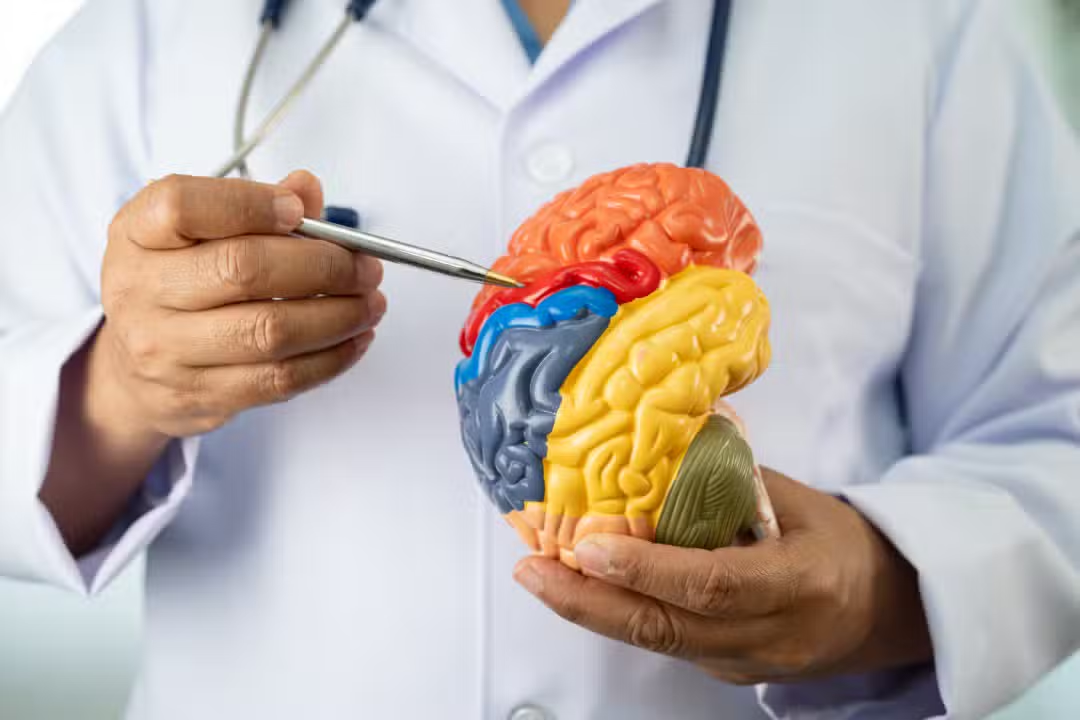
Scientists and researchers linked to University Hospitals (UH) have reached a significant milestone in the study of neurodegenerative diseases by demonstrating that memory loss can be reversed. The study, led by doctor Andrew A. Pieper, used an experimental medicine to restore energy balance in the brain cells of genetically modified mice. The results indicate that cognitive damage, previously considered permanent, can be partially recovered through specific chemical interventions in cellular metabolism.
This discovery challenges the traditional view of medicine that Alzheimer is a pathology with linear and irreversible progression, focusing now on the possibility of tissue repair. Durante the experiments, animals that already showed advanced stages of degradation returned to exhibiting a cognitive performance considered normal for the species. The success of the intervention lies in identifying a central energy crisis that affects neurons, preventing them from processing nutrients efficiently.
The research detailed the following fundamental points about the functioning of the new therapeutic approach and the biological mechanisms involved in the recovery process:
- Identification of a critical failure in cellular energy production that precedes neuronal death in affected brains.
- Use of compounds that stabilize brain chemistry and allow the resumption of ATP production by mitochondria.
- Observation of clear signs of regeneration in brain tissue after normalization of energy supply.
- Drastic reduction in neuroinflammation markers that tend to block synapses and impair the formation of new memories.
The role of the nad+ molecule in the recovery process
The basis of the experimental treatment focuses on restoring adequate levels of the NAD+ molecule, an essential component for the survival and functioning of all living cells. Esta substance is responsible for mediating chemical reactions that transform nutrients into energy usable by neurons, in addition to acting directly in the repair of cellular DNA. With the advancement of Alzheimer, NAD+ levels suffer a sharp drop, much higher than the natural decrease that occurs during the common human aging process.
When levels of this molecule become critically low, nerve cells lose their defense capacity and begin to accumulate severe oxidative damage. Este scenario triggers a persistent immune response, known as neuroinflammation, which ends up degrading the connections between neurons and compromising the integrity of short- and long-term memory. Replacing or stabilizing this metabolic pathway has been shown to be effective in interrupting the cycle of cellular self-destruction and allowing the brain to initiate natural repair protocols.
Impact of energy restoration on tissue regeneration
The researchers observed that by restoring chemical stability in the brain samples, signs of chemical weathering began to regress consistently. The treatment not only prevented new neurons from dying, but also allowed the surviving cells to fully resume their synaptic communication functions. Este phenomenon of regeneration suggests that the brain has a latent resilience that can be activated when the biochemical environment is properly corrected by medication.
The study thoroughly compared human and mouse tissue samples to validate that the mechanism of energy failure is identical in both species. Essa correlation is essential to increase the chances of success in future clinical trials with humans, since the therapeutic target is a universal biological pathway. The Andrew A. Pieper team is now working on optimizing dosages to ensure that the molecule can cross the blood-brain barrier safely and efficiently in real patients.
Differences between natural aging and pathology
It is important to highlight that the decrease in cellular energy occurs in all elderly people, but in Alzheimer this process is transformed into a catastrophic system failure. Enquanto healthy aging maintains minimal levels of repair, pathology blocks these routes, leading to the accumulation of toxic proteins and the fragmentation of neuronal DNA. The experimental medicine acts precisely on this frontier, preventing energy deficiency from becoming a point of no return for the cognitive health of the affected individual.
Research has shown that correcting metabolism significantly reduces oxidative stress, which is one of the main villains in the progression of dementia. By reducing this wear and tear, cells are able to focus their resources on maintaining existing memory networks and creating new pathways for processing information. Esta paradigm shift takes the exclusive focus away from beta-amyloid protein plaques and places bioenergetics as the central pillar of new strategies to combat the disease.



Perspectives for the development of new pharmacological therapies
The transition from animal to human testing requires caution, but the data obtained provides a solid basis for creating a new class of neuroprotective drugs. Até At the moment, most medications available on the market focus only on controlling symptoms or removing protein debris, without addressing the metabolic cause of degeneration. The new approach focuses on the root of the problem, offering real hope that cognitive function can be restored even after the onset of clinical symptoms.
Scientists believe that combining this energy restoration technique with existing treatments can generate a synergistic effect unprecedented in modern medicine. The ultimate goal is to create a protocol where the patient receives support so that their own brain can combat inflammation and recover lost connections. The next phases of research will involve long-term monitoring of the effects of the NAD+ molecule to ensure the stability of the cognitive gains initially observed.
Laboratory studies and the methodology applied in research
To ensure the accuracy of the data, the team used two different strains of mice that perfectly simulate the genetic and biochemical changes found in patients with Alzheimer. Esse double validation method made it possible to confirm that the results were not isolated or dependent on a single specific genetic variable. The animals were subjected to maze and object recognition tests, where they showed full recovery of their learning capacity and retention of new information.
High-resolution imaging monitoring also revealed a significant decrease in DNA lesions after the introduction of the experimental treatment into the circulatory system. Tais physical evidence corroborates the behavioral results, proving that improvement in memory is directly linked to the biological recovery of neuron health. The research reinforces the need to look at the brain as an organ that strictly depends on a constant flow of chemical energy to maintain the individual’s consciousness and identity.
The role of neuroinflammation in the loss of cognitive functions
Chronic inflammation of the nervous system is one of the main obstacles to any attempt at memory recovery in diagnosed patients. The study proved that the energy crisis is the trigger that keeps the brain’s defense cells in a constant and harmful state of alert. By normalizing NAD+ production, researchers were able to “turn off” this aggressive inflammatory response, allowing the neuronal environment to once again be conducive to communication between cells.
This discovery is vital because it explains why many previous treatments have failed by simply trying to reduce inflammation without addressing the underlying lack of energy. Sem fuel, neurons cannot remain stable, regardless of the amount of anti-inflammatory drugs used in the therapeutic process. The integrated approach proposed by University Hospitals solves both problems simultaneously, attacking the energetic cause and silencing the harmful immune response that prevents the patient’s full recovery.
Considerations on the future of neurodegenerative treatment
The international scientific community received the data with optimism, as the restoration of function in advanced cases is a feat rarely observed in laboratory studies. The focus now turns to scaling the production of these molecules and carrying out rigorous safety tests before any application in a human hospital environment. The discovery paves the way for other diseases that involve energy failures, such as Parkinson, to also be studied from this new perspective of tissue repair.
The final data from the experiment show that brain biology is much more plastic than imagined a decade ago, allowing interventions that restore quality of life. The work of Andrew A. Pieper and his team will remain a reference for the development of protocols that prioritize the metabolic health of the neuron as a way to preserve the human mind. The breakthrough represents a decisive step towards transforming Alzheimer from a definitive sentence into a treatable and potentially reversible medical condition in its most debilitating aspects.
Veja Tambem em News (EN)

Research reveals that parents are unaware of how their children use artificial intelligence

Samsung releases new system update with new features for Galaxy Watch 4 users

Digital retail reduces the value of the Galaxy S25 5G smartphone with bank bonuses and device exchange

Amazon’s wireless CarPlay adapter has a 50% discount and high approval ratings from drivers

Zach Cregger’s new Resident Evil ignores games and focuses on an unprecedented story with new characters

Rumor suggests that Nintendo is preparing a special edition of the Switch 2 with a remake of Ocarina of Time

Apple accelerates production of the iPhone 17e and develops new Air model with dual camera system

Epic Games platform releases twelve high-budget games at no permanent cost for PC users

PlayStation 5 Pro price drop accelerates digital retail sales and eliminates global stocks

New Galaxy Watch 9 firmware appears on server and confirms progress in software development

Apple’s commemorative project tests cell phone with 1.1 millimeter edge and curved screen for 2027
