
New Toyota Prius hits the market with a 223 hp hybrid engine and a range of up to 27 km/l


The Japanese automaker has redefined the standards of the electrified automotive segment by introducing recent updates to its most iconic vehicle. The model maintains the basis of the fifth generation, but significantly improves power delivery and fuel economy, consolidating its leadership position among passenger cars focused on sustainability.
With an optimized mechanical package, the vehicle delivers a combined power that varies between 196 horsepower in the conventional hybrid version and an impressive 223 horsepower in the plug-in configuration. Essa mechanical calibration results in a much more vigorous acceleration response, allowing the car to reach zero to sixty miles per hour in approximately seven seconds.
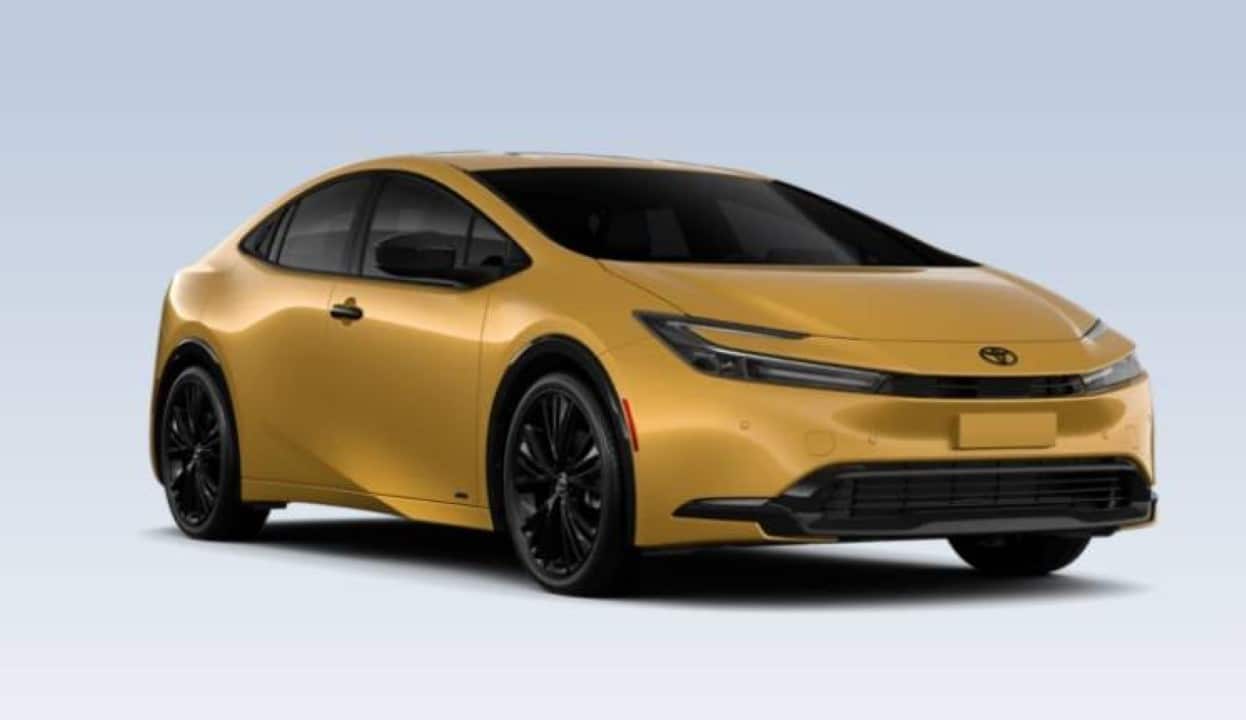
In addition to improved dynamic performance, the engineering applied to the design ensured exceptional consumer brands for everyday use. Under ideal driving conditions, the standard hybrid system can overcome the barrier of twenty-seven kilometers per liter, while the plug-in variant guarantees purely electric driving for up to seventy kilometers.
Mechanical evolution and positioning in the sector
The development of this line of vehicles reflects a profound transition in the strategies of major global manufacturers, which seek to combine high performance with strict emissions reduction targets. The modular platform adopted by the brand, known for its high torsional rigidity, allowed engineers to lower the car’s center of gravity, which translates into much more precise and safer handling on highways. Esse structural advancement not only improves stability in high-speed curves, but also reduces vibrations transmitted to the cabin, increasing the acoustic comfort of occupants during long journeys and bumpy urban routes.
To support this technical evolution, the manufacturer implemented specific modifications that directly affect the aerodynamics and cooling of the powertrain.
– Adoção nineteen-inch alloy wheels in top-of-the-line configurations.
– Redesigned front Grade to optimize airflow and cool the electrical system.
– Paleta in exclusive pearlescent colors with details in a glossy black finish.
External architecture and aerodynamic fluidity
The car’s silhouette was sculpted in wind tunnels to minimize air resistance against the body as much as possible. The roof features a pronounced curvature that extends to the trunk lid, creating a teardrop-shaped profile that cuts through the wind with extreme ease and reduces aerodynamic drag.
At the front, the headlights with LED lighting technology adopt a sharp and aggressive shape, integrating perfectly with the creases of the hood. The rear lights follow the same aesthetic pattern, forming a continuous line that visually widens the car and gives it a striking presence on the streets at night.
Electrified powertrain performance
The heart of the car is a two-liter combustion engine that works in perfect synchronization with powerful electrical generators. In the front-wheel drive version, electronic management distributes force intelligently, ensuring smooth starts and safe speed recovery on busy highways.
Variants equipped with on-demand all-wheel drive use an additional electric motor positioned on the rear axle. Esse system comes into action automatically when it detects loss of grip on the front wheels, providing extra torque to stabilize the vehicle on slippery surfaces or during sudden accelerations.
The transition between using electrical energy and burning fuel occurs imperceptibly for the driver. The control module constantly evaluates pressure on the accelerator pedal, cruising speed and battery charge level to decide which energy source is most efficient at that exact moment.
Driver protection and assistance systems
Active and passive security received special attention from developers, resulting in the inclusion of a comprehensive technological package from the entry versions. The autonomous emergency braking system uses high-resolution cameras and millimeter-wave radar to map traffic ahead.
This equipment is capable of identifying not only other cars, but also pedestrians and cyclists who may cross the road unexpectedly. Caso the computer detects an imminent risk of collision and the driver does not react in time, the brakes are applied with maximum force to mitigate or avoid the accident.
Adaptive cruise control works in conjunction with lane keeping assist, creating a semi-autonomous driving experience that is very useful in severe traffic jams. The car can follow the flow of traffic, stopping completely and accelerating again without the driver’s direct intervention on the pedals.
For maneuvering in tight spaces, rear cross traffic alert monitors approaching perpendicular vehicles. Sensores ultrasonic sensors emit audible and visual warnings on the dashboard, preventing minor collisions when exiting parking spaces with reduced visibility.
Internal comfort and digital integration
The interior environment was designed with the philosophy of keeping the driver’s eyes on the road and hands on the steering wheel. The seven-inch digital instrument panel was strategically positioned above the steering wheel rim, functioning almost like a display projected onto the windshield. In the center of the console, a high-definition screen measuring up to twelve inches houses all entertainment, navigation and climate adjustment functions. Connectivity with smartphones occurs completely wirelessly, allowing the mirroring of map and music applications with extreme fluidity and quick response.
The materials used to finish the cabin mix soft-touch textures with highly durable plastics, creating a sophisticated and welcoming atmosphere. The front seats, which can be electrically adjusted and heated in more expensive versions, offer excellent lateral and lumbar support. With the roofline lowered for aerodynamics, head and legroom for the five occupants remains generous. The luggage compartment, with a volumetric capacity of around four hundred liters, perfectly meets the needs of a family on weekend trips.
Pluggable variant specifications
The configuration that allows external charging of batteries represents the pinnacle of engineering aimed at clean mobility within the brand’s portfolio. Equipada with an energy store of thirteen point six kilowatt-hours, this version transforms the car into a purely electric vehicle for the vast majority of daily urban journeys. Full recharge time takes approximately four hours when connected to a standard household outlet, a time that drops dramatically when using dedicated wall chargers. The one hundred and fifty-two horsepower combustion engine works in harmony with the one hundred and sixty-three horsepower electric drives, delivering sporting performance without sacrificing economy. Como technological difference, the vehicle’s roof can be equipped with photovoltaic solar panels, which capture sunlight during the period the car is parked and convert this radiation into extra energy to power auxiliary systems, such as the air conditioning and the multimedia center, preserving the main battery charge for traction.
Commercial distribution around the world
The launch schedule initially prioritizes the large consumer markets of América, Norte, Europa and Ásia, where charging infrastructure and government incentives for electrified vehicles are more robust. The manufacturer studies the feasibility of exporting specific batches to emerging countries, evaluating local demands and current taxation policies to guarantee competitive prices at dealerships.
Sustainability and emissions reduction
The project’s environmental commitment goes beyond low consumption of fossil fuels, encompassing the entire life cycle of the product. Lithium-ion batteries were developed to withstand more than a decade of intense use without severe degradation, and the automaker already has structured programs for recycling and reusing these components in stationary energy storage systems.
The bodywork and interior linings use a significant percentage of recycled plastics and plant-based materials. The regenerative braking system acts as a constant generator, capturing the kinetic energy that would otherwise be wasted in the form of heat during braking and sending it back to the battery pack, maximizing autonomy on routes with many stops.
Dispute for space at dealerships
The segment of electrified sedans and hatchbacks has become one of the most competitive in the global industry, with South Korean and Japanese automakers fighting a fierce battle for consumer preference. The model in question faces strong rivals that also deliver excellent consumption averages and technological packages full of driving assistants.
The great competitive advantage of this car lies in the mechanical reliability built over more than two decades of pioneering hybrid technology. The extensive technical assistance network spread across the world and the high resale value continue to be decisive factors that weigh in favor of the brand when the customer decides to close a deal.




