
The manufacturer’s strategy prioritizes Exynos processors in the Galaxy line to reduce high costs

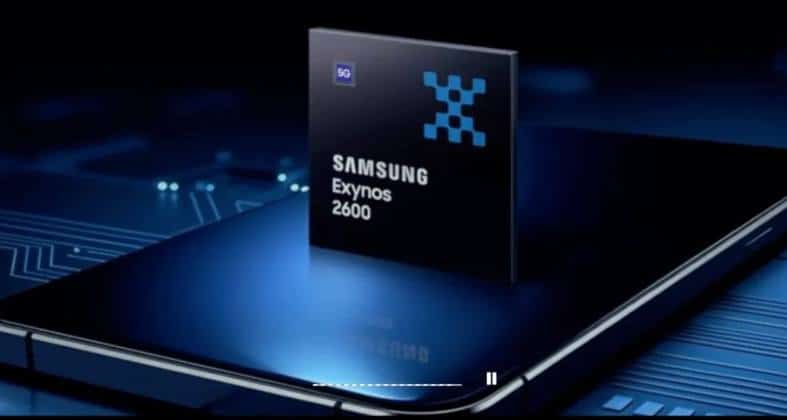
The South Korean technology giant is stepping up preparations for a structural change in the manufacturing of its high-performance mobile devices. The central strategy involves the progressive expansion of the use of internally developed processors, aiming to reduce the historical dependence on external semiconductor suppliers. Essa industrial movement is mainly focused on reducing operating expenses and increasing the profit margin per unit sold in the global telephone market.
The strategic planning establishes that the transition will gain strength with the brand’s next launches, scheduled for the beginning of the next annual market cycle. The manufacturer focuses its efforts on optimizing its assembly lines to ensure that proprietary components meet the quality standards required by the premium segment. The goal is to create a self-sufficient ecosystem that allows greater control over the hardware and software integrated into devices.

Currently, the acquisition of third-party chips represents a considerable portion of the production cost of the company’s most advanced smartphones. By mastering the end-to-end production chain, the corporation hopes to not only balance its finances, but also offer unique innovations that differentiate its products from direct competition in the fierce mobile technology sector.
Financial impact and transition in component supply
The dependence on processors manufactured by partner companies generates a significant weight on the Asian manufacturer’s cost sheets. State-of-the-art components purchased on the foreign market can cost approximately two hundred and eighty dollars per unit, a value that severely compresses the profit margins of high-end devices. The projection of experts in the semiconductor sector indicates that these prices tend to undergo further upward adjustments in the coming quarters, driven by the increasing complexity of chip manufacturing.
To mitigate this scenario of economic vulnerability, the corporation directs massive investments into its own research and development facilities. The allocation of billion-dollar resources to create internal central processing and graphics architectures signals a long-term commitment to technological independence. Analistas of the market point out that a financial contribution of this magnitude would not be justified if the intention was to keep the company’s own components only as a secondary or minority option in the brand’s portfolio.
The implementation of this change occurs gradually to avoid disruptions in the supply chain and ensure the stability of global sales. The adoption schedule foresees a staggered increase in the presence of proprietary hardware, starting with a smaller share and expanding as production capacity and factory throughput rates reach ideal levels of efficiency.
- Drastic reduction in licensing and acquisition costs for external hardware.
- Greater flexibility to adjust new product launch cycles.
- Protection against price fluctuations in the international semiconductor market.
- Absolute control over the integration between the operating system and the processor.
Advanced architecture and the development of new hardware
The company’s technological advancement is materialized by the introduction of a two-nanometer lithography process, one of the most sophisticated manufacturing techniques currently available in the industry. Essa extreme miniaturization of transistors allows a much larger number of components to be allocated in the same physical space, resulting in significant leaps in processing speed. Mass production of this new generation of chips has already begun, with engineering teams working hard to overcome initial silicon wafer yield challenges.
One of the great differences of this new hardware is the integration of a graphics processing unit developed in partnership with experts in visual architecture. The customized component promises to deliver twice the computing graphics capacity compared to previous generations, enabling advanced features such as real-time ray tracing for mobile games. Essa evolution puts the proprietary processor in a position to compete for performance leadership in the premium segment.
Strategic market division for the next generation
The distribution of processors in upcoming launches will follow a logic of geographic and device model segmentation. The estimate is that around seventy-five percent of the units initially manufactured still use the chip supplied by the North American partner. Essa parcela majoritária será direcionada principalmente para as versões mais caras da linha e para mercados específicos que possuem exigências regulatórias particulares ou forte preferência histórica por determinada marca de componente.
The remaining twenty-five percent of global production will be equipped with the processor developed internally by the South Korean manufacturer. Esses devices will supply strategic regions, such as the European continent and the Asian domestic market itself, focusing on the standard and intermediate versions of the premium device family. Essa mixed approach works like a laboratory on a global scale, allowing the collection of real usage data without compromising the brand’s perception of quality.
Maintaining hardware uniformity across the most exclusive and expensive smartphone variants ensures that consumers willing to pay the maximum price receive a standardized experience anywhere in the world. Enquanto this, the controlled introduction of the proprietary chip in other versions paves the way for wider adoption in subsequent years.
Technological autonomy and the creation of processing units
The quest for complete independence in semiconductor design led the corporation to deeply restructure its engineering departments. Highly specialized Equipes were formed with the sole mission of designing central processing and graphics cores from the ground up. Esse strategic move aims to eliminate the need to license third-party technologies, ensuring that all intellectual capital generated remains under the company’s control.
Long-term planning sets ambitious goals for the end of the decade, including the launch of a hardware platform completely free of external dependencies. The expectation is that future iterations of the proprietary processor will abandon the graphics architectures developed in partnership, adopting solutions created entirely within the brand’s laboratories. Essa complete transition will represent the culmination of the technological autonomy project.
In addition to powering cutting-edge smartphones, the new processing architecture is being designed with scalability in mind. The intention is that variations of this same chip can be integrated into a wide range of products in the company’s ecosystem, including high-performance tablets, smart watches, mixed reality glasses and even automotive infotainment systems.
The consolidation of this technical domain places the manufacturer in a privileged position to dictate the direction of innovation in the mobile market. By not depending on the launch schedule of external suppliers, the company gains agility to implement new artificial intelligence and image processing resources exactly when consumer demand arises.
Thermal performance and energy efficiency in premium devices
One of the biggest challenges faced by previous generations of proprietary processors was managing heat dissipation and excessive battery consumption under intense workloads. To reverse this history and regain the trust of the most demanding users, the company’s engineering focused massively on the energy efficiency of the new lithography. The adoption of more modern transistor structures allows the chip to operate at high frequencies while consuming a fraction of the energy required by older models, significantly extending the device’s autonomy away from sockets.
Improved thermal control also ensures that the smartphone maintains peak performance for prolonged periods, avoiding the sudden drops in speed that occur when the system needs to cool internal components. Essa stability is essential for modern tasks, such as recording videos in very high resolution and the continuous execution of complex generative artificial intelligence algorithms directly on the device. Overcoming these technical bottlenecks is the definitive argument to convince the market of the viability of proprietary hardware.
Ecosystem expansion and plans for future generations
The component replacement strategy goes beyond the simple exchange of parts on an assembly line, becoming a complete redefinition of the corporation’s technological identity. By mastering two-nanometer manufacturing and projecting a gradual increase in the adoption rate of its chips, the company is setting the stage so that, within a few years, the overwhelming majority of its premium devices will be driven by native technology. Support for ultra-fast RAM memory standards and ultra-high-speed storage systems demonstrates that the hardware is prepared to handle massive volumes of data instantly. Esse level of deep integration between the cell phone’s electronic brain and other peripheral components results in unparalleled navigation fluidity, essential to sustaining the innovations in neural processing that will define the next era of mobile computing.
Consumer acceptance and global regulatory adequacy
Consumer market acceptance plays a vital role in the success of this industrial transition. The company rigorously monitors user feedback in regions where the proprietary chip is already sold, using these metrics to refine software updates and calibrate hardware for subsequent generations. Paralelamente, the manufacturer navigates through a complex maze of telecommunications certifications, ensuring that its integrated modems meet all the requirements of operators and regulatory agencies on different continents.
Competitive dynamics in the semiconductor sector
The Asian giant’s move sends tremors across the global semiconductor industry, forcing current market leaders to rethink their pricing and innovation strategies. The gradual loss of one of its biggest customers represents a considerable financial blow to companies that traditionally supply processors for the premium line.
This scenario of heightened competition directly benefits the end consumer, who now has access to more refined technologies driven by the dispute between the giants in the sector. The race for supremacy in mobile processing accelerates the development of more efficient solutions, consolidating a new era of independence and innovation in the smart device market.



