Twitter down: global server failure takes down social network X and blocks access for millions of users today

This Wednesday morning, the microblogging platform The first reports of malfunctions appeared on internet traffic monitoring panels, pointing to an abrupt drop in the capacity to load new publications and update the timeline. Diferentes connectivity providers confirmed that the problem is not related to local internet routes, but rather to the central infrastructure of the technology company’s servers. The outage simultaneously affects users of desktop computers and mobile devices, creating an information blackout in one of today’s main real-time communication tools. The volume of complaints on crash tracking sites quickly surpassed the hundreds of thousands mark within a few hours of instability.
Immediately after the first signs of system failure, corporations, government agencies and news agencies that depend on the network to distribute urgent communications needed to look for alternative communication channels. The absence of an immediate official position from the platform’s engineering team increases uncertainty about the exact origin of the technical problem and the estimated time for full recovery of services.
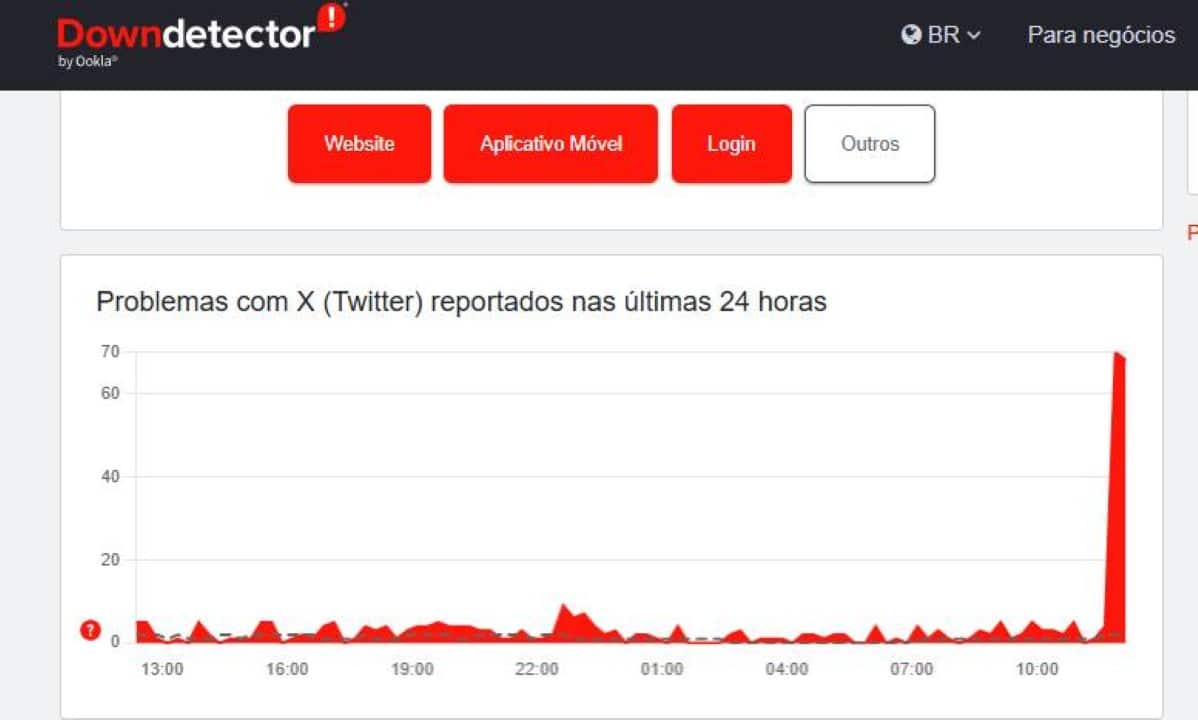
During access attempts, independent diagnostic systems mapped the main errors faced by those trying to use the mobile application or the version for web browsers:
- Complete lock on screen authentication of credentials and passwords.
- Connection error messages when trying to load heavy media such as photos and videos.
- Failure to deliver push notifications to smartphones and tablets.
- Temporary disappearance of engagement metrics on old posts.
Direct impact on navigation via web browsers
Access via traditional computers accounts for most of the failure notifications recorded by global traffic monitoring services. Profissionais who use the web interface to manage multiple corporate accounts report that the home page goes into an infinite loading cycle without displaying any new data.
Without the display of recent posts, the workflow of marketing, journalism and customer support teams is severely compromised during business hours. The website’s architecture presents difficulties in processing requests sent by browsers, returning internal server error codes to clients.
Digital infrastructure experts point out that bottlenecks in edge servers may be responsible for this lack of response to basic user commands. The distribution of static content, such as profile images, banners and interface graphic elements, also suffers from extreme slowness or complete rendering failure on screens.
Given the impossibility of using the main tool, technology forums and other social platforms became the meeting point for exchanging information about the extent of the fall. The dependence on a single ecosystem for instant global communication highlights the vulnerability of modern digital operations to hardware or software failures.
Anomalies recorded in smartphone applications
Software developed for the Android and iOS operating systems has demonstrated irregular behavior since the beginning of systemic instability on central servers. Search tools for trending keywords and topics stopped indexing new content, only displaying outdated results from previous days or blank pages.
Attempting to publish short messages containing audiovisual attachments results in the application unexpectedly closing on different cell phone models from different manufacturers. The fragmentation of errors suggests that the application programming interface responsible for connecting mobile devices to the company’s databases is inoperative.
Common palliative measures, such as clearing the application’s memory cache or completely reinstalling the software, have no practical effect in resolving the access block. The external nature of the flaw requires that the definitive fix be applied directly to the technology company’s data processing centers.



Barriers in the authentication and security system
The process of verifying users’ identities became one of the most critical points during the social network’s period of instability. Indivíduos who try to start a new session encounter invalid credential messages, even when the data entered is absolutely correct and verified. The two-factor authentication system, essential for protecting high-profile and corporate accounts, has significant delays in sending codes via text message or email. Essa failure to recognize passwords raises concerns about the integrity of the databases, although cybersecurity experts have ruled out, until the moment operational data is collected, the hypothesis of a coordinated denial of service attack.
Automatic password managers also fail when trying to fill in login fields because the landing page does not respond to the standard security protocols established by browsers. Account recovery tools are inoperative, preventing users from redefining their access autonomously through links sent by email. The current technical recommendation advises that people avoid making multiple consecutive entry attempts, as the platform’s automated defense system may interpret repetitive action as suspicious activity and apply prolonged preventive blocks to IP addresses.
Reflections on the distribution of urgent information
The platform’s shutdown directly affects the dynamics of live event coverage by press vehicles, transit agencies and emergency services. The characteristic agility of microblogging is needed at times when the rapid dissemination of government alerts and public service news is strictly necessary.
Crisis management agencies face logistical difficulties in monitoring public sentiment towards brands and institutions during the technological blackout. The absence of an official contingency channel on the part of the network operating company prolongs the state of misinformation about the operational status of digital services.
History of instabilities and structural changes
Since recent corporate restructurings and profound changes to the platform’s source code, the social network has experienced intermittent periods of technical instability that affect its global user base. Migrating physical servers and implementing new content recommendation algorithms requires complex synchronization between different data centers spread across multiple continents. Quando failures occur when updating these internal routing protocols, information traffic is abruptly interrupted, resulting in massive access drops that take hours to be mitigated. The readjustment of website reliability engineers, the sector responsible for keeping the infrastructure operating uninterruptedly, is often highlighted by technology sector analysts as an operational risk factor. Maintaining a digital ecosystem that processes millions of requests per second requires continuous investment in cutting-edge hardware and artificial intelligence to balance the load of global networks.
Technical procedures during outage
While support teams work behind the scenes to reestablish connectivity, checking the integrity of the local internet connection remains the recommended first step for internet users. Using browsers in incognito mode can help rule out conflicts generated by third-party extensions or corrupted temporary files stored on machines.
External publication scheduling platforms also suffer from the breakdown of the official programming interface, making it impossible to automate posts scheduled by advertising agencies. Continuous monitoring through independent status dashboards remains the most effective way to track the progress of recovery work on central servers.
Gradual recovery
Normalization of access to databases usually occurs progressively, prioritizing network nodes with higher traffic density before reaching peripheral connections. Adjustments to firewall protocols and load balancing rules are applied in rigorous steps to avoid further overloads on the central system when users return.
Veja Tambem em News (EN)

Research reveals that parents are unaware of how their children use artificial intelligence

Samsung releases new system update with new features for Galaxy Watch 4 users

Digital retail reduces the value of the Galaxy S25 5G smartphone with bank bonuses and device exchange

Amazon’s wireless CarPlay adapter has a 50% discount and high approval ratings from drivers

Zach Cregger’s new Resident Evil ignores games and focuses on an unprecedented story with new characters

Rumor suggests that Nintendo is preparing a special edition of the Switch 2 with a remake of Ocarina of Time

Apple accelerates production of the iPhone 17e and develops new Air model with dual camera system

Epic Games platform releases twelve high-budget games at no permanent cost for PC users

PlayStation 5 Pro price drop accelerates digital retail sales and eliminates global stocks

New Galaxy Watch 9 firmware appears on server and confirms progress in software development

Apple’s commemorative project tests cell phone with 1.1 millimeter edge and curved screen for 2027