
Images from the Hubble telescope reveal the disintegration of comet C/2025 K1 after close proximity to the sun

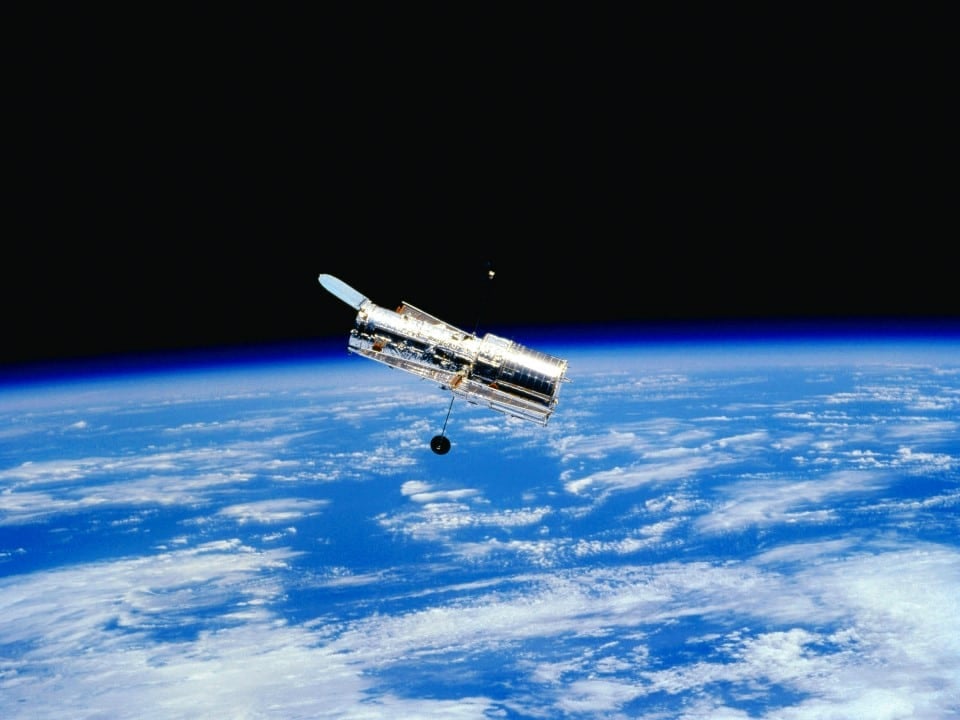
Space equipment recorded a highly relevant astronomical event by documenting the breakup of a newly discovered celestial body. High-precision lenses in orbit captured the exact moment the main structure gave way to thermal and gravitational pressures. The phenomenon occurred shortly after the object reached its perihelion, the point of greatest proximity to the central star of our system. Instead of a solid, cohesive core, the images revealed the presence of at least four distinct fragments traveling together, shrouded in a dense cloud of cosmic dust and gas.
Photographic captures were taken in a specific observation window, taking place between the eighth and eighteenth of November. Durante During this period, the trajectory of the celestial body already placed it on the route away from the hottest zone in the stellar system. The rapid identification of this structural anomaly mobilized research teams to repurpose measuring instruments and focus on the evolution of the debris cloud.
Detailed observation of this process offers unprecedented data on the physical fragility of these frozen travelers. The initial suspicion that the celestial body was intact was quickly discarded as soon as the first raw data was processed by terrestrial control centers.
– The expansion of volatile material creates a secondary tail visible in processed images.
– Larger blocks maintain almost parallel trajectories temporarily.
– The speed of separation between individual parts is monitored daily by astrophysics teams.
Rupture dynamics and analysis of captured images
Visual records indicate that the disintegration process began approximately eight days before the first targeted photographic captures in space. The extreme proximity to the system’s heat source generated unbearable thermal stress for the object’s porous structure. The abrupt increase in temperature caused the violent sublimation of internal gases, creating deep fissures that culminated in the separation of the main core into smaller pieces.
The resulting cloud of debris formed a glowing halo around the fragmented pieces. Essa gaseous expansion makes direct visualization of smaller rocks difficult, but provides essential information about the celestial body’s rate of mass loss. Radiation pressure acts directly on these loose particles, pushing the lighter material and forming the characteristic tail that extends thousands of kilometers into the vacuum.
The decision to use the space observatory in low Earth orbit was made urgently, replacing the original planning that involved other lower resolution equipment. The sharpness of the images made it possible to clearly distinguish the four largest components, ruling out the hypothesis of a simple emission of gas jets that could simulate a false visual division. The physical separation of the blocks demonstrates the complete structural failure of the original core.
Chemical composition and origin in the vast spherical structure
Spectroscopic analysis revealed a peculiar chemical signature, characterized by an exceptionally low amount of carbon. Essa deficiency in carbonic elements suggests that the object formed in a specific and isolated region during the early days of planetary evolution. The absence of certain complex organic molecules differentiates this body from other comets previously observed in the same orbital path.
The orbital trajectory confirms its origin in the far reaches of space, more precisely in the vast and distant spherical structure of icy bodies that surrounds our stellar neighborhood, known as Nuvem of Oort. Objects from this region spend billions of years in a state of deep freeze, preserving the exact chemical conditions of the nebula that gave rise to the rocky planets and gas giants.
When these bodies are gravitationally perturbed and begin their fall toward the center of the system, they bring with them pure samples of the primordial material. The structural break facilitates access to these inner layers, allowing spectrometers to analyze compounds that have been protected from cosmic radiation since the formation of the star system.
Continuous monitoring and acting gravitational forces
Observatories installed on the Earth’s surface also recorded anomalous fluctuations in the object’s brightness weeks before visual confirmation in space. Esses luminosity peaks are classic indicators of rupture events, where fresh, highly reflective material is suddenly exposed to intense solar radiation.
The tidal force exerted by extreme gravity acts as a catalyst in the destruction process, stretching and compressing the fragile structure to its physical limit. The combination of accelerated rotation, caused by asymmetric gas emission, and internal melting creates a scenario where structural cohesion becomes mathematically impossible to maintain due to the weak forces of mutual attraction between the rocks and the ice.
Networks of ground-based telescopes work together with satellites to map the dispersion of debris. The difference in perspective between the instruments on the ground and in space allows for the exact triangulation of the position of each fragment. The delay in the dissipation of the dust cloud indicates that the secondary fragmentation process continues to occur, with the larger blocks breaking into even smaller pieces.
Mathematical modeling of the fragments’ orbit requires daily adjustments. The loss of mass alters the gravitational influence that Sol exerts on the pieces, subtly modifying the trajectory of each one independently. Continuous tracking ensures that no data on orbital dynamics is lost during the most active phase of the decay.
Planetary studies and the mechanics of celestial bodies
The detailed study of the fragmentation of early celestial bodies serves as a direct window into the past of the space environment. The materials exposed during the break are untouched relics that retain the exact composition of the original matter. Measuring the evaporation rate and mechanical resistance of these blocks helps refine theoretical models about the formation of planetesimals and the agglomeration of cosmic dust in protoplanetary disks.
Documenting destructive events in real time eliminates sole reliance on computer simulations. The empirical data collected serves to calibrate forecasting algorithms, allowing astronomers to anticipate the behavior of future icy visitors approaching the habitable zone. Understanding fluid dynamics and solid mechanics in microgravity environments is significantly advanced by direct visual recording of nucleus separation.
Space observation and tracking technologies
The ability to quickly redirect a space telescope’s mirrors and sensors demonstrates the agility of contemporary astronomical operations. Coordination between ground tracking stations and scientific satellites ensures uninterrupted coverage of short-lived transient events. Fusing optical data with infrared and ultraviolet measurements creates a three-dimensional profile of the debris cloud, revealing not only the physical position of the fragments, but also the exact temperature and molecular composition of the expanding gases. Processing this information requires supercomputers capable of filtering out the background noise of deep space, isolating only the photons emitted or reflected by the disintegrating target. The precision achieved in these measurements allows us to calculate the exact mass of each remaining piece and predict its orbital trajectory with minimal margins of error. The development of new image processing algorithms has been fundamental to extracting the maximum amount of information from captured pixels, transforming blurred points of light into detailed physical models of the celestial body’s internal structure.
Next steps in astronomical investigation
Observation campaigns will continue as long as the debris remains visible and reflects sufficient light to optical sensors. Prolonged data collection will make it possible to determine whether the fragments will survive the trip back to the edges of the system or whether they will completely evaporate in the vacuum of space. Tracking the remaining dust cloud will provide the last pieces of information about the core’s original density before its total destruction.



