
Lenovo officially launches new generation of Legion Y700 gaming tablet with 9,000 mAh battery and 165 Hz screen

The Asian technology manufacturer expanded its portfolio of high-performance mobile devices with the global announcement of a new device focused on digital entertainment. The launch aims to meet a growing demand for compact devices that can run heavy applications with the same efficiency as traditional desktop computers.
The portable device market now has a robust alternative for those looking for mobility without giving up advanced technical specifications. The engineering behind the new product prioritized the integration of cutting-edge components to ensure fluidity in tasks that require high graphics processing power and intensive multitasking.

The arrival of this model intensifies the competition in the electronics segment aimed at the enthusiast public, establishing new standards of speed and autonomy. Companies in the sector have invested heavily in research and development to miniaturize powerful hardware, and this launch directly reflects this industrial trend of technological convergence.
Internal architecture and advanced processing
The device’s operating core is controlled by the Qualcomm Snapdragon 8 Elite Gen 5 platform, a recently launched component that promises to redefine the limits of mobile computing. Este processor was developed with an optimized lithography that reduces power consumption while delivering higher mathematical calculation rates than previous generations.
To keep up with the speed of the main chipset, the manufacturer made different RAM memory configurations available in the LPDDR5T standard. Consumers can opt for versions that start at 12 GB, go up to 16 GB and cap out at 24 GB, an amount of volatile memory rarely seen in devices of this compact form factor.
Internal storage also received special attention from the engineering team, adopting UFS 4.1 Pro technology to ensure fast data reading and writing. Space options reach up to 1 TB, allowing the installation of dozens of large applications without compromising the operational system’s responsiveness.
The combination of these three fundamental elements creates an environment conducive to executing simultaneous tasks and instantly loading complex virtual scenarios. Testes Preliminary laboratory tests indicate that the architecture can sustain maximum performance for prolonged periods without experiencing sudden drops in thermal performance.
Panel specifications and visual fluidity
The equipment’s main interaction interface is an 8.8-inch IPS LCD panel, specifically designed to maximize the user’s visual immersion. The screen has a native resolution of 3040 x 1904 pixels, which results in a high pixel density, capable of reproducing sharp texts and images with a high level of detail. The big technical difference of this generation, however, is the implementation of a refresh rate of 165 Hz. Esta specification ensures that frame transitions occur extremely smoothly, eliminating visual trails in fast-moving scenes and providing a competitive advantage in applications that require immediate reflexes on the part of the operator.
In addition to the high refresh frequency, the display has a touch sampling of 480 Hz, reducing the latency between the user’s physical command and the on-screen response to almost imperceptible levels. The maximum brightness of the panel was calibrated to reach 800 nits, making it easier to view content even under direct sunlight in outdoor environments. Support for a 12-bit color depth ensures the reproduction of a wider and more accurate spectrum of tones, while compatibility with stylus pens expands the device’s possibilities of use beyond entertainment, also reaching design and digital illustration professionals who require precision.
Thermal management and energy autonomy
Heat dissipation is one of the biggest obstacles in building compact high-power devices, and the solution found involved implementing a massive vapor chamber. With a total area of 17,353 square millimeters, this cooling system acts passively to distribute the temperature generated by the processor evenly throughout the internal structure of the chassis.
Efficient thermal control is essential to preserve the battery life, which in this version has been expanded to a total capacity of 9,000 mAh. Este volume of energy storage represents a significant leap compared to previous models, ensuring that the equipment remains away from sockets for long days of continuous use at maximum brightness.
When recharging is necessary, the system supports a power input of up to 68 W through its physical connection ports. Esta fast charging technology allows the power cell to recover a considerable percentage of its total charge in a matter of minutes, optimizing the user’s time and keeping the device always ready for daily operation.
Physical connectivity and software features
The external structure of the device houses two USB-C ports strategically positioned to facilitate ergonomics when used in landscape orientation. Esta dual configuration allows the user to plug the power cord into one of the inputs while using the other to plug in high-fidelity headphones or external control peripherals, eliminating the need for multiple adapters.
In the logical aspect, the device leaves the factory running the Android 16 operating system, modified with a proprietary interface that focuses on organizing and optimizing resources. The software includes native artificial intelligence tools that monitor application behavior, while the photography suite features a 50 MP rear lens and an 8 MP front lens, perfectly suited for document scanning and high definition video calls.
Visual identity and ergonomic construction
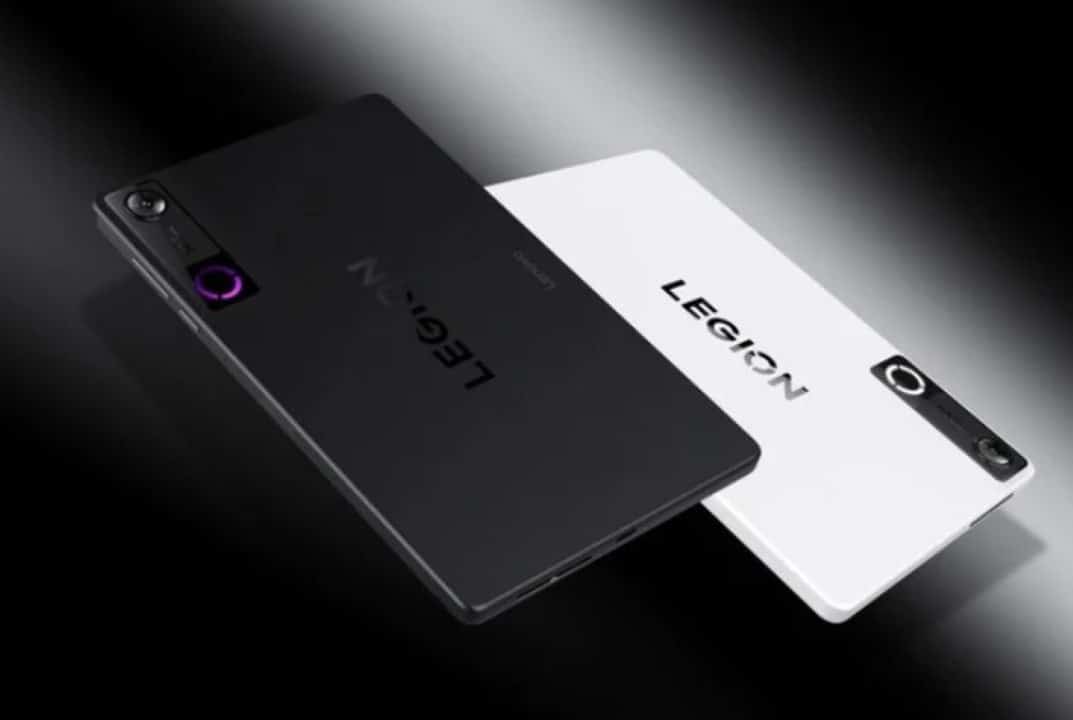
The industrial design of the equipment maintains a sober approach that characterizes the brand’s product line, but introduces subtle elements that reveal its true vocation for high computational performance. The straight sides and chassis built with highly durable materials provide a firm and comfortable grip, essential for preventing hand fatigue during extended periods of continuous use. The rear of the chassis has received a notable aesthetic update with the inclusion of a redesigned camera module, which now houses an RGB lighting system that is fully customizable via the control panel. Este light ring, molded in the shape of the product family’s logo, not only serves as an aesthetic adornment, but also acts as a practical visual status indicator, alerting the user to pending notifications, critical battery level or the activation of maximum performance modes. The inclusion of dual haptic vibration motors inside the housing complements the hardware’s sensory experience, emitting precise physical responses that vary in intensity depending on the actions performed on the operating system interface.
Suggested values and commercial availability
The equipment distribution schedule is scheduled to begin for the Asian market, with the first units hitting shelves at the end of March. The entry-level configuration, equipped with 12 GB of RAM and 256 GB of storage, was announced with a suggested value of 4,299 yuan, the equivalent of around three thousand and two hundred reais in direct conversion without taxes.
The top-of-the-line version, which delivers maximum specifications with 24 GB of RAM and 1 TB of internal space, will be sold for 6,399 yuan. The manufacturer has not yet released the official calendar for expanding sales in Western territories, but the brand’s logistical history suggests that the global launch should occur gradually over the next semester.
Strategic positioning in the electronics sector
The introduction of this equipment reinforces the manufacturer’s strategy of dominating the niche of small tablets aimed at high performance. By combining an extreme specification screen with the fastest processor available on the current mobile market, the company serves a demanding audience that seeks the portability of a smartphone combined with the raw processing capacity of a state-of-the-art desktop console.



