
NASA’s lunar mission confronts climate activism: science versus precautionary principle

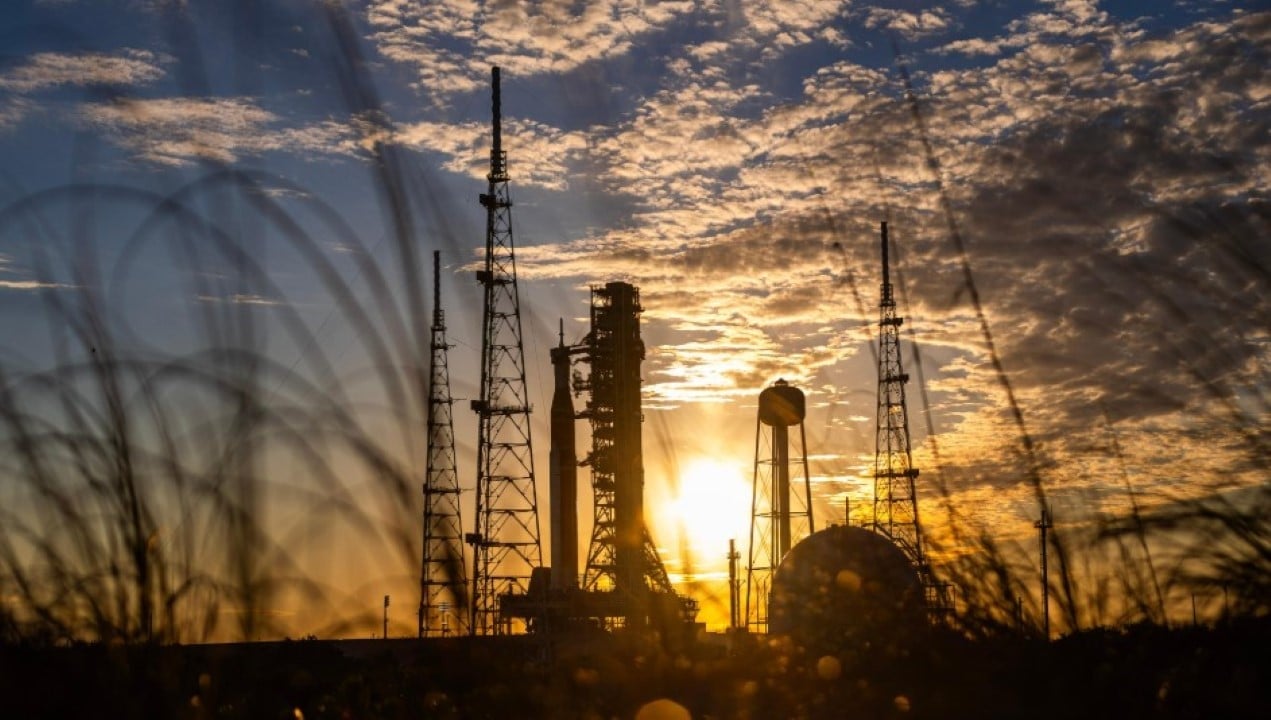
NASA’s future mission to Lua, scheduled for April next year, emerges as a turning point not only in the history of manned space exploration, but also in the intricate debate over the guidelines of contemporary climate activism. With the revitalization of its space program, the US agency and a vast network of partners from the public and private sectors are making decisions guided by robust scientific evidence, to the detriment of speculation and unfounded fears. The Este path represents a clear distinction in relation to the “precautionary principle”, a doctrine that has been consolidated in the Organização and Nações Unidas climate conferences since the beginning of the 1990s. The commitment to scientific audacity reflects a mentality of progress that defies the constraints of excessive caution, encouraging innovation and advancement.
The “precautionary principle”, as often interpreted by climate activists, proposes that if an activity is perceived as potentially harmful to human health or the environment, preventive measures should be implemented even in the absence of definitive scientific proof of the causal relationship between the activity and the alleged harm. In essence, the premise is to eliminate any trace of risk, which, in extreme scenarios, could lead to the paralysis of significant human activities, fueling hysteria and misinformation. Esta approach is presented as antithetical to the spirit of innovation and progress that drives great undertakings.
Imagine the American trajectory if the precautionary principle had dominated political decisions at crucial moments in history. Alan Shepard’s famous command, “Why don’t you solve your little problem and light this candle?”, uttered before his spaceflight in 1961, was unlikely to have been met with enthusiasm by mission control. Da Likewise, the visionary march of President John F. It is possible to argue that even the very existence of a free América would have been compromised, if George Washington had not dared to cross the river Delaware in 1776, in a risky venture against the Hessians in Trenton.
The daring mission Artemis II
Four astronauts, three Americans and one Canadian, make up the crew of the Artemis II mission. Eles are about to travel to a distance Terra never reached by humans, offering them an unprecedented view of the hidden side of Lua. The journey will culminate in a landing on Oceano Pacífico, close to the coast of Califórnia, after a ten-day mission.
Participating in a manned space flight, like the next mission, requires an extraordinary amount of courage. Desde the moment of launch in Cabo Canaveral until the return to Oceano Pacífico, the inherent risks can never be completely eradicated. Contudo, modern engineering and science allow these risks to be rigorously minimized.
Science, rigorous testing and climate models
Like the Apollo program that preceded it, Artemis is based on exhaustive testing and precise scientific observations. Esta approach contrasts markedly with the mere modeling exercises that have become a dominant facet of what is often categorized as “climate science” in certain debates. The primacy of empirical data and controlled experimentation is non-negotiable in space exploration.
The methodology employed by NASA seeks constant validation through concrete evidence, reflecting an unwavering commitment to objectivity. Cada phase of the program is subjected to detailed analysis, where theory is constantly confronted by practical reality, minimizing margins of error. Isso guarantees the safety and success of missions, based on a deep and verifiable understanding of the phenomena involved.
The scientific rigor applied in the Artemis program exemplifies the importance of a research process that is not content with projections, but demands confirmation. Este paradigm is fundamental to any technological and exploratory advancement, where human life and significant resources are at stake. Space exploration, by its nature, does not allow for shortcuts or unsupported assumptions.
The question about activism and modeling
Times, however, are constantly evolving, and public and scientific perception about various topics also changes. In May 2025, an energy-focused symposium, organized by Heritage Foundation, brought together scientists and economists for an in-depth examination of the various assumptions underpinning climate models. Durante the event, many of these assumptions, which led to costly environmental regulations, were severely questioned.
Previously NASA engineers, now members of the The Right Climate Stuff group, have expressed sharp criticism of what they describe as a “garbage in, garbage out” approach to climate modeling. Segundo them, such models are often designed to generate results that align with predetermined political agendas, rather than reflecting purely scientific data. The documentary “Climate Porn” details this attack on scientific methodology and the corrective initiatives that are underway to rebalance the debate.
New perspectives on the causes of climate change
Independent, privately funded organizations such as Centro of Pesquisa Ambiental and Ciências of Terra (CERES) have played a crucial role in providing valuable platforms. Essas platforms allow advocates of a more realistic and multifaceted view of climate to critically analyze the true factors driving the warming and cooling trends of the planet Terra. The work of these entities contrasts with more one-dimensional narratives.
During the Heritage Foundation symposium, CERES scientists highlighted the undeniable influence of solar activity on Earth’s climate. Esse is a factor that, they say, the UN’s Painel Intergovernamental over Mudanças Climáticas (IPCC) has systematically neglected in its reports. The omission of relevant data compromises the completeness of climate analysis, preventing a complete understanding of natural processes.
In a recent and relevant study, the CERES team presents significant conclusions. The “total solar irradiance” estimates, which were omitted by the UN in its analyses, strongly indicate that most of the global warming observed since the 19th century may have a natural origin. Este finding suggests the need for a review of prevailing assumptions in the field of climate science, considering a broader range of influences.
Adaptation and the future of humanity
The planet’s climate is constantly changing, and these transformations can, in fact, pose significant challenges for humanity. Esta reality becomes even more pressing if the planet eventually enters a new cooling phase. Society’s ability to adapt to these changes is crucial for survival and long-term global well-being.
Humanity, however, will be in a considerably stronger and more resilient position to adapt and adjust to these climate changes if it is richer, more prosperous and industrialized. Economic and technological development provides the tools and resources necessary to mitigate impacts and seize opportunities. A revitalized space program, like Artemis, is an essential and intrinsic part of this equation of progress and resilience.



