
Radio telescopes in Chile spot an unprecedented amount of methanol in the interstellar comet 3I/ATLAS

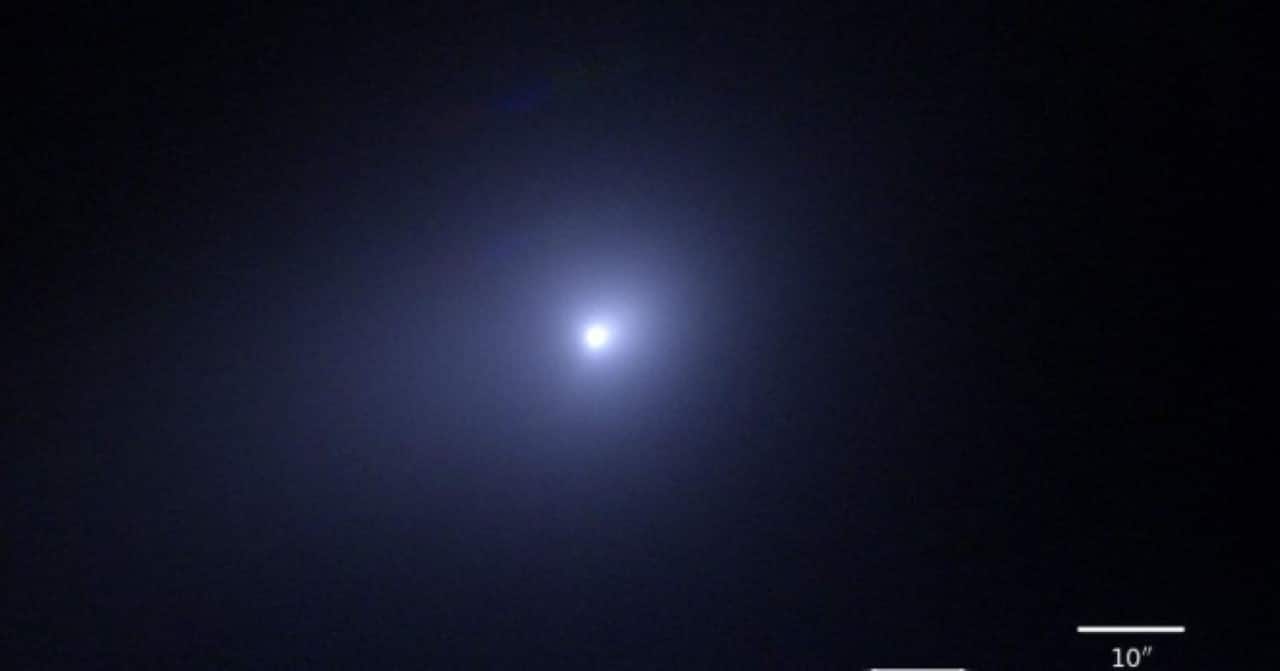
The detection of chemical compounds on celestial bodies originating outside our solar system has seen significant progress with the identification of extreme concentrations of methanol in comet 3I/ATLAS. Continuous monitoring of this cosmic visitor has delivered unprecedented data on its internal composition, revealing a molecular structure that differs drastically from the patterns observed in local comets. The information was captured by high-precision radio astronomy equipment installed in the desert of Atacama, in Chile, paving the way for understanding the astrophysical conditions present in other planetary systems.
Detailed mapping of the object was carried out by astrophysics experts and documented in high-impact scientific journals. The massive presence of complex organic molecules in the comet’s nucleus and transient atmosphere supports the hypothesis that primordial star-forming materials have varied distributions throughout the galaxy. Spectral analysis allowed the isolation of methanol and hydrogen cyanide signatures with extreme clarity, providing an unprecedented chemical portrait of an extrasolar body.
The passage of interstellar bodies through the neighborhood of Terra is a rare astronomical event that activates observatories globally. Tracking required the mobilization of ground and space infrastructure to ensure data collection before the object returns to deep space. The restricted observation window required the coordinated use of different electromagnetic wave capture technologies to record as much information as possible about the comet’s composition and behavior.
Millimeter technology applied in the Chilean desert
Capturing the comet’s chemical data required the use of a complex of parabolic antennas specifically designed to observe the cold and distant universe. Este equipment captures specific wavelengths that remain invisible to traditional optical telescopes, making it the ideal tool for tracking gases at low temperatures and cosmic dust. The extreme sensitivity of the South American complex, combined with the altitude and low humidity of the desert, was the determining factor in isolating the exact frequencies emitted by the organic molecules present in the celestial body.
The detection process occurs when solar radiation heats the object’s icy core, causing the immediate sublimation of internal materials. Este physical phenomenon creates a diffuse cloud of gas and dust around the nucleus, a structure known technically as a coma. Radio astronomy instruments analyze the light that passes through this formation, identifying the unique fingerprints left by each chemical element that makes up the structure of the extrasolar visitor during its closest approach to Sol.
Identification of the trajectory of the celestial body
The 3I/ATLAS recognition marked the third occasion in the history of astronomy in which an object of confirmed extrasolar origin crossed the orbit of local planets. The extreme speed and angle of approach in relation to the orbital plane of Sol worked as the primary indicators of its external origin, ruling out the possibility of belonging to Nuvem of Oort. Confirmation of its interstellar nature immediately triggered a global monitoring task force.
Before this specific detection, astronomical records only accounted for the passage of asteroid 1I/’Oumuamua and comet 2I/Borisov. The scarcity of study targets in this category increases the importance of each new discovery, transforming these bodies into natural laboratories for modern astrophysics. Space agencies have directed the focus of large orbital telescopes to map the object’s light curve and rotation with millimeter precision.
The orbital dynamics demonstrated a hyperbolic trajectory, indicating sufficient kinetic energy to escape the gravitational pull of the Sol. Diferente of periodic comets that return after long cycles of decades or millennia, this visitor will cross the solar system on a one-way trip. Esta feature imposes a strict time limit for carrying out all spectrographic and photometric measurements planned by researchers.
Deviations in the proportion of organic elements
Intensive monitoring carried out during the closest approach to Sol revealed anomalous chemical behavior when compared to native celestial bodies. The research team focused efforts on measuring the ratio between methanol and hydrogen cyanide ejected into the space vacuum. The crossing of spectral data showed a massive statistical deviation in relation to the average known by current astronomical science.
The readings indicated that the amount of methanol exceeded that of hydrogen cyanide by 124 times during the first cycle of detailed observation. In a second measurement carried out days later, the recorded proportion reached the mark of 79 times. Estes numbers establish a stark contrast with locally formed comets, which have an average ratio of just 26 times more methanol than cyanide.
The volume of methyl alcohol detected places the object in a restricted category of bodies super-rich in organic compounds. In the history of observations, only one previous comet had higher rates, with a rate 280 times higher. The prominent position in the chemical abundance ranking reinforces the theory that the environment in which this body was formed had unique thermodynamic characteristics.
The variation in the emission rate between observation days provides indications of the heterogeneity of the cometary nucleus. The irregular outgassing suggests that pockets of methanol ice are distributed asymmetrically beneath the object’s crust. As the comet rotates and exposes different faces to solar radiation, the composition of the coma undergoes changes that are directly measurable by terrestrial radio telescopes.
Sublimation dynamics and spatial ejection
The equipment’s spatial resolution capacity made it possible to map not only the presence of molecules, but the exact mechanics of how they are ejected into space. The hydrogen cyanide showed a direct release pattern from the solid core, a process identical to that documented on celestial bodies orbiting Sol. Methanol, in turn, demonstrated secondary and considerably more complex sublimation dynamics, requiring new models of interpretation.
The data shows that alcohol is released from microscopic ice clusters that break away from the nucleus and begin to float in the transient atmosphere. Essas particles function as independent emitting sources as they travel through the coma, sublimating rapidly upon receiving direct solar radiation. The detailed recording of this extended sublimation phenomenon in an extrasolar object represents an observational milestone for modeling the structural density of planetesimals.
Chemical signatures of stellar nurseries
The chemical signature of a comet acts as a fossil record of the physical and chemical conditions of the protoplanetary disk where its original formation occurred. The extreme abundance of methanol in 3I/ATLAS indicates that its origin system had a freezing zone with concentrations of carbon monoxide and hydrogen radically different from those that formed Terra and the neighboring planets. Observações complementary tests carried out by state-of-the-art infrared telescopes had already detected high levels of carbon dioxide in the initial phase of approach to the celestial body. Bringing all this data together builds an astrophysical model where the interstellar object formed in an extremely cold environment, possibly at the outer edges of a massive star system. Neste remote location, ultraviolet radiation facilitated the hydrogenation of carbon monoxide, transforming it into methanol ice in an accelerated manner. The intact preservation of these molecules during their billion-year journey through interstellar space demonstrates the resilience of organic structures in the deep cosmic vacuum. Este scenario provides primary study material on prebiotic chemistry on a galactic scale, helping scientists decipher how the building blocks of life are distributed throughout the universe before integrating into new planetary systems.
Expansion of global tracking networks
The ongoing cataloging of the properties of the cosmic visitor establishes new parameters for the search and analysis of future interstellar bodies. Improving radio astronomy techniques allow the scientific community to extract massive volumes of data in increasingly shorter time windows. The crossing of spectrometric information from different observatories consolidates a robust database on the raw material available in deep space.
To maximize data collection from fast and ephemeral objects, space agencies work on integrating automated warning systems. Quando a scanning telescope detects an orbital anomaly, precise coordinates are instantly distributed to high-resolution observatories around the planet. Esta synchronized network ensures that no interstellar passage event goes unnoticed by research teams dedicated to monitoring the sky.
Development of new optical instruments
The development of new radio and optical instruments promises to exponentially increase the detection rate of extrasolar bodies over the next decade. The ability to analyze the chemical composition of pieces of other solar systems without the need to send space probes represents a significant technological leap for modern science. Observational astronomy continues to refine its methods for decoding the chemical complexity of the universe and mapping the distribution of essential elements across the entire expanse of Via Láctea.



