
Survey reveals BYD Dolphin at the top of automotive preference with 16.7% of purchase intentions


The national automotive market records a significant change in drivers’ purchasing intentions, with the rise of battery-powered vehicles. A recent market survey identified that the BYD Dolphin hatch took first place among the most desired cars in the country, accumulating 16.7% of preferences. The survey interviewed 500 participants from different regions and income groups, highlighting a transition in consumers’ priorities in relation to urban mobility.
The model of Chinese origin managed to surpass vehicles that historically dominated the public’s imagination, such as traditional sedans from Japanese brands. Esse movement reflects greater acceptance of new propulsion technologies and a search for alternatives that offer lower operating costs in the long term.
The data collected shows the main demands of current buyers:
- Advanced connectivity systems: 65.6% of responses
- Reduction in pollutant emissions: 59.6% of mentions
- Efficiency and fuel economy: 51.8% of preferences
- Enhanced security packages: 48.8% of choices
The presence of two cars from the same Asian manufacturer in the top ten consolidates the brand’s expansion strategy across the country. The result demonstrates that electrification is no longer a niche but has become a viable and desired option for a significant portion of the population.
Technological and environmental factors drive new choices
Consultation participants demonstrated that onboard technology is the main decision factor when planning a vehicle change. Native smartphone integration, over-the-air software updates and high-resolution screens have transformed car dashboards into extensions of mobile devices.
The environmental issue also gained unprecedented weight in the responses, with almost six in ten respondents pointing to the absence of polluting gas emissions as a fundamental criterion. Essa change in mentality follows the global debate on sustainability and the need to reduce dependence on fossil fuels in large urban centers.
In addition to ecology, daily financial mathematics directly influences drivers. The savings generated by replacing gasoline or ethanol with electric energy attract consumers who use the car intensively, offsetting the higher initial purchase price through reduced fueling and periodic maintenance costs.
Technical performance and configurations of the Asian hatch
The entry-level version of the vehicle, called GS, is equipped with a set of 44.9 kWh batteries, responsible for powering an electric motor capable of generating 95 horsepower. Essa mechanical architecture provides a certified autonomy of 291 kilometers, a distance considered sufficient for the urban routine of the vast majority of users.
For drivers who demand greater performance, the Plus variant delivers higher numbers, jumping to 204 horsepower and an immediate torque of 31.6 kgfm. The battery pack is also expanded to 60.5 kWh, which extends the maximum range to 330 kilometers under ideal driving conditions.
The power gain in the top-of-the-line version allows the car to accelerate from zero to 100 km/h in less than eight seconds, ensuring agility when overtaking and restarting. The power management system supports rapid recharging, enabling the battery to recover 30% to 80% of its capacity in just 30 minutes when connected to high-power stations.
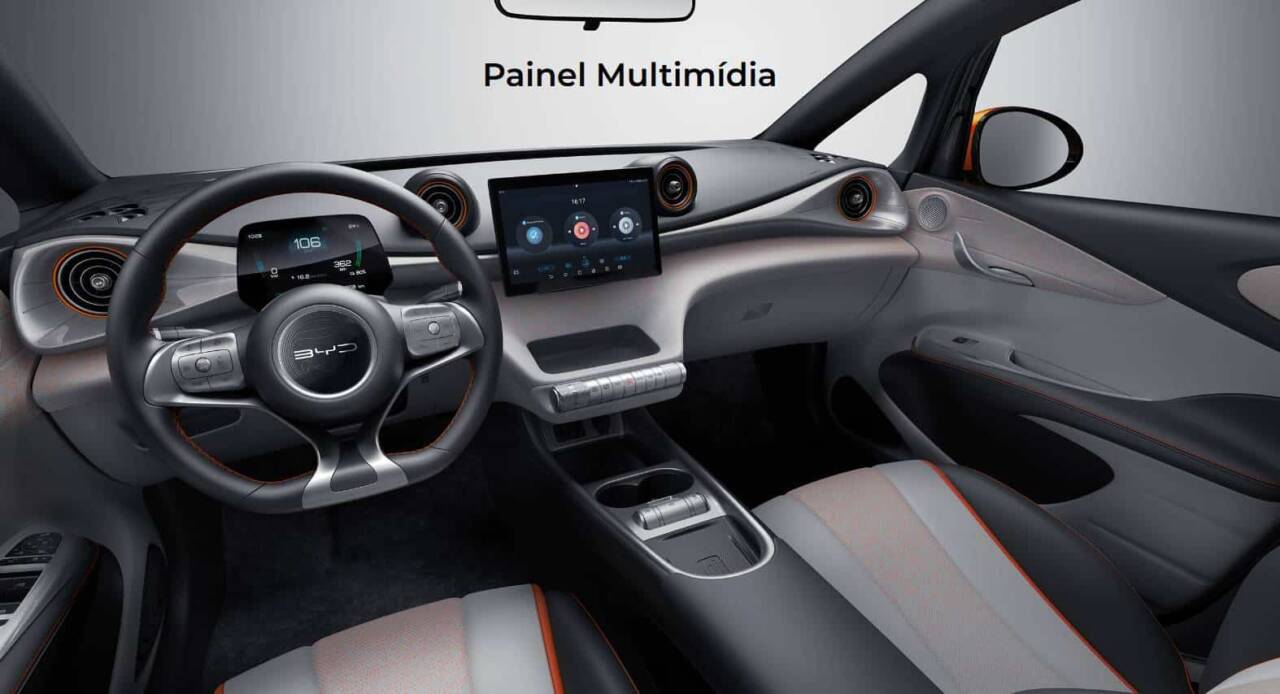
The list of standard equipment includes a multimedia center with a 12.8-inch rotating screen, six airbags and a complete driver assistance package. Integrated systems offer automatic emergency braking, adaptive cruise control, blind-spot monitoring and forward collision warning.
Values practiced and positioning in the automotive market
The commercial strategy adopted for the model involves aggressive price positioning to attract the public accustomed to hatchbacks and compact combustion SUVs. The initial configuration starts at R$ 149,990, a value that puts the car in direct competition with the intermediate and top-of-the-line versions of the best-selling sports utility vehicles in the country. Essa financial parity has been crucial in convincing buyers to transition to electric mobility.
The most powerful and equipped option reaches R$ 184,800, justifying the increase with superior interior finishing, alloy wheels with an exclusive design and greater rolling capacity. Ambas the versions sold have an extended warranty program that covers the battery pack and the main components of the electrical system for an extended period, aiming to mitigate the public’s natural distrust in relation to the durability of new technologies.
Competitor movement and other featured models
The purchase intention ranking revealed that traditional vehicles still maintain a solid base of admirers, although they are losing absolute leadership. The Honda Civic secured second place overall with 14.9% of preferences, supported by its long history of mechanical reliability and excellent resale value. Logo ago, Toyota Corolla accounted for 13% of responses, confirming the strength of the Japanese brand among more conservative consumers who prioritize low maintenance costs and a wide dealer network. The list continues with a three-way tie at 9.3%, involving the Hyundai Creta, the Toyota Hilux pickup truck and the BYD Outros names mentioned include the Hyundai HB20 with 8%, focused on cost-benefit, in addition to technical ties between the Jeep Renegade and the Tesla Model Y, both with 6.8%, and the BMW X6 closing the relationship with 5.5%, representing the luxury segment.
Expansion of charging infrastructure on highways and cities
The increase in purchase intentions for battery-powered models occurs in parallel with the development of the country’s electricity supply network. Estações fast charging devices are being installed on busy highways and in strategic points in urban centers, such as shopping malls, supermarkets and traditional gas stations.
Partnerships signed between automakers, electrical companies and retail chains have accelerated national coverage, reducing drivers’ range anxiety during longer trips. The availability of public and semi-public chargers is a determining factor in the consolidation of this new mobility format.
In addition to the physical infrastructure, government incentive programs and state tax exemption or reduction policies, such as IPVA, make the acquisition and maintenance of these cars more attractive. The exemption from municipal rotation in capitals with heavy traffic also works as an important selling point for concessionaires.
Sales dynamics and local production of the automaker
The volume of registrations registered at the beginning of the year confirms the trend highlighted by market research. The Asian manufacturer took a majority share in electrified vehicle sales, driven not only by the intermediate hatch, but also by the compact Dolphin Mini, which led the category’s records in January.
To sustain this growing demand and avoid import bottlenecks, the company focuses its efforts on adapting its industrial complex located in Camaçari. The manufacturing unit is preparing to expand its assembly lines to begin national production of pure and hybrid flex vehicles, with the aim of nationalizing components and making final prices even more competitive compared to established competition.
Adaptation of the production chain and auto parts sector
The rapid rise of electric vehicles to the top of wish lists forces the entire automotive chain to go through an accelerated adaptation process. Concessionárias who previously focused exclusively on selling traditional mechanical parts, such as oil filters and belts, now invest in technical training for their teams for the safe handling of high voltage systems. Specialized workshops are multiplying in capitals and large cities in the interior, ensuring that owners have adequate support after the end of the factory warranty period.
The auto parts sector is also following this transition, seeking to nationalize the production of specific components for electrified vehicles. The installation of factories dedicated to the assembly of batteries and electric motors in the national territory promises to generate new jobs and reduce dependence on imported inputs. Esse reindustrialization movement focused on clean technologies strengthens the domestic market and creates a favorable ecosystem for other global automakers to accelerate their plans to launch zero-emission models.



