Apple reveals new premium smartphone with 5.5 millimeters and aerospace titanium structure

The North American technology manufacturer announced a major overhaul of its line of high-performance mobile devices. The latest design introduces a redesigned chassis that reaches an unprecedented thickness of 5.5 millimeters, setting a new engineering standard in the telecommunications sector. The drastic reduction in physical dimensions required a complete reorganization of internal components, forcing the development team to create thermodynamic and structural solutions that would support the advanced hardware without compromising the integrity of the device. The development of this new architecture required years of research in materials science, resulting in a product that challenges the limits of miniaturization of electronic components.
Structural engineering and high-strength materials
The construction of the new device is based on the use of aerospace-grade titanium, a material specifically chosen for its superior strength-to-weight ratio. The metal alloy goes through a precision machining process that removes crucial grams from the main structure while ensuring the rigidity necessary to protect internal components against daily twisting and impacts. Engenheiros of the company needed to develop an exclusive manufacturing process to shape the metal to microscopic tolerances, fusing it directly to the internal recycled aluminum chassis, which also contributes to the sustainability goals of the company’s production chain.
To complement the metal structure, the front of the device received a high-density liquid glass treatment.
This material creates a protective barrier that minimizes scratches and disperses the force of direct impacts. The panel’s technical specifications include:
– Resistência improved against falls on uneven and abrasive surfaces.
– Redução significant fingerprint build-up due to advanced oleophobic coating.
– Maior optical clarity for the display’s light emission, ensuring color fidelity.
Cooling and thermal dissipation system
The reduction in the thickness of the device created direct challenges for managing the heat generated by the central processor. To avoid overheating, the manufacturer implemented a thermal dissipation system based on multi-layer graphene sheets, strategically distributed over the main logic board.
In addition to graphene, a miniaturized vapor chamber has been integrated into the internal design. Este component uses the phase transition of liquids in a closed circuit to move heat away from critical areas, keeping the device’s performance stable even during computationally demanding tasks, such as high-resolution video processing.
Local processing and artificial intelligence
The smartphone’s operating core features a neural engine dedicated to executing machine learning algorithms directly on the hardware. Esta architecture allows the device to process complex commands without the need for constant connection to cloud servers, speeding up the operating system’s response.
The local execution of tasks guarantees greater privacy for user data, since sensitive information does not travel through external networks. The optimized processor can perform trillions of operations per second, accelerating voice recognition, simultaneous translation and analysis of images captured by the lenses.
Software developers now have access to an application programming interface that exploits the full potential of this neural engine. The deep integration between hardware and software results in an immediate response to physical and virtual commands, increasing the energy efficiency of the set.
High-frequency, energy-efficient display
The OLED technology display has been recalibrated to offer an adaptive refresh rate that reaches up to 120 Hz. Visual fluidity is dynamically adjusted according to the content displayed on the screen, optimizing the scrolling experience in browsers and high definition video playback.


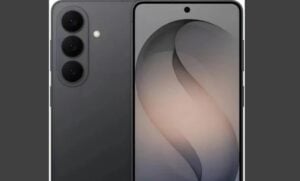
When the user views static images or texts, the system automatically reduces the update frequency to minimum levels. Esta intelligent screen management is essential to preserve battery power in a device with such small dimensions, balancing performance and autonomy.
The screen’s light emission also underwent adjustments to reduce the visual impact in low-light environments. Sensores of ambient light constantly monitor external conditions to calibrate the panel’s brightness and color temperature, adapting instantly to changes in lighting.
The integration of liquid glass with the OLED panel eliminates internal air layers, reducing unwanted reflections. The result is crisp viewing in direct sunlight, maintaining fidelity of reproduced colors and ensuring content remains readable in any outdoor setting.
Camera module redesign
The image capture system has undergone a significant aesthetic and functional change, with the lenses now aligned perfectly to the rear of the chassis. Eliminating the traditional protrusion of the camera module required the adoption of ultra-light optical sensors and a periscopic light refraction system, which directs the image horizontally within the device’s body, saving vertical space.
The new lens arrangement not only improves the smartphone’s ergonomics when resting on flat surfaces, but also protects the glass components against direct friction. The image processing software works together with the neural engine to correct optical distortions in real time, ensuring photographs with high detail accuracy, instant autofocus and adequate white balance even in adverse lighting conditions.
Advanced connectivity and ultra-wideband
The device’s communications infrastructure has been updated to support the latest wireless networking standards and high-speed data transmission. The inclusion of an ultra-wideband chip allows precise spatial recognition of other compatible devices nearby, making it easier to transfer large files and locate lost items with a margin of error of just a few centimeters. The antenna system has been redesigned and integrated directly into the titanium edges, bypassing natural metallic interference through grooves filled with insulating polymers. Esta configuration ensures signal stability in dense urban areas and optimizes power consumption when searching for cell phone networks, maintaining uninterrupted connection even when moving quickly. The network hardware is also prepared to operate at higher frequencies, ensuring compatibility with future expansions of the global telecommunications infrastructure.
Internal architecture and logic board
The main logic board was divided into smaller sections and interconnected by high-density flexible cables. Esta internal modularity allowed engineers to make use of every available cubic millimeter, making room to accommodate battery cells molded into irregular shapes and ensuring precise assembly of the new passive cooling components.
Energy management and durability
The chemical composition of the battery was changed to increase energy density without expanding the physical volume of the cell. The power management system monitors the user’s charging patterns to prevent premature wear of the lithium-ions, extending component life over years of continuous use.
Magnetic induction charging received thinner and more efficient copper coils, reducing energy loss in the form of heat. The titanium structure acts as a passive heatsink during this process, keeping the device temperature within safe operating limits and ensuring rapid recharging occurs without thermal interruptions.
Hardware security and encryption
Data protection on the new device is managed by a security enclave physically isolated from the main processor. Este dedicated chip stores encryption keys and biometric data, ensuring that third-party applications do not have direct access to sensitive information. The hardware architecture was designed to resist physical attacks and data extraction attempts via communication ports, establishing a robust defense perimeter.
The operating system validates the integrity of all hardware components during the boot process. If the system detects non-genuine parts or unauthorized modifications to the logic board, access to critical security features such as contactless payments and biometric authentication is immediately suspended to protect the end user from fraud and privacy violations.
Veja Tambem em News (EN)

Research reveals that parents are unaware of how their children use artificial intelligence

Samsung releases new system update with new features for Galaxy Watch 4 users

Digital retail reduces the value of the Galaxy S25 5G smartphone with bank bonuses and device exchange
Amazon’s wireless CarPlay adapter has a 50% discount and high approval ratings from drivers

Zach Cregger’s new Resident Evil ignores games and focuses on an unprecedented story with new characters

Rumor suggests that Nintendo is preparing a special edition of the Switch 2 with a remake of Ocarina of Time
Apple accelerates production of the iPhone 17e and develops new Air model with dual camera system

Epic Games platform releases twelve high-budget games at no permanent cost for PC users

PlayStation 5 Pro price drop accelerates digital retail sales and eliminates global stocks

New Galaxy Watch 9 firmware appears on server and confirms progress in software development

Apple’s commemorative project tests cell phone with 1.1 millimeter edge and curved screen for 2027