
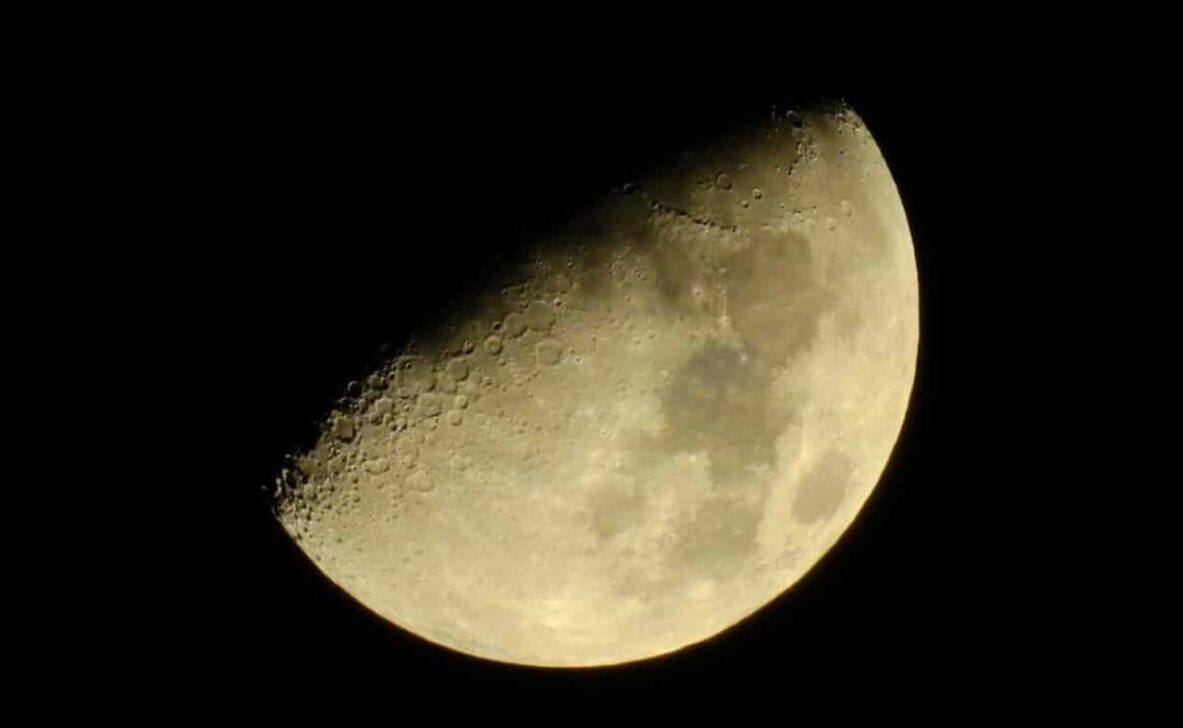
A celestial conjunction marks the beginning of the new season with the approach between Lua in its initial phase and the planet Vênus in the western sky. The event occurs shortly after sunset on March 20, requiring quick attention from observers due to the low elevation of the stars on the horizon. Naked-eye viewing is facilitated by the intense brightness of the planet, considered the brightest object in the night sky after the natural satellite of Terra.
The phenomenon coincides exactly with the astronomical milestone that defines the approximate equality between the length of day and night across the globe. The position of the celestial bodies in the celestial vault creates a visual spectacle where both exhibit similar shapes, with illuminated portions facing the direction in which Sol has just set. The light reflected by the Earth’s surface also plays a fundamental role in illuminating the dark side of the satellite.
Celestial mechanics experts point out that the observation window is short, lasting just a few hours before both bodies disappear below the horizon. Monitoring requires clear skies and the absence of physical obstacles in the west direction, making meteorological planning an essential step for anyone who wants to record the moment.
Orbital mechanics and visual alignment
The apparent proximity between the two celestial bodies is an optical illusion caused by the observer’s perspective on the Earth’s surface. In reality, millions of kilometers separate the lunar orbit from the Venusian trajectory around Sol. The temporary alignment occurs in the constellation of Peixes, with the stars separated by an angular distance of a few degrees, which allows them to be placed in the same field of view of basic optical instruments.
A technical detail that enriches observation is the phenomenon known as cinereal light, responsible for illuminating the part of the lunar disk that is not directly reached by solar rays. The Terra works like a giant mirror, reflecting light from the Sol back into space and reaching the satellite’s surface. Isso allows the full outline of the lunar sphere to be perceived even when only a thin sickle is officially illuminated.
Venus, in turn, presents phases very similar to those of the Moon when observed through magnifying lenses. Devido to its inner orbital position relative to Terra, the planet currently displays a crescent shape that perfectly mirrors the appearance of its neighboring satellite, creating a rare and aesthetically notable geometric parallelism in the evening twilight.
Weather conditions and regional visibility
The weather forecast has a direct influence on the success of the observation, with significant variations depending on the geographic location. Regiões under the influence of high atmospheric pressure systems present the best conditions, guaranteeing clear skies and stable air. In Japanese territory, for example, areas such as the west of the country and the Tokai region have a meteorological advantage, with low cloud cover immediately after sunset.
On the other hand, areas affected by shear lines or moist fronts face difficulties in visualizing the celestial pair. The region of Kanto and the southwestern Japanese islands deal with a higher probability of cloud cover. On the Pacífico side of Tohoku and the east of
Recommended equipment for observers
The visual magnitude of Vênus ensures that the event is fully accessible without the need for any optical instrument. The planet appears as a fixed, white point of light, often called the evening star, standing out even before the sky completely darkens. The young Lua, although fainter, offers a delicate contrast that can be easily captured by human vision in suitable locations.
The use of astronomical binoculars considerably expands the experience, revealing textures and nuances invisible to the naked eye. Moderate magnification equipment, such as a model with ten magnifications per fifty millimeters of aperture, is sufficient to show the earthy light in the dark part of the lunar disk with great clarity. Além Furthermore, the angular separation between the two stars fits perfectly within the field of view of these portable instruments.
Small and medium-sized telescopes add an extra layer of scientific detail to the observing session. With the use of suitable eyepieces, it becomes possible to resolve the Vênus disk and confirm its growing phase, proving the heliocentric theory through direct observation. The crater on the illuminated edge of Lua also gains three-dimensional relief due to the grazing angle of sunlight.
Event photography requires equipment with manual exposure and focus control. Câmeras fixed on tripods, using medium focal length lenses, they are able to record the intense brightness of the planet without overexposing the satellite’s delicate cinematic light. The use of timers prevents camera shake at the time of shooting, ensuring clear images of the alignment at twilight.
Astronomical dynamics and transition of seasons
The event gains additional relevance as it occurs exactly on March 20th, the date that marks the crossing of the Sol through the celestial equator heading north. Esse apparent movement of the solar system’s central star determines the beginning of spring in the northern hemisphere and autumn in the southern hemisphere. Durante this specific twenty-four hour period, the tilt axis of The celestial mechanics behind this seasonal milestone do not alter the physical position of Lua or
The synchrony between the initial lunar phase and the seasonal landmark demonstrates the complexity of natural astronomical clocks. Enquanto the transition of seasons is dictated by terrestrial translation, the position of the satellite and the neighboring planet depends on their own independent orbital speeds. The simultaneous occurrence of these factors is a periodic event that attracts the attention of scientific institutions and enthusiasts. The systematic observation of such alignments over the centuries has allowed humanity to refine orbital mechanics calculations, establishing precise calendars and understanding the three-dimensional geometry of the inner solar system with mathematical accuracy.
Atmospheric factors that influence sharpness
The quality of observation of celestial bodies close to the horizon is severely affected by a series of atmospheric and environmental phenomena that require prior planning. Light from Lua and Vênus needs to pass through a much thicker layer of the Earth’s atmosphere when the stars are low in the sky, compared to objects located at the zenith. Essa extra thickness of air acts as a natural filter, dispersing shorter wavelengths and often giving a reddish or orange color to the stars, in addition to reducing their apparent brightness through the process of atmospheric extinction. Somado In addition, air turbulence, caused by temperature differences in atmospheric layers, causes images to flicker, an effect known as astronomical seeing, which can degrade the resolution of fine details seen by telescopes. Light pollution generated by urban centers acts as an additional obstacle, creating a veil of artificial light that obscures the natural contrast of the night sky and hides the delicate cinematic light of the lunar disk. To mitigate these effects, experienced observers seek high-altitude locations, where the air is thinner and more stable, far from illuminated highways and industrial complexes, ensuring that ocular adaptation to darkness is maintained and that the transparency of the sky allows full visualization of the conjunction before the stars definitively dive below the western horizon.
Time window for follow-up
Punctuality is the most critical factor for successful viewing of this astronomical event. In reference locations, Sol sets just before 6pm, starting civil twilight where Vênus is already noticeable. Lua follows the same downward trajectory, disappearing over the horizon at around nineteen hours and eighteen minutes, followed by the neighboring planet at twenty hours and two minutes, which gives observers a useful window of just over an hour to carry out their recordings and contemplations.
Optimal geographic positioning
The choice of observation location determines the quality of the visual experience during twilight. Áreas West-facing coastlines, open plains or tops of tall buildings offer the clear line of sight needed to track the stars until the last few minutes before sunset. The presence of mountains, dense forests, or skyscrapers in the direction of sunset can drastically shorten the visible time of the conjunction.
The adaptation of the eyes to the decrease in natural light is a physiological process that takes around twenty minutes to complete. Evitar the use of electronic device screens or white light flashlights while waiting in the chosen location ensures that the pupils remain dilated. Essa Simple practice maximizes the retina’s ability to capture photons reflected by the lunar surface and the dense Venusian atmosphere, providing a clear and memorable view of the celestial alignment.