
Earth reaches solar balance point on the vernal equinox of March 20 in the Northern Hemisphere

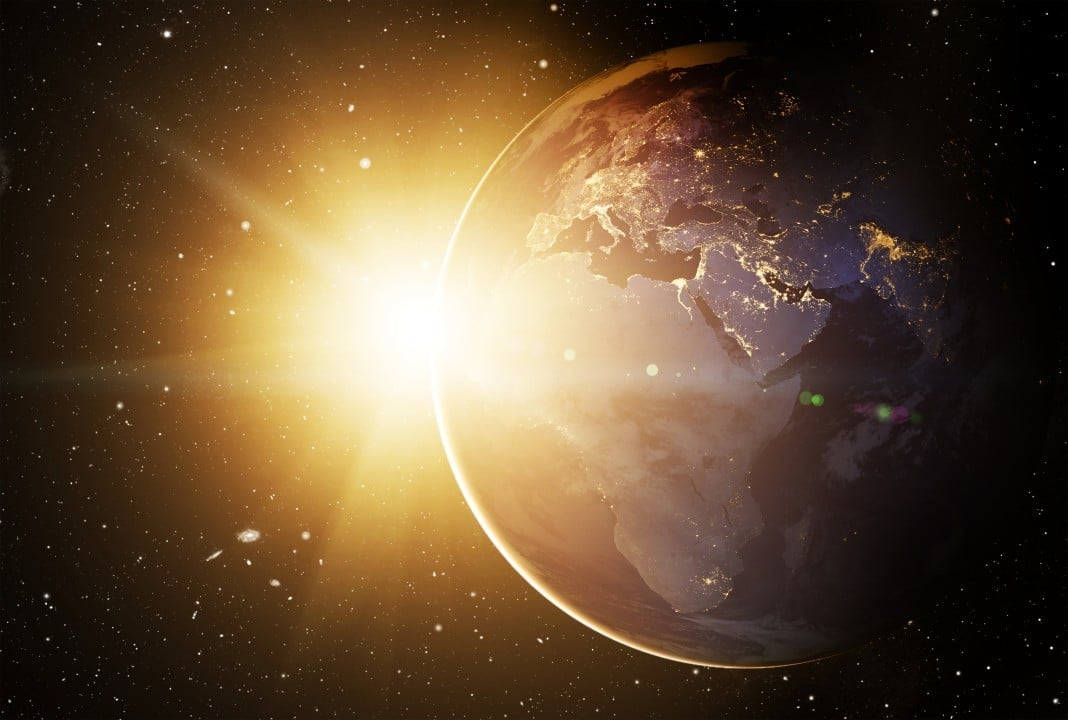
The vernal equinox occurred this Thursday, March 20, at 14:46 UTC (11:46 Brasília time), marking the official start of astronomical spring at Hemisfério Norte. Nesse moment, the Sol crosses the celestial equator from south to north, resulting in practically equal illumination for the two hemispheres of the Terra. The phenomenon causes an almost identical duration between day and night in most parts of the planet, with minimal variations depending on latitude. From that date onwards, the days begin to gradually lengthen in Hemisfério Norte, while in Hemisfério Sul astronomical autumn begins.
The term equinox derives from Latin and means “equal nights”, reflecting the main characteristic of the event. The tilt of the Earth’s axis, which causes the seasons, is neutral with respect to Sol during the equinox, pointing neither near nor far from the star. Isso allows both poles to be illuminated simultaneously and allows Sol to rise almost exactly east and set almost exactly west at any location.
Difference Between Astronomical and Meteorological Stations
Astronomical seasons are based on the position of Terra in its orbit around Sol and events such as equinoxes and solstices. Já meteorological stations follow fixed annual climate cycles, divided into three-month periods to facilitate analysis of temperature and atmospheric patterns.
Meteorologists consider spring to begin on March 1 at Hemisfério Norte, regardless of the exact date of the equinox. Essa division helps in comparing historical data and predicting climate trends over the years.
The meteorological approach prioritizes consistency in long-term records, while the astronomical one reflects the precise orbital motion of the planet.
Characteristics of the vernal equinox on the planet
At the equator, Sol is positioned directly overhead at midday, creating minimal shadows on vertical objects. Days and nights last approximately 12 hours each, with differences of just a few minutes caused by atmospheric refraction and the shape of the horizon.
After the equinox, the daily duration of sunlight progressively increases by Hemisfério Norte until reaching a maximum at the June solstice. No Hemisfério Sul, the reverse process occurs, with days shortening until the December solstice.
The event takes place annually between March 19th and 21st, varying depending on the calendar and Earth’s orbit. In 2026, the vernal equinox falls exactly on March 20.
Tradições e observações culturais associadas
Several cultures have celebrated the vernal equinox for centuries, associating it with renewal and natural balance. No Japão, the day is a national holiday, with rituals that honor ancestors and the arrival of the flowering season.
At archaeological sites such as Chichen Itzá, at México, the phenomenon generates impressive visual effects, such as shadows that simulate a serpent descending the pyramid of El Castillo during the equinox. Observadores gather to witness the spectacle aligned with the Mayan calendar.
These traditions highlight the historical relevance of the event to different societies around the world.
Implications for the annual sunlight cycle
The vernal equinox represents the transition point at which the amount of sunlight received by both hemispheres becomes equal. Antes of him, Hemisfério Sul received more light during the austral summer, while Norte experienced winter.
From March 20, this distribution gradually changes, favoring Hemisfério Norte with longer days and greater warming. The process continues until the June solstice, when the longest day of the year occurs at Norte.
This orbital dynamics explains seasonal temperature variations and vegetation behavior at mid- and high-latitudes.
Observation of the phenomenon at different latitudes
In polar regions, the equinox marks the period when the Sol begins to circle above the horizon at the Polo Norte, ending the polar night. No Polo Sul, the opposite begins, with Sol disappearing for months.
Locations close to the equator experience little variation in day length throughout the year, maintaining stable lighting conditions. Atmospheric refraction causes Sol to be visible for a few extra minutes even when geometrically below the horizon.
These combined effects ensure that the balance is not perfect at all points on the Terra, but approximate in most locations.
The vernal equinox reinforces scientific understanding of the movement of Terra and its influence on the seasons. The event occurs predictably and serves as a reference for astronomical calendars around the world.



