

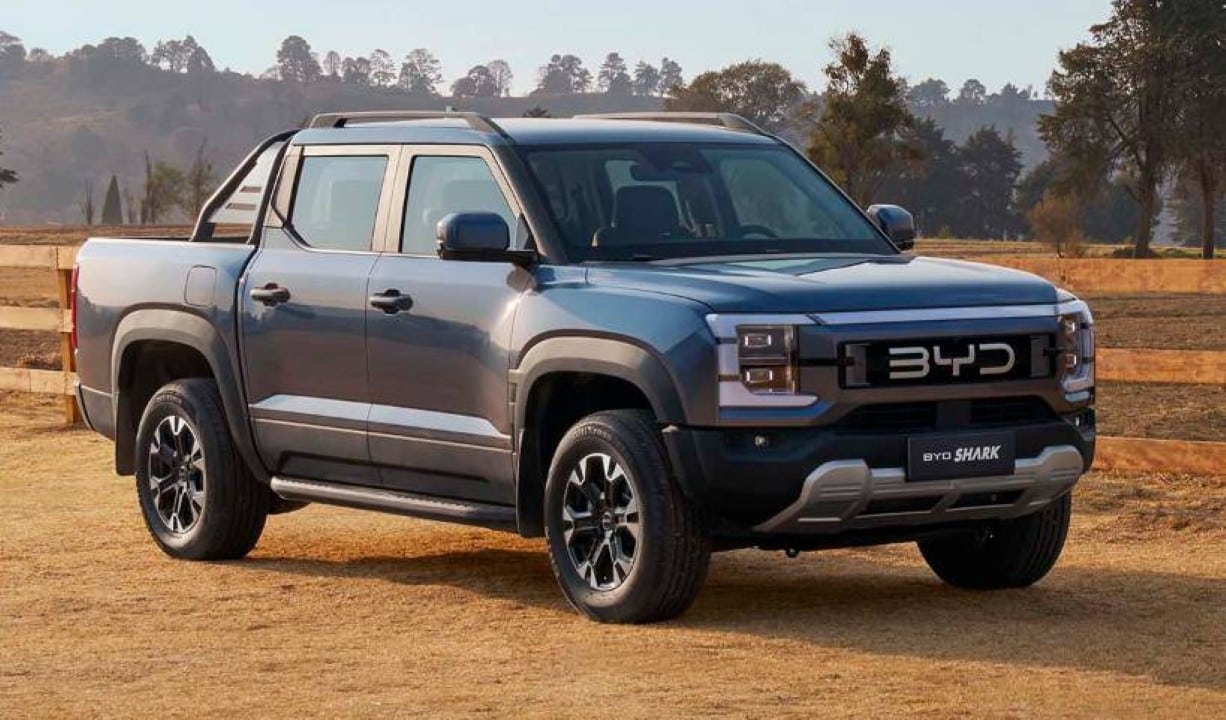
The executive director of Ford recently carried out a detailed technical evaluation of the BYD Shark hybrid pickup, a model recently launched by the Chinese automaker in several América Latina markets. The analysis focused on the performance, electrified architecture and severe use capacity of the Asian vehicle compared to the North American brand’s traditional products. The executive recognized the technological advances and construction quality of the competing model, but highlighted significant structural limitations.
During field evaluations and stress tests, the American automaker’s engineering team observed that the Chinese pickup truck features a high-level connectivity and energy efficiency package. The plug-in hybrid system offers silent driving and quick acceleration responses, characteristics inherent to electric motors. The integration of high-resolution screens and autonomous driving assistants was also highlighted as a strong competitive differentiator for urban and highway use.
Despite praise for electronic innovation, the central conclusion of the evaluation pointed out that the BYD Shark still does not meet the standards of robustness, durability and load capacity required by consumers of heavy commercial vehicles. The direct comparison was established with the Ford Ranger and Toyota Hilux, models that dominate the medium pickup truck segment and are recognized for their resistance in rough terrain, mining operations and intense agribusiness routines.
Technical assessment and positioning of the automaker
The structural analysis indicated that the chassis and suspension setup of the Chinese model prioritize occupant comfort on paved roads. Essa calibration results in a smooth ride, resembling the dynamic behavior of luxury SUVs, which attracts a customer profile focused on lifestyle and recreational use.
On the other hand, subjecting the vehicle to extreme torsion tests and maximum load transport on dirt roads revealed premature wear and reduced directional stability. Traditional pickup truck engineering requires a specific torsional rigidity that can withstand the constant impact of holes and ditches without transferring stress to the body, an aspect where veteran brands still maintain a wide advantage.
Features of the Chinese pickup on the market
The BYD Shark arrives on the market equipped with the DMO platform, developed specifically for off-road vehicles with hybrid propulsion. The mechanical package combines a combustion engine with electric motors, delivering a combined power that exceeds four hundred horsepower, an impressive number for the midsize category.
The model also introduces external power supply technology, allowing the pickup’s battery to power electrical equipment, work tools or even camping trips. Essa functionality represents a change in the concept of the vehicle’s utility, transforming it into a mobile energy generator.
The sales strategy focuses on fuel economy and emissions reduction, promising a combined range of more than eight hundred kilometers. The aggressive visual appeal and LED light signature aim to capture consumers who value modern aesthetics combined with environmental responsibility.
Historical dominance of traditional models
The Ford Ranger has decades of development focused strictly on work capacity and mechanical resistance. The current generation of the model has high-displacement turbodiesel engine options, designed to deliver maximum torque at low speeds, a fundamental feature for towing agricultural implements and overcoming obstacles.
The Toyota Hilux shares this same conservative engineering philosophy focused on long-term reliability. The unbreakable reputation built by these models is based on mechanical simplicity at critical points and the use of oversized components in the suspension and transmission system.
The Latin American market requires mid-size pickup trucks to routinely transport around one ton in the bed and tow up to three and a half tons. Compliance with these metrics without compromising the safety or integrity of the chassis is the main purchasing criterion for fleet owners and rural producers.
The capillarity of the dealership network and the immediate availability of spare parts within the countries form a solid commercial barrier. Marcas traditional companies have authorized workshops in remote regions, ensuring that the work vehicle does not remain idle for long periods awaiting maintenance.
Commercial dynamics and electrification in América Latina
The automotive landscape in América Latina presents geographic and infrastructure challenges that shape the adoption of new technologies. The vast territorial extension and the scarcity of fast charging networks for purely electric vehicles outside large urban centers make plug-in hybrid powertrains the most viable transition solution. Asian automakers identified this gap and accelerated the introduction of models that combine the safety of a fuel tank with the efficiency of a plug-in rechargeable battery, changing the pace of portfolio renewal in the region.
To quickly gain market share, new entrants apply an aggressive pricing policy, positioning highly equipped hybrid pickups in the same price range as intermediate diesel versions from traditional brands. Esse movement forces a readjustment of established commercial strategies, requiring veteran automakers to justify the premium charged for their vehicles by proving durability, resale value and lower total cost of ownership over years of severe use.
Engineering architecture and chassis development
The fundamental difference in performance in extreme conditions lies in the engineering approach applied to chassis construction and powertrain integration. Traditional Picapes utilize a ladder-spar body-on-frame architecture, forged from ultra-high-strength steel, specifically designed to flex in a controlled manner under stress and absorb severe impacts without permanent deformation. BYD, in turn, adopts battery integration technology directly into the chassis structure to increase rigidity and protect the energy cells, an innovative solution that reduces the center of gravity and improves dynamics on asphalt. However, the additional weight of the battery pack and the need to protect the floor against impacts from rocks and ditches limit the suspension travel and alter the vehicle’s behavior in situations of extreme diagonal torsion. Ford engineering accumulates millions of miles of testing in deserts and mountains to refine the geometry of the leaf-sprung or multi-link rear suspension, ensuring the body supports maximum weight without compromising angle of attack or four-wheel drive, a level of fine mechanical calibration that requires years of iterations and empirical data from real customers operating in overload conditions.
Competitive prices and sales strategies
The introduction of Chinese hybrid pickup trucks changes consumers’ perception of value by offering semi-autonomous technology packages and premium finishes for prices lower than those practiced by the market. Essa tariff pressure forces established brands to review their profit margins and accelerate the introduction of new standard equipment in their entry-level and intermediate versions.
Adaptation of global production lines
Traditional manufacturers have already started the process of updating their platforms to receive electrified engines in the next product cycles. The Ford develops hybrid versions of the Ranger to meet global emissions standards without sacrificing segment-defining payload and towing capacity.
The development of solid-state batteries and more compact electric motors will dictate the pace of commercial vehicle transformation. Automotive engineering seeks the exact balance between the energy efficiency required by environmental legislation and the non-negotiable mechanical robustness demanded by field and industrial workers.



