
Ford analyzes BYD Shark in Latin America and defends Ranger’s robustness against the new hybrid pickup truck

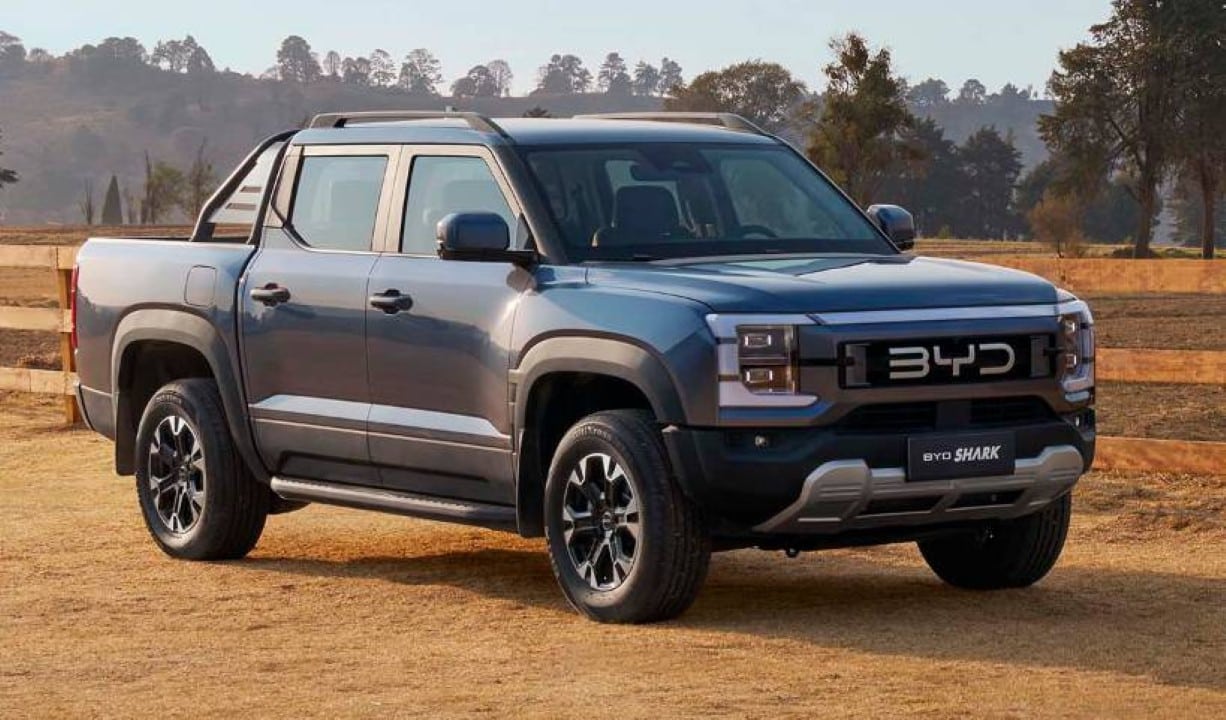
The North American automaker Ford recently carried out a detailed technical evaluation of the new BYD Shark plug-in hybrid pickup truck, a model that has just entered the competitive América Latina market. The traditional manufacturer’s move aims to understand the technological innovations introduced by the Chinese brand in the medium commercial vehicle segment. Durante the analyses, company executives recognized advances in connectivity and energy efficiency, but highlighted that the Asian model still does not reach the structural resistance standards established by category leaders. The dispute for the consumer now involves the exact balance between the modernity of electrified engines and the ability to withstand heavy work in the field.
Arrival of the new Asian competitor in the utility sector
The launch of the BYD Shark represents a milestone in the energy transition of light cargo vehicles sold in the Latin American region. The truck uses a plug-in hybrid system that combines a combustion engine with electric drives, delivering a combined power that surpasses many traditional diesel-powered options available at dealerships.
This mechanical configuration allows the vehicle to travel dozens of kilometers in electric mode alone, drastically reducing fuel consumption on urban journeys. The model also introduces a level of interior finishing and digital screens that resemble luxury sports utility vehicles, attracting a new buyer profile that seeks sophistication combined with the pickup truck format.
Technical assessment on durability and load capacity
Despite the innovations presented in the powertrain and cabin, the Ford engineering pointed out reservations regarding the application of the Chinese pickup truck in extremely demanding scenarios. The North American manufacturer, which produces the Ranger, focuses intensely on the torsional rigidity of the chassis and the suspension calibrated to support more than a ton in the bucket daily without material fatigue.
Work vehicles have to deal with unpaved roads, mud, dust, and towing heavy farm implements over many years of continuous use. The evaluation indicated that the architecture of the new competitor prioritizes driving comfort and fast acceleration, leaving the vocation for severe load transport and extreme off-road use in the background.
Consolidated models in the market have undergone decades of structural improvements based on feedback from rural producers and fleet owners. Building a reputation for mechanical reliability requires rigorous testing in adverse climatic and geographic conditions, something that traditional brands master with a wide margin of accumulated technical knowledge.
Changing consumer preferences and adoption of new technologies
The mid-size pickup truck market is undergoing a profound transformation driven by the search for greater energy efficiency and reduced pollutant emissions. Consumidores who previously valued only the raw torque of the diesel engine are now showing interest in quiet cabins and advanced driving assistance systems.
The introduction of high-capacity batteries in pickup trucks enables not only clean propulsion, but also the power supply for power tools and outdoor equipment. Essa functionality transforms the vehicle into a true mobile power station, adding value for professionals who work in remote locations without adequate electrical infrastructure.
Modern consumer evaluation criteria now include several factors new to the category:
– Autonomia in pure electric mode for daily commuting in large cities.
– Capacidade external power supply for construction and camping tools.
– Nível noise in the cabin during long road trips with the family.
– Atualizações remote software for continuous improvement of the multimedia and engine management system.
Agribusiness demands and the dominance of consolidated brands
The agricultural sector continues to be the main sales driver for medium-sized pickup trucks in the América Latina, dictating the rules on what a vehicle needs to offer to be commercially successful. Produtores rural people use these pickup trucks as indispensable work tools, requiring engines that can support diesel of varying quality and suspensions that do not give way under maximum weight. The Toyota Hilux and Ford Ranger built their market leadership by delivering exactly this mechanical predictability, ensuring that the vehicle will not leave the owner stranded in the middle of a harvest. Robustness is not just a marketing concept, but an operational necessity that directly affects the profitability of businesses in the field and the logistics of transporting inputs.
To compete in this specific segment, any new manufacturer needs to prove that its electronic components and batteries are protected against water infiltration, stone impacts and constant vibrations. The traditional consumer’s natural distrust of new propulsion technologies requires a massive effort in practical demonstration and extended warranties. Veteran brands use their decades-long history of operating on farms as a shield against the invasion of electrified models, arguing that true innovation must always be linked to the unquestionable durability of the final product, regardless of the technology that moves the wheels.
Electrification strategies of traditional automotive manufacturers
The pressure exerted by the arrival of Asian hybrid pickup trucks is forcing Western and Japanese automakers to bring forward their own electrification plans, seeking a transition that does not compromise the essence of their most profitable products. The engineering teams at these companies work on developing modular platforms capable of accommodating heavy batteries without sacrificing ground clearance or approach and departure angles, which are essential for off-road performance. The major technical dilemma lies in the additional weight of the hybrid system, which can subtract from the payload capacity of the bucket, a regulatory and practical limit that cannot be ignored by commercial users. Além Furthermore, the integration of electric motors into the rear rigid axles requires creative solutions to maintain suspension articulation on rough terrain. Traditional manufacturers are betting on a gradual approach, initially introducing mild hybrid systems to reduce consumption, while exhaustively testing plug-in configurations in controlled environments. The central objective is to launch electrified trucks that maintain the seal of approval from the most conservative customers, ensuring that the adoption of the new energy matrix occurs safely and without loss of operational functionality in daily activities.
Race for innovation and maintenance of commercial leadership
The current scenario presents a fierce competition where the speed of innovation of incoming brands collides with the manufacturing experience of sales leaders. The ability to quickly adapt local assembly lines to produce vehicles with a lower carbon footprint will define which companies maintain their market share over the next decade. Brand loyalty, historically strong in the pickup truck segment, will be tested as the financial benefits of fuel savings become more apparent to fleet owners.
Coexistence of different energy matrices in concessionaires
Automotive sector experts point out that the Latin American market will experience a long period of coexistence between strictly combustion pickup trucks and hybrid models. Geographic diversity and disparity in electrical charging infrastructure among countries in the region prevent an abrupt transition to completely clean technologies in the short term.
Manufacturers are expected to maintain broad portfolios, offering diesel versions for the interior and electrified options for urban customers and corporate fleets focused on sustainability. The technological dispute will raise the general quality standard of vehicles, directly benefiting the end consumer with safer, more efficient and comfortable products for all applications.



