
Global automotive market accelerates transition with new luxury, high-range SUVs
The global automotive industry is undergoing a profound transformation with the introduction of a new fleet of electrified sport utility vehicles. Montadoras from different parts of the world invest heavily in platforms dedicated to zero-emission propulsion, aiming to meet growing consumer demand for efficiency and technological innovation. Esse movement ranges from compact models designed for everyday urban life to extremely luxurious vehicles with sporting performance.
The transition to electric motors represents a significant milestone in modern vehicle engineering, requiring adaptations in aerodynamics, weight distribution and energy management. Companies redesign their traditional portfolios to include options that offer not only environmental sustainability but also a superior driving experience. The integration of high-capacity batteries and ultra-fast charging systems has become the new standard required for both the premium and affordable segments.
Consumers now have access to a diverse catalog that promises to eliminate range anxiety, a factor that previously limited the mass adoption of electric cars. The new generation of utility vehicles combines bold design, advanced connectivity and versatile capabilities, serving both families in search of space and off-road adventure enthusiasts. The focus on aerodynamic efficiency and versatility of use marks the definitive evolution of this category in the international market.
Advancing dedicated platforms and global charging infrastructure
The development of unique architectures for electric vehicles allows automakers to maximize internal space and optimize the positioning of battery cells. Essa structural approach significantly improves dynamic stability by lowering the car’s center of gravity. Designers gain greater freedom to create innovative external shapes, moving away from the aesthetic restrictions imposed by traditional combustion engines. Além In addition, the global expansion of the fast charging network acts as a key catalyst for the popularization of these large models. High-power Estações, capable of delivering hundreds of kilowatts in a few minutes, facilitate long-distance travel without prolonged interruptions. Technology from eight-hundred-volt systems begins to migrate to mass-production utilities, drastically reducing wait times at outlets. Esse technological ecosystem is complemented by intelligent navigation software that calculates the most efficient route in real time. The system automatically predicts charging stops based on vehicle consumption and station availability. Consequentemente, the user experience becomes more fluid, consolidating the electric utility as a viable option for different demographic profiles. Continued investment in solid-state battery research also points to a future with even greater energy density and improved safety.
Bentley and McLaren redefine the limits of high motor luxury
The British brand Bentley prepares a historic milestone with the introduction of its first fully electric model, known as the Urban SUV. The vehicle is strategically positioned below the Bentayga in terms of dimensions, measuring approximately five meters in length. The design incorporates elegant lines directly inspired by the acclaimed EXP15 concept, maintaining the automaker’s classic visual identity. The engineering department promises power in the region of a thousand horsepower, a specification that guarantees the fastest acceleration ever recorded in the company’s history. The interior cabin strictly follows the extreme comfort standard seen in the Flying Spur, focused on noble materials and acoustic insulation. The dynamic agility on the asphalt, in turn, refers to the sporting performance of the Continental GT, balancing weight and directional precision.
In the same high-performance territory, McLaren is developing a utility vehicle codenamed P47, adopting a plug-in hybrid configuration to guarantee extreme performance. The mechanical package features a powerful four-liter twin-turbo V8 engine, combined with high-efficiency electric drives. Projetado with four doors and four individual seats, the model enters a highly competitive arena to rival the established names of Ferrari, Aston Martin and Lamborghini. The Woking manufacturer’s strategy involves applying its vast experience in the Fórmula 1 and track supercars to create a family vehicle. Aerodynamic precision and the extensive use of carbon fiber are elements expected to compensate for the additional weight of the hybrid system, while maintaining the brand’s pure driving DNA.
Porsche and Mercedes integrate extreme power and high voltage systems
The Porsche Cayenne Electric appears as a technological reference by offering a massive 113 kWh battery, providing a range that exceeds the 640 kilometer mark. The top-of-the-line Turbo version delivers an impressive 1,140 horsepower and a maximum torque of 1,500 Nm. Esses superlative figures allow acceleration from zero to one hundred kilometers per hour in just 2.5 seconds. Além of sporting performance, the model maintains its practical utility with a towing capacity of up to 3,500 kg.
On the Mercedes-Benz side, the GLC Electric introduces an advanced 800-volt architecture specifically designed to support ultra-fast recharging and minimize waiting time. Maximum range reaches up to 653 kilometers, while driving comfort is guaranteed by the sophisticated air suspension inherited directly from the luxurious Classe S. The exterior design features an illuminated front grille made up of 942 individual pixels, creating a unique visual signature during night driving.
The interior of the Mercedes model is dominated by large high-definition digital screens, which concentrate all of the vehicle’s infotainment functions and controls. The integration of artificial intelligence systems allows the car to learn the driver’s preferences, automatically adjusting the climate and ambient lighting. Esse focus on digital experience reflects current demand for vehicles that function as true high-performance connected mobile devices.
Fiat and Skoda bet on accessible proposals with nostalgic appeal
Fiat finalizes the details for the official presentation of GigaPanda, scheduled for Salão of Paris, bringing a family utility with a robust look inspired by the eighties. The vehicle will be offered in versatile five- or seven-seat configurations, aiming to meet the demands of large families seeking interior space and practicality. The build uses the Smart Car architecture, a modular platform shared with the Citroën C3 and Grande Panda, which helps reduce production costs.



Consumers will have the freedom to choose between pure gasoline propulsion options, a hybrid system and a fully electric variant. The version powered exclusively by batteries offers an estimated range of around 400 kilometers, ideal for urban use and short trips. GigaPanda’s commercial positioning is strictly focused on affordability, aiming to compete aggressively with established rivals like Nissan Qashqai.
The Skoda, in turn, prepares the debut of the Epiq, a compact model that adopts the new Modern Solid design language, characterized by a more adventurous appearance. Construído on the MEB+ platform of the Grupo Volkswagen, the vehicle guarantees excellent use of internal space, including a 475-liter trunk. Electric range can reach up to 430 kilometers, making it a viable option for both daily commuting and weekend trips.
The starting price of the Skoda Epiq is estimated at around 25,000 GBP, placing it as one of the most competitive options in the entry-level electric segment in the Europa. The minimalist interior focuses on durable materials and practical solutions, following the brand’s traditional philosophy of offering smart features. The combination of affordable price, adequate autonomy and functional design represents a crucial step towards the massification of electric mobility among middle-class consumers.
Jeep and Land Rover preserve the adventurous essence on difficult terrain
The second generation of the Jeep Renegade undergoes a complete redesign, introducing for the first time a purely electrical option alongside traditional mechanical assemblies. The exterior design faithfully maintains the iconic seven-slot front grille, accompanied by robust plastics strategically positioned to prevent damage during off-road forays. Engineering focuses on preserving the brand’s legendary 4×4 capability, using independent electric motors on the axles to ensure precise traction on slippery surfaces.
The Land Rover Defender Sport, designed as a more compact version of the traditional Defender, will hit the market exclusively with electric propulsion. Using the EMA platform allows engineers to maximize approach and departure angles, essential characteristics for negotiating severe obstacles in wild environments. Protótipos currently undergoing rigorous testing reveals a square shape and a light bar that spans the entire width of the vehicle, modernizing the classic aesthetic.
Rivian expands international presence with focus on versatility
North American manufacturer Rivian is preparing the introduction of the R2, a mid-size utility vehicle designed to directly rival the Tesla Model Y in the European market. The electric model offers more than 560 kilometers of autonomy and has an advanced all-wheel drive system, equipped with specific driving modes for different off-road conditions. Para stands out in the segment, the vehicle incorporates unique features, such as fully retractable rear windows and a practical flashlight hidden inside the driver’s door.
Volvo consolidates Scandinavian safety and energy efficiency
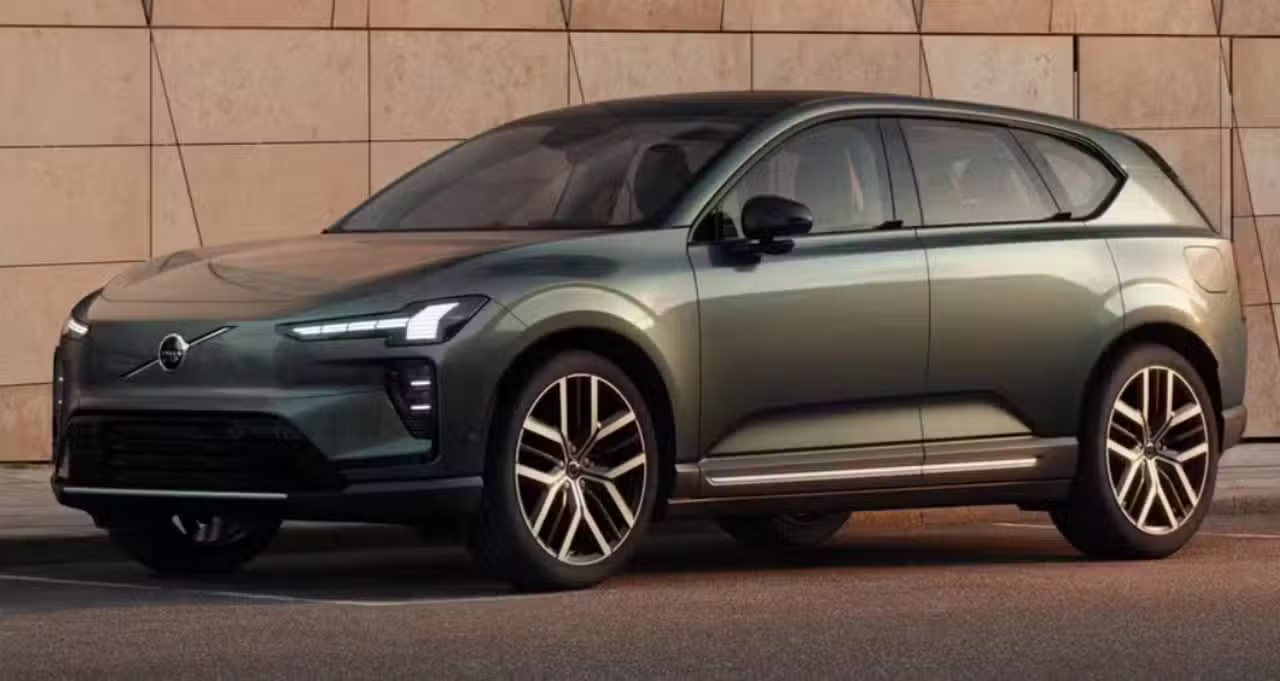
The Volvo EX60 arrives at dealerships as the definitive zero-emissions alternative to the popular XC60, using the new SPA3 architecture developed to optimize energy efficiency. The top-of-the-line model supports an impressive range of up to 500 miles, virtually eliminating any concerns about the distance between charging stations during long trips. The ultra-fast charging system reaches peaks of 370 kW, allowing the addition of 337 kilometers of autonomy in just ten minutes connected to a compatible station.
The Swedish utility’s internal environment follows an open concept, prioritizing natural light, sustainable materials and a clean design free from excessive physical buttons. The cabin’s technology center is powered by an advanced system integrated into the Google, offering native navigation, voice assistance and continuous internet updates. Essa combination of extreme autonomy, cutting-edge active safety and digital connectivity reaffirms the manufacturer’s commitment to leading the transition to a completely carbon-neutral future.
Veja Tambem em News (EN)

Research reveals that parents are unaware of how their children use artificial intelligence

Samsung releases new system update with new features for Galaxy Watch 4 users

Digital retail reduces the value of the Galaxy S25 5G smartphone with bank bonuses and device exchange

Amazon’s wireless CarPlay adapter has a 50% discount and high approval ratings from drivers

Zach Cregger’s new Resident Evil ignores games and focuses on an unprecedented story with new characters

Rumor suggests that Nintendo is preparing a special edition of the Switch 2 with a remake of Ocarina of Time

Apple accelerates production of the iPhone 17e and develops new Air model with dual camera system

Epic Games platform releases twelve high-budget games at no permanent cost for PC users

PlayStation 5 Pro price drop accelerates digital retail sales and eliminates global stocks

New Galaxy Watch 9 firmware appears on server and confirms progress in software development

Apple’s commemorative project tests cell phone with 1.1 millimeter edge and curved screen for 2027
