
Google announces new Pixel 10a smartphone with 5100 mAh battery and seven years of updates

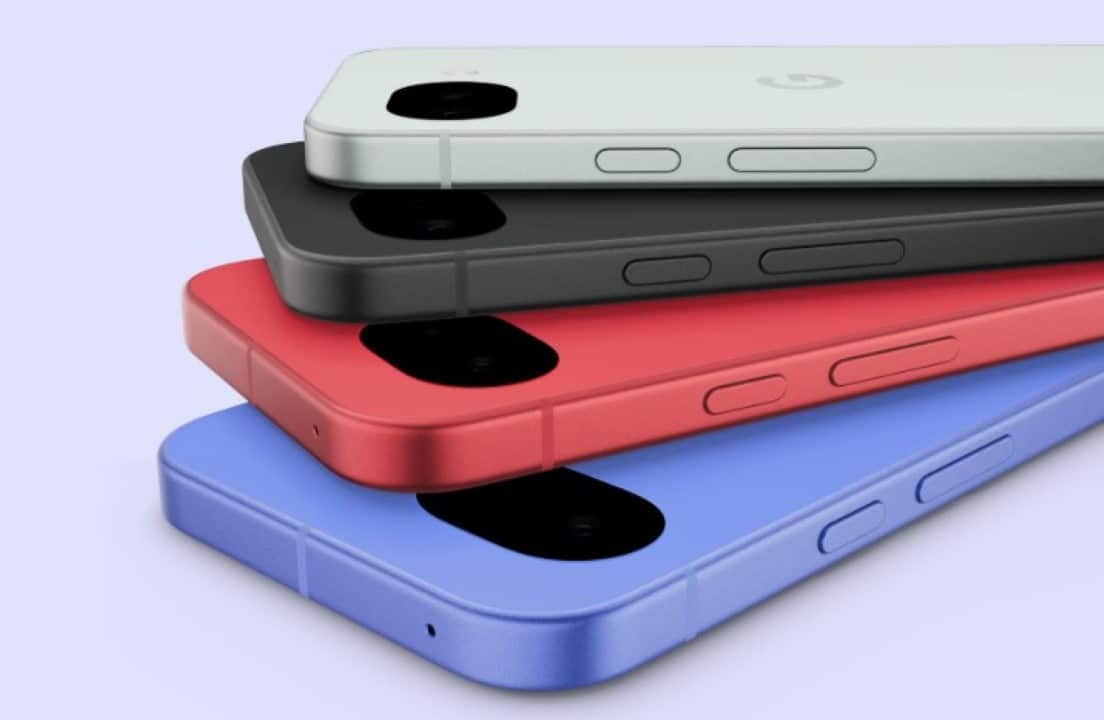
The global mobile device market receives a new option aimed at the intermediate segment with the official arrival of the latest smartphone developed by the search giant. The device seeks to balance advanced technical specifications with a more affordable acquisition cost, focusing on durability and optimized software experience.
Initially available in North American retail since the beginning of March, the device integrates state-of-the-art processing components and promises operational longevity. The commercial strategy aims to attract consumers who want cutting-edge resources without the need to invest the prices charged in the premium category.
Grab your Google Pixel 10a today ✨
Lavender, Obsidian, Berry, and Fog…pick your vibe!🪻🖤🍓💨🔗https://t.co/DDOk3kTiRI pic.twitter.com/xEA716Ie9F
—Google India (@GoogleIndia)March 6, 2026
The equipment brings innovations in its physical structure and energy capacity, in addition to incorporating native artificial intelligence tools. The manufacturer bets on deep integration between hardware and the operating system to ensure fluidity in daily tasks and image capture.
Physical structure and engineering choices for everyday use
The architectural design of the new cell phone prioritizes ergonomics and resistance, presenting exact dimensions of 153.9 millimeters high by 73 millimeters wide, with a thickness of 9 millimeters. The total weight of 183 grams has been distributed symmetrically to avoid fatigue during prolonged periods of handling. The external construction uses a reinforced aluminum frame, providing structural rigidity to the equipment chassis.
One of the main visual differences of this generation is the complete elimination of protrusions on the rear photographic module, resulting in a completely flat surface that guarantees stability when the device is placed on tables or benches. The device has international IP68 certification, attesting to its capacity for temporary submersion in fresh water and total protection against the entry of microdust particles. The front part received an update in its protection against impacts and scratches, using Gorilla Glass 7i tempered glass, which surrounds a panel with visibly reduced edges compared to models from previous years.
The color palette available for retail includes diverse options to suit different user profiles. The official shades are:
– Preto obsidian for a low profile.
– Verde mist with matte finish.
– Vermelho berry for greater visual emphasis.
– Lavanda with soft pastel tones.
Display panel and audio system specifications
The visual interface is controlled by a 6.3-inch Actua pOLED display, which delivers an Full HD+ resolution of 1080 by 2424 pixels. The technology used allows an adaptive refresh rate that automatically varies between 60 Hz and 120 Hz, optimizing energy consumption depending on the content displayed on the screen.
The panel’s brightness reaches peaks of 3,000 nits when playing specific content, maintaining an average of 2,000 nits in direct sunlight, which guarantees impeccable readability in outdoor environments. The multimedia set is complemented by high-fidelity stereo speakers and an ultrasonic fingerprint reader positioned under the front glass.
Processing capacity and thermal management
The processing core is powered by the Tensor G4 chip, developed with an architecture focused on machine learning and artificial intelligence operations. The component works together with 8 GB of RAM, a configuration that ensures agile transitions between multiple applications open simultaneously.
The heat dissipation system has been redesigned to keep internal temperatures at safe levels, even when playing graphics-intensive games or continuously recording high-resolution videos. Internal storage is offered in 128GB and 256GB variants, using fast-read memories.
The connectivity package includes full support for 5G networks, the Wi-Fi 6E standard for very high-speed wireless connections and Bluetooth 6.0. The device also integrates a satellite communication module for issuing distress signals in regions without cell phone coverage.
Energy autonomy and quick recharge protocols
Power supply is guaranteed by a battery cell with a nominal capacity of 5,100 mAh, a considerable volume for the dimensions of the chassis. Testes laboratory tests and daily use simulations indicate that the component provides enough autonomy to exceed the 24-hour mark away from power outlets, considering a mixed use pattern that involves internet browsing, social media consumption, exchanging messages and occasional photo capture. In extreme stress scenarios, such as uninterrupted use of satellite navigation, the power management system acts to extend the charge until the end of the business day.
The electrical supply infrastructure has received significant improvements, now supporting an input power of 30W via USB-C cables, which allows half of the battery’s total capacity to be restored in approximately thirty minutes. Magnetic induction technology for wireless charging is also present, operating at 10W of power. Para critical situations, the software provides an extreme economy mode that disables secondary functions and can extend the basic functioning of the phone for more than one hundred continuous hours.
Photographic performance and visual correction algorithms
The rear optical array is led by a 48-megapixel main sensor equipped with optical image stabilization. Este hardware works in sync with advanced algorithms to record photographs with wide dynamic range, preserving precise details in both brightly lit areas and deep shadow zones.
Night capture mode uses multiple exposures combined by software to brighten dark scenes without introducing excessive digital noise. The 13 megapixel secondary lens offers an ultra-wide field of view, ideal for recording wide landscapes or photographs of large groups in environments with good availability of natural light.
The front camera, also with a resolution of 13 megapixels, was calibrated to map and reproduce skin tones with extreme fidelity, processing images instantly for publication on digital platforms. The video recording system supports 4K resolution at 60 frames per second on the main lens and 30 frames per second on the selfie sensor.
Artificial intelligence-based tools like Framing Assistant provide real-time guidance to improve photo composition. Native gallery software allows for complex edits such as removing unwanted objects from the background and dynamically adjusting focus after image registration.
Software ecosystem and update guarantee
The device leaves the factory running the latest version of the mobile operating system, Android 16, featuring a clean interface, free from deep modifications or pre-installed third-party applications. Integration with the Gemini language model transforms interaction with the device, allowing simultaneous translation of audio conversations, the generation of images from text commands directly in the neural processor and the automated organization of personal information. Funcionalidades how proactive blocking of unwanted calls and on-screen gesture-based search shortcuts simplify the user’s routine. The model’s biggest asset, however, lies in the technical support policy established by the manufacturer, which ensures the uninterrupted sending of security updates and new versions of the operating system for a period of seven years, establishing a new longevity standard for the mid-range smartphone category and reducing the need for frequent hardware changes.
Commercial positioning and global availability
Sold on the international market with suggested prices of US$499 for the base version and US$599 for the model with greater storage, the equipment faces strong competition from Asian brands that offer aggressive specifications in similar price ranges. The absence of an official forecast for the start of sales in the Brazilian market means that local consumers depend on import channels, an operation that substantially increases the final cost of the product due to the tax burden and logistics fees, bringing its commercial value closer to that of higher category devices available in national retail.



