
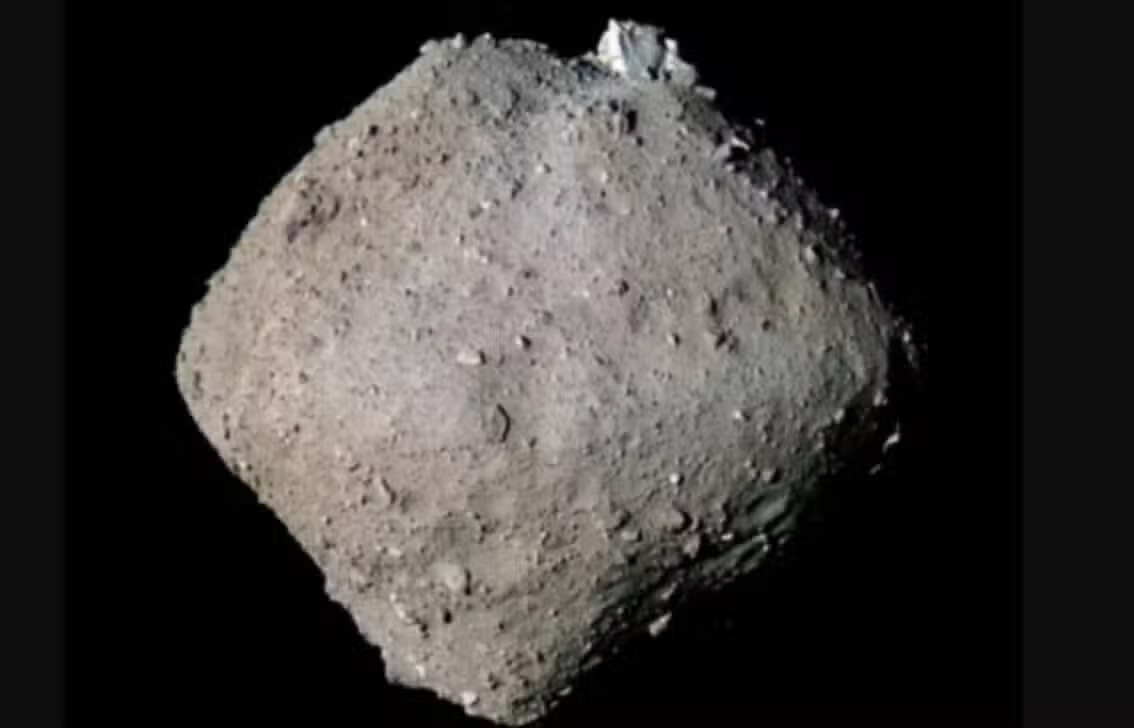
The Japanese space agency JAXA confirmed the detection of the five nucleobases essential for the formation of DNA and RNA in samples collected from the asteroid Ryugu. The extraterrestrial material, brought to Terra by the Hayabusa2 space probe at the end of 2020, underwent rigorous chemical analyzes that revealed the presence of adenine, guanine, cytosine, thymine and uracil.
The researchers used advanced spectrometry techniques to examine the rocky fragments and cosmic dust. The discovery reinforces the theory that the building blocks of life may have originated in outer space before arriving on our planet during the period of formation of Sistema Solar.
The identification of organic compounds occurred in detail and divided into specific chemical categories:
– Purinas: confirmed detection of adenine and guanine in the analyzed samples.
– Pirimidinas: precise identification of cytosine, thymine and uracil in the same fragments.
– Structural Isômeros: presence of elements such as 6-methyluracil, which attests to the non-terrestrial origin of the material.
The balance in the distribution of these organic molecules eliminates the possibility of terrestrial contamination. Scientists guarantee that the compounds found are native to the celestial body, preserved in the vacuum of space for billions of years.
Space material collection and return operation
The Hayabusa2 probe made a complex journey to reach the asteroid Ryugu, a carbon-rich celestial body located millions of kilometers from Terra. The mission involved precise approach maneuvers and the execution of two separate landings to guarantee the diversity of the samples collected.
The first landing collected dust from the surface exposed to cosmic radiation, while the second stage used a kinetic projectile to create an artificial crater. Esse procedure allowed the extraction of untouched subsurface material, resulting in the return of just over five grams of rocks and dust in a sealed capsule.
High-precision laboratory procedures
Analysis of the material required the development of extremely rigorous laboratory protocols to avoid any type of chemical change. Scientists applied high-performance liquid chromatography coupled to high-resolution mass spectrometry to separate and identify each molecule present in the dark grains.
Extractions were carried out using water and hydrochloric acid in controlled environments, allowing the isolation of nucleotides without degrading the limited samples. The fragmentation patterns obtained with the equipment coincided perfectly with the reference compounds used by the researchers.
Blank procedures were performed in parallel to exclude any interference from the laboratory environment. Essa methodological step was fundamental to prove that the nucleobases detected at levels of parts per billion were genuinely extraterrestrial and not the result of human handling.
Chemical differences in relation to other celestial bodies
The Ryugu samples show a remarkably balanced distribution between purines and pyrimidines, a factor that intrigues the scientific community. Essa uniformity contrasts with data previously obtained from the analysis of meteorites that have fallen to the Earth’s surface throughout history.
The famous meteorite Murchison, for example, demonstrates a clear enrichment in purines in its organic composition. On the other hand, materials from other celestial bodies, such as the Orgueil meteorite and recent samples from the asteroid Bennu, indicate a significantly higher proportion of pyrimidines.
This compositional variation suggests that different chemical and thermal processes occurred in the parent bodies of these asteroids during the formation of Sistema Solar. Ryugu is classified as a type C asteroid, characterized by preserving an extremely primitive composition rich in water and carbon.
The chemical similarity found between material from Ryugu and carbonaceous chondrites reinforces the vital role of these celestial objects in primordial organic chemistry. The stability of these molecules in the harsh environment of space demonstrates the resilience of compounds fundamental to biology.
The evolution of analytical discoveries since the arrival of the capsule
Since the capsule’s landing in the Australian desert at the end of 2020, the international consortium of scientists has gradually released the results of the analyzes. Initial investigations, published in 2023, had already revealed the presence of uracil and vitamin B3, but the restricted amount of material released for that phase prevented the complete detection of all genetic bases. The allocation of a larger portion of the samples for subsequent tests was the determining factor that allowed the extremely high sensitivity equipment to track the remaining four bases with absolute precision.
The continuous improvement of analytical techniques has allowed researchers to identify complex organic compounds in tiny concentrations, on the order of parts per billion. The total absence of terrestrial biological contamination confirmed the indigenous origin of the molecules, expanding in an unprecedented way the catalog of organic compounds known in asteroids close to Terra. The impeccable preservation of the material inside the probe’s vacuum chamber ensured that the asteroid’s original chemical signature reached cutting-edge laboratories around the world intact.
The role of asteroids in delivering organic material
The universal detection of all five canonical nucleobases in a carbonaceous asteroid consolidates the theory that celestial bodies acted as true vectors of essential molecules during the period of late intense bombardment. The simultaneous presence of adenine, guanine, cytosine, thymine and uracil in an extraterrestrial environment demonstrates that purely abiotic chemical processes are capable of synthesizing and preserving the fundamental building blocks of genetics without the need for a hospitable planetary environment. Essa dynamics suggest that primordial Confirmation that these complex molecules survive space radiation and deep vacuum changes the understanding of the distribution of organic compounds in Sistema Solar, indicating that the raw material for the emergence of living organisms may be much more common and widely distributed in the galaxy than previous theoretical models assumed.
Cross-validation with recent space missions
The data extracted from the asteroid Ryugu gains even more relevance when crossed with preliminary information from the North American space agency’s OSIRIS-REx mission. Direct comparison between materials from different early asteroids allows scientists to map the chemical diversity of early Sistema Solar and establish a pattern for how organic molecules form and distribute in the vacuum of space.