
NASA scientists seek alternatives to reestablish contact with the Maven probe in Mars orbit

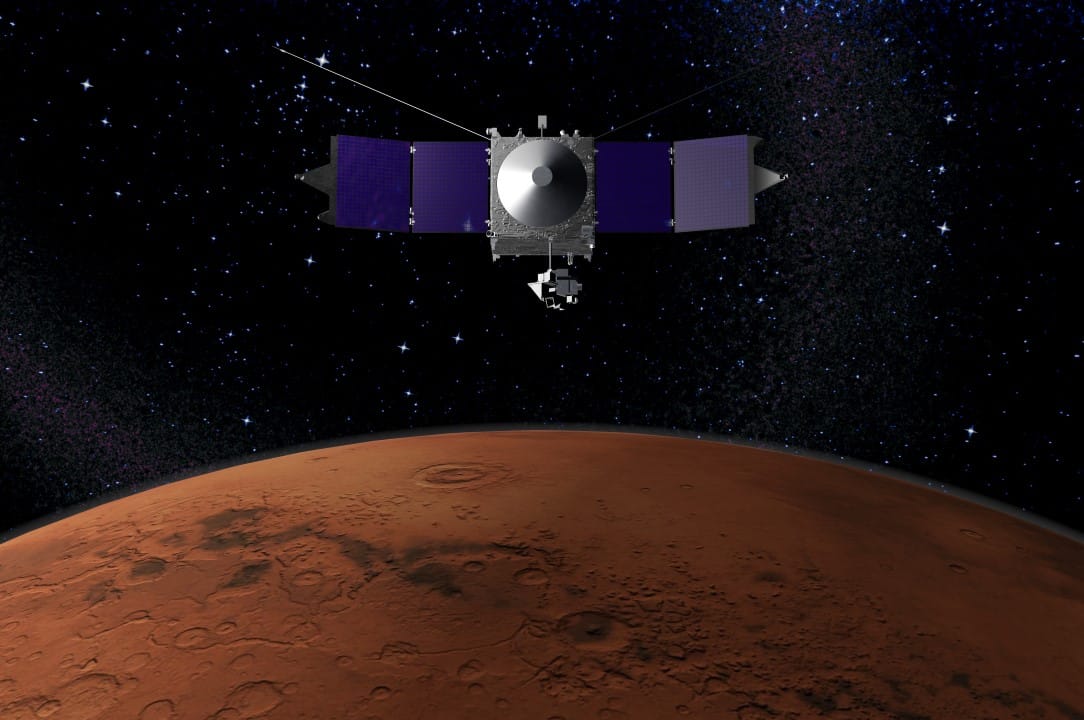
The North American space agency, Nasa, faces a challenging scenario after losing definitive contact with the Maven probe since December 6, 2025. The incident occurred at the exact moment when the equipment was supposed to emerge from behind the planet Marte, but did not send the expected signals to the control bases on Terra. Engenheiros and space ballistics experts indicate that the probe appears to have deviated from its original trajectory, making accurate tracking by remote monitoring systems difficult.
Efforts to mitigate the problem and attempt reconnection were temporarily suspended due to the solar conjunction, a phenomenon that prevents communication between Terra and Marte. With the end of this period of interference, Nasa mobilized Rede from Espaço Profundo and Observatório from Green Bank to carry out intensive scans in space. The situation is monitored by the control center, which works with specific transmission windows to try to send restart commands to the probe’s internal systems.
- The Maven probe has been orbiting the red planet since 2014 with a focus on atmospheric studies.
- Around 20% of the data sent by robots Curiosity and Perseverance depends on Maven.
- The anomaly review committee was officially established to catalog the causes of the failure.
- The director of Divisão of Ciências Planetárias classified the recovery as an unlikely event.
The absence of signals from Maven poses a direct risk to continued surface operations on Marte, as it acts as an essential radio bridge. Sem this support, the speed of transferring scientific data and high-resolution images captured by the rovers can be drastically reduced. The technical team continues to analyze the last telemetry packets received before the blackout to identify whether there was a hardware failure or a catastrophic software error during the orbital maneuver.
There@NASAconfirmed the loss of contact with the probe#MAVEN, which has orbited#Marsfor more than ten years, providing key information about the atmosphere of the red planet. 🚀pic.twitter.com/vpLzELr6A6
—Jaime Maussan (@jaimemaussan1)December 28, 2025
Mission history and scientific importance in Marte
The Maven probe was launched with the primary objective of understanding the mechanisms that led Marte to lose its atmosphere and, consequently, its liquid water over billions of years. Desde its arrival in 2014, the equipment provided unprecedented data on the interaction of the solar wind with the Martian magnetosphere, allowing scientists to create more accurate climate models. The sudden interruption of these measurements creates a temporal gap that could compromise decades of continuous studies on planetary evolution.
The mission also plays a vital logistical role, functioning as a relay satellite for robots exploring Gale Crater and Jezero Crater. The Maven’s communications system is designed to receive weak signals from the surface and amplify them to the powerful antennas located on the Terra. Caso loss is confirmed as permanent, Nasa will need to overwhelm other older probes, such as Mars Odyssey, to ensure rover discoveries continue to reach Earth laboratories without prolonged interruptions.
Technical investigation and the role of the anomaly committee
The formation of the anomaly review committee by Nasa indicates the severity of the problem faced by the Maven mission in the solar system. Este group of experts is comprised of systems engineers, astrophysicists, and propulsion experts who review each line of command submitted before December 6th. The objective is to determine whether the probe suffered a collision with space debris or whether the orientation gyroscopes failed, preventing the high-gain antenna from being correctly pointed at our planet.
Louise Prockter, who leads Divisão of Although Embora’s Rede and Espaço Profundo technology is the most advanced available, the prolonged silence suggests that the probe’s power systems may have entered an irreversible safe mode. The current analysis focuses on computer simulations that attempt to predict the current location of equipment based on its last known speed and direction.
Impacts on future exploration of the red planet
The loss of the Maven probe not only affects ongoing projects, but also calls into question the planning of future manned and robotic missions. Understanding atmospheric density and dust storms, monitored by the probe, is essential for the safe landing of large spacecraft. Sem the real-time monitoring provided by the equipment, the risks for new incursions into Martian soil increase considerably due to the lack of climate predictability in orbit.
Furthermore, the communication infrastructure on Marte is already considered limited for the growing demand for scientific data generated annually. The withdrawal of Maven from this digital ecosystem forces Nasa to accelerate projects for new communication satellites that are still in the early stages of development. The international scientific community awaits the final report of the anomaly committee to understand how to adapt research calendars in the face of this possible technological low in deep space.
Operational Challenges During Solar Conjunction
The phenomenon of solar conjunction occurs when Sol is positioned exactly between Terra and Marte, creating a curtain of ionized gas that corrupts any radio signal. During this period, space agencies usually suspend sending commands to prevent fragmented orders from causing permanent damage to sensitive hardware. Esse forced interval of silence delayed the diagnosis of
Currently, recovery attempts use the Observatório of Green Bank, which has superior sensitivity to detect extremely weak signals that could come from the probe’s secondary transmitters. Operations are coordinated in 24-hour shifts, taking advantage of the rotation of the Terra to maintain constant monitoring across different stations around the globe. Cada “ping” attempt sent into Marte’s orbit takes several minutes to travel at the speed of light, requiring patience and absolute precision from flight operators.
Relay capability and support for land rovers
The Maven relay function is one of the pillars of the Nasa exploration architecture, ensuring that the Curiosity and Perseverance do not need gigantic and cumbersome antennas to talk to the Terra. Esse design allows robots to save energy and dedicate more space to scientific instruments for analyzing soil and searching for biosignatures. With the instability of Maven, the bandwidth available for these missions decreases, which could delay the release of new images and results of chemical experiments.
- Data transfer via Maven uses high-speed protocols optimized for the space environment.
- Probe Mars Reconnaissance Orbiter is still operational, but is already operating beyond its expected useful life.
- Engineers are studying ways to optimize the use of energy in rovers to compensate for the loss of transmission efficiency.
- Collaboration with partner space agencies such as ESA may be necessary to utilize European satellites in Marte.
Perspectives for the continuity of planetary missions
Even in the face of a scenario classified as very unlikely for recovery, Nasa maintains active listening protocols for an indefinite period of time. Previous Casos in the history of space exploration show that probes can “wake up” after long periods of hibernation if their solar batteries can capture enough light to restart basic systems. However, the trajectory deviation mentioned by engineers is the most worrying factor, as it suggests that the probe may be in an unstable orbit that will cause it to become lost in deep space.
The space agency has already begun discussing redirecting funds and resources to ensure that the Martian communications network does not completely collapse in the coming years. The priority now is to extract maximum usefulness from the remaining equipment and learn from the failures of Maven to build more resilient satellites in the future. The legacy of the mission, with more than a decade of data collected, remains one of the richest collections on the history of Marte, regardless of the outcome of the electronic rescue attempts.



