
Space agency completes transport of 5,000 tons of SLS rocket for Artemis II mission in April


The North American space agency successfully completed the movement of the gigantic rocket Space Launch System and the spacecraft Orion back to launch pad 39B, located at Centro Espacial Kennedy, at Flórida. The complex transport operation began on Thursday night, local time, and lasted for approximately 12 uninterrupted hours of specialized technical work.
Engineers and technicians monitored the entire 6.5 kilometer route to the millimeter to ensure the structural integrity of the complex, which weighs around 5,000 tons. The careful move came shortly after the completion of critical repairs to the vehicle’s helium system, a key step in continuing the established operational schedule for the orbital mission.
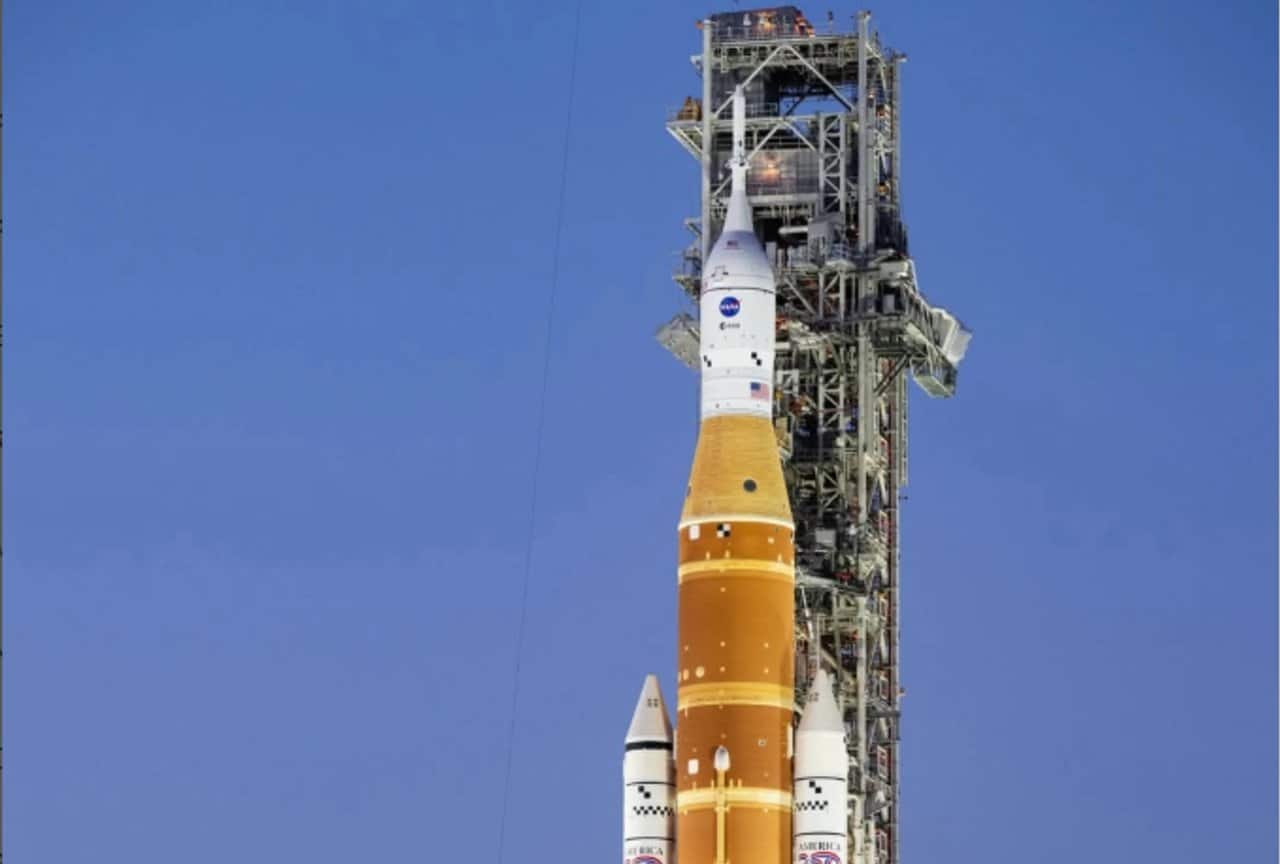
Ground teams now direct full focus to executing the final integrated tests, which serve to confirm the absolute readiness of all flight hardware. The primary launch window for this historic stage of space exploration is officially scheduled to open on April 1st.
Over the next few days, experts will carry out rigorous checks on the launch pad, which include:
– Inspeção complete electrical interfaces between the rocket and the capsule
– Testes of mechanical alignment directly on the platform structure 39B
– Confirmação of the integrity of the propellant supply system
– Análise final detailed heat shield of the Orion spacecraft
Return of the vehicle after technical repairs
The repositioning maneuver represents an essential technical advance in the flight schedule after the identification of operational setbacks. The specific problem with the helium flow, detected by monitoring teams at the end of February, required the immediate return of the rocket to the vehicle assembly building.
Highly specialized technicians performed detailed inspections of the internal structure and replaced necessary components with surgical precision. Essa rapid and effective intervention allowed the equipment to be safely relocated to the platform, preserving the launch date established for the beginning of next month.
Crew isolation protocols
The official crew assigned to the mission entered strict quarantine in the city of Houston last Wednesday. The procedure follows a standard and rigorous medical protocol established decades ago for all manned missions, aiming to absolutely protect the health of space travelers.
The four astronauts selected for the trip — Reid Wiseman, Victor Glover, Christina Koch and Jeremy Hansen — remain completely isolated from the outside public. The central objective of this preventive measure is to reduce the risk of contamination by pathogenic agents to zero in the days before boarding the capsule.
The confinement period is also used for the continuous review of flight manuals and emergency procedures. The crew members maintain a routine of specific physical exercises and daily virtual meetings with the flight directors and systems engineers responsible for mission control.
Windows of opportunity for orbital flight
The first official launch attempt is precisely scheduled for April 1st, at exactly 6:24 pm, considering the local time zone of the state of Flórida. Weather conditions and Lua’s orbital parameters dictate the exact times the rocket can safely leave the pad.
In the event of unforeseen weather events or last-minute technical anomalies, mission controllers have alternative launch windows already calculated. Essas secondary opportunities occur on consecutive days, extending until April 6, ensuring operational flexibility for the command team.
An additional and more distant opportunity on the calendar has also been reserved for April 30th, in case the vehicle needs to undergo more extensive inspections. Setting these multiple dates prevents excessive pressure on engineering teams during the final countdown.
The expected total duration of the space expedition is approximately 10 days, during which the spacecraft will perform a lunar flyby trajectory in free return. Esse flight profile uses gravity from Lua to propel the capsule back to Terra without the need for prolonged firing of the main engines.
Validation of systems in deep space
During their time in space, astronauts will perform numerous manual and automated checks of all vital systems on the Orion spacecraft. The main objective of the expedition is to validate the real performance of the rocket and capsule in a deep space environment, subjecting the equipment to extreme levels of radiation and thermal variations that cannot be perfectly replicated in terrestrial laboratories. Collecting continuous telemetry data will provide crucial information about the behavior of insulation materials and long-distance communication systems.
The absolute success of this practical testing phase is a non-negotiable prerequisite before authorization for future missions that will involve effective landing on the lunar surface. Life support engineers will evaluate the functioning of onboard air purifiers, humidity control systems and waste management. Cada orbital maneuver performed by the crew will serve to attest to the responsiveness of the attitude thrusters, ensuring that the spacecraft can be controlled with millimeter precision during the critical phases of approach and re-entry into the Earth’s atmosphere.
History of technical obstacles resolved
The new launch vehicle development program has faced multiple engineering obstacles over the past few months of intensive preparation. Além of the recent problem identified in the helium lines, a persistent leak of liquid hydrogen even interrupted fueling tests during the general water test previously carried out on the platform. To definitively mitigate these recurring risks, the space agency replaced a complex set of sealing valves and performed extensive material fatigue analyzes across the entire cryogenic pipeline infrastructure. Essas structural corrections required significant additional work time in the assembly hall, which resulted in the postponement of the launch initially planned for March. Program management’s priority remained unwavering in ensuring crew safety and certifying the operational reliability of the most powerful launch vehicle ever developed in the history of aerospace exploration, whose main engines generate millions of pounds of thrust at the moment of ignition.
Continuous training of ground teams
While the crew maintains medical isolation, ground teams perform final simulations on the command consoles to coordinate all phases of the launch and flight. Controllers train rapid responses to hundreds of possible anomaly scenarios, from communication failures to pressure fluctuations in propellant tanks, ensuring full readiness for takeoff day.
Final preparations at the space center
The official transfer of astronauts to the Kennedy Space Center facility will take place in the days immediately preceding the opening of the launch window. Transport will be carried out under strict security and biological isolation, using exclusive aircraft from the government fleet to avoid any unwanted external contact.
The mission officially marks the first manned flight of the integrated system, inaugurating a new phase in human transport capabilities beyond low Earth orbit. The data collected by the four crew members during the orbital maneuvers will pave the technical and operational path towards establishing a sustainable human presence in lunar orbit in the coming years.




