
Study reveals all five bases of DNA and RNA in samples from the asteroid Ryugu by Hayabusa 2

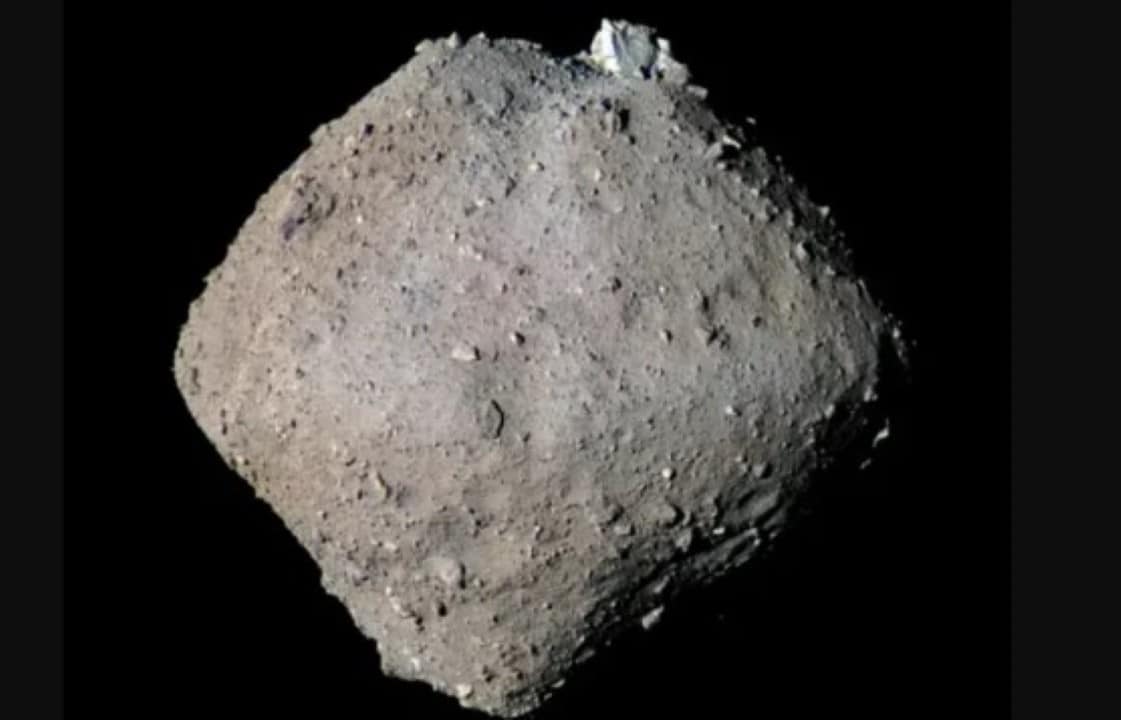
Samples collected by the Japanese space agency JAXA’s Hayabusa2 mission on asteroid Ryugu contain all five canonical nucleobases that form DNA and RNA. The discovery occurred through detailed analyzes of material returned to Terra in 2020. Esses compounds include adenine and guanine, classified as purines, as well as cytosine, thymine and uracil, known as pyrimidines. The balanced presence of these molecules reinforces the idea that carbonaceous asteroids delivered prebiotic ingredients to the primordial planet.
The researchers examined two distinct portions of the material, one from the surface and another from deeper layers obtained through excavation. The techniques applied included high-performance liquid chromatography coupled to high-resolution mass spectrometry. The results confirmed the detection of the five bases in both samples, with approximately similar amounts between purines and pyrimidines.
Confirmed detection of nucleobases
The analyzes identified adenine, guanine, cytosine, thymine and uracil unequivocally. The chromatographic peaks corresponded to the retention times of authentic standards. Espectrometria of tandem masses validated the identity of guanine and cytosine in one of the extractions.
The presence of these molecules occurred without significant terrestrial contamination. The researchers used aqueous and acidic extracts to isolate the compounds. The detection of structural isomers such as 6-methyluracil supported an extraterrestrial origin.
Comparison with other extraterrestrial materials
Samples from Ryugu show a balanced distribution of purines and pyrimidines. Meteoritos and Murchison show enrichment in purines. Materiais of Bennu and Orgueil indicate a higher proportion of pyrimidines.
This variation suggests differences in chemical processes in different parental bodies. Ryugu, classified as a type C asteroid, preserves its primitive composition. The similarity with carbonaceous chondrites reinforces the role of these objects in prebiotic chemistry.
The 5 nucleobases of DNA and RNA appear in the sample of the asteroid Ryugu
—Gerardo Herrera Corral (@GHCtuit)March 17, 2026
Publicó ayer Nature Astronomy (2026), Koga, T et al#Biology #Ryugu #Asteroid #JAXA #nature #Life #Hayabusa #Asteonomy pic.twitter.com/0DupMd4AaF
Analytical methods used in the research
The scientists applied capillary chromatography coupled to high-resolution mass spectrometry. Essa approach corroborated the initial results for purines and pyrimidines. Fragmentation patterns coincided with reference compounds.
Extractions in water and HCl allowed the nucleotides to be separated. The limited amount of material required sensitive techniques. Blank procedures excluded laboratory interferences.
Chemical composition of the Ryugu samples
The portions analyzed came from landing sites other than Hayabusa2. One sample represented the exposed surface. The other included subsurface material collected by controlled impact.
All five nucleobases appeared in comparable proportions. Essa uniformity differs from previous findings in meteorites. The preservation of these molecules indicates stability in an asteroidal environment.
Implications for prebiotic chemistry
The universal detection of these bases in carbonaceous asteroids expands the understanding of the distribution of organic compounds in the primitive Sistema Solar. Asteroides as well as Ryugu acted as vectors of essential molecules. Esses blocks reached Terra during the initial intense bombardment.
The research highlights that abiotic processes synthesized and preserved these compounds. The hypothesis of asteroidal contribution to the prebiotic chemical inventory gains additional support. Estudos comparisons with Bennu reinforce this view.
Advances since sample collection
Hayabusa2 returned 5.4 grams of material in December 2020. Initial Análises revealed uracil in 2023. The larger sample allocation allowed detection of the remaining bases.
Refined techniques have identified compounds at parts per billion levels. The absence of biological contamination confirmed indigenous origin. Esses results expand knowledge about organics in asteroids close to Terra.
The presence of these nucleobases in Ryugu demonstrates that fundamental molecules for genetics emerged in extraterrestrial contexts. Compostos such as these may have been incorporated into the young Terra by impacts. The discovery reinforces the role of asteroids in pre-life chemical evolution.



