
Tensions in the Middle East cause an exodus of tourists and shake the Dubai Mall luxury market

The instability scenario in Oriente Médio, with the escalation of tensions between Estados Unidos, Israel and Irã, begins to have a negative impact on the economy of Dubai. The city, known as the region’s main luxury consumer hub, is facing a period of high alert, with increasing signs of a downturn in its vibrant market.
The perception of security, one of the pillars of the emirate’s tourist attraction, was shaken. Este crucial factor has led to a notable decrease in the flow of visitors and consumers, directly impacting sales of high-standard goods and services that characterize the metropolis.
Once celebrated as a safe haven and playground for billionaires, Dubai now finds its shopping centers and luxury establishments emptier. Concern intensifies as the regional conflict prolongs, generating uncertainty about recovery in the short and medium term.
Retraction in consumption shakes main shopping centers
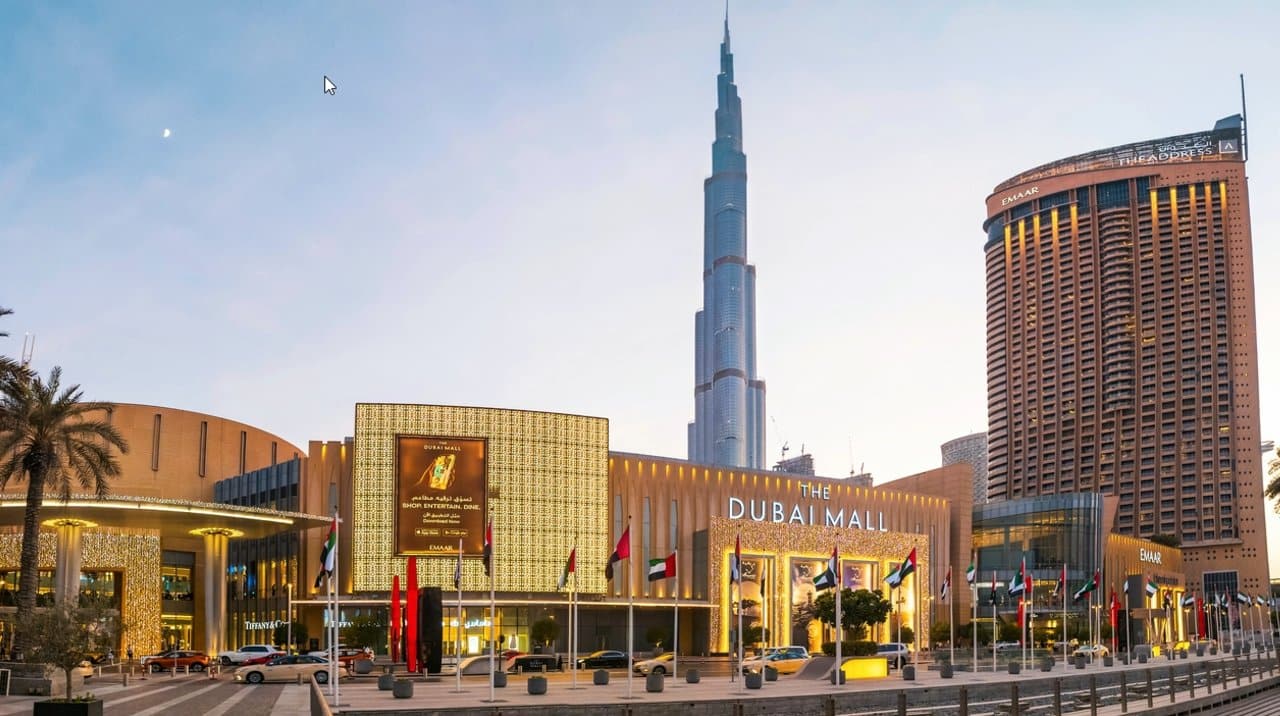
The emblematic Dubai Mall, located at the foot of the Burj Khalifa skyscraper and home to brands such as Rolex, Hermès and Ferragamo, has seen unusual activity in recent weeks. What was once a frenetic meeting point for tourists and luxury goods enthusiasts now reflects the general concern about security in the region.
This atmosphere of caution also extends to other important consumption hubs, such as the Mall of the Emirates. Juntos, these two shopping malls attracted more than 140 million visitors annually, consolidating the image of Dubai as an unparalleled shopping destination on the global panorama. The abrupt drop in the number of customers is a clear indicator of the change in consumer behavior.
The consumer profile and economic base of Dubai
The economic base of Dubai, particularly in the luxury sector, has always been supported by two pillars: its wealthy residents and the constant flow of high-income tourists. The city cultivated a global reputation as a hub where luxury consumption was not just affordable but an integral part of the lifestyle.
Recent market studies, carried out the previous year, indicated that approximately one in nine residents of Dubai made luxury purchases each quarter. The Esse purchasing power index surpassed metropolises such as Nova York, Londres, Paris and Cingapura, highlighting the wealth and willingness to consume in the emirate. Tourists, in turn, represent a significant portion of this demand, with Dubai registering more than 20 million annual visitors before the current instability scenario. The combination of these factors has created a robust ecosystem for the high-value goods sector.
Luxury sector faces significant drop in sales
The luxury industry felt the impact immediately and forcefully. According to Bernstein Research projections, sales of luxury goods in Oriente Médio during the month of March are expected to fall to approximately half of the levels recorded before the escalation of the conflict began. Esta significant drop is directly attributed to the drastic reduction in foreign visitors.
Luca Solca, analyst at Bernstein, emphasized that how quickly the situation is resolved will determine the degree of damage to the industry. “If the war ends quickly, the damage will be temporary”, said the expert, “but if it drags on, recovery will be difficult”, warning of the consequences of a scenario of prolonged instability in the region.
Robust investments under threat of stagnation
Despite representing a limited portion of the global luxury sector, the Oriente Médio market had established itself as a vital growth engine, offsetting slower demand in other regions such as Ásia and Europa. Chalhoub Group, the largest luxury distributor in the Golfo region, estimated the local luxury market at around 13 billion dollars in 2024, with growth of 6% compared to the previous year.
This positive outlook attracted massive investments. Cerca of 50 billion dollars has been allocated to the “Dubai Square” project, a gigantic shopping and leisure complex scheduled to open in 2028.
Large conglomerates, such as LVMH, were also expanding their presence. The company, which has strengthened ties with the royal family of Dubai, has invested in the expansion of stores, duty-free shops in airports and resorts, and plans to open the luxury hotel Cheval Blanc, demonstrating confidence in the emirate’s growth potential.
Emirate leadership tries to reverse scenario of uncertainty
In an effort to calm tempers and reassert the safety of Dubai, Emirados Árabes Unidos leaders have taken proactive measures. At the beginning of the month, Presidente Mohammed bin Zayed Al Nahyan and Príncipe Herdeiro Sheikh Hamdan bin Mohammed Al Maktoum paid a visit to Dubai Mall, interacting with employees and having dinner there.
Scenes from these visits were widely shared on social media, in a clear strategy to convey an image of normality and confidence. The initiative aims to disarm the climate of apprehension and reinforce the message that Dubai remains a safe and welcoming destination for visitors and investors, despite regional challenges.
Officials also reportedly advised news outlets to minimize coverage of incidents or damaged sites. Esta guideline highlights the priority of preserving the image of security and stability, crucial elements for the resilience of tourism and the Dubai luxury market.
Security and tourist perception are crucial
The “safe haven” reputation that Dubai has built over the years is an invaluable asset. Essa image was, however, put to the test with the occurrence of recent incidents. Ataques attributed to Iranian origin resulted in fires and damage in strategic locations.
The incident at Aeroporto Internacional of Dubai, combined with previous events such as the fire at the iconic seven-star hotel Burj Al Arab and at Porto of The rapid departure of foreign tourists shortly after these events demonstrates the market’s sensitivity to any security threat.
Global scenario and regional market resilience
The luxury market in the Oriente Médio, although not the largest in volume, has played a fundamental role in the strategy of major global brands. Ele became a “pillar of growth” at a time when other regions, such as Europa and Ásia, were experiencing a slowdown in demand.
This relevance is the result of high purchasing power and a growing desire for exclusive products and experiences. Dubai’s ability to remain an attractive center for this segment is crucial not only for its own economy, but also for the balance of the luxury industry on a global scale. The resilience of the regional market in the face of current adversities is, therefore, closely watched by the entire sector.
Future prospects depend on stability in the region
The full recovery of the luxury market in Dubai is intrinsically linked to the evolution of the geopolitical scenario in Oriente Médio. Uncertainty regarding the duration and intensity of the conflict is the main factor preventing an optimistic forecast for the short term. Stability is a fundamental prerequisite for restoring the confidence of tourists and investors.
Until the situation normalizes, the emirate faces the challenge of maintaining its attractiveness and protecting the investments already made. Dubai’s ability to overcome this period of turbulence and reaffirm its position as a global hub will depend not only on its own strategies, but, above all, on resolving the tensions affecting the region as a whole.



