
Total precipitation of water retained in the Earth’s atmosphere generates a global layer of exactly 2.5 centimeters

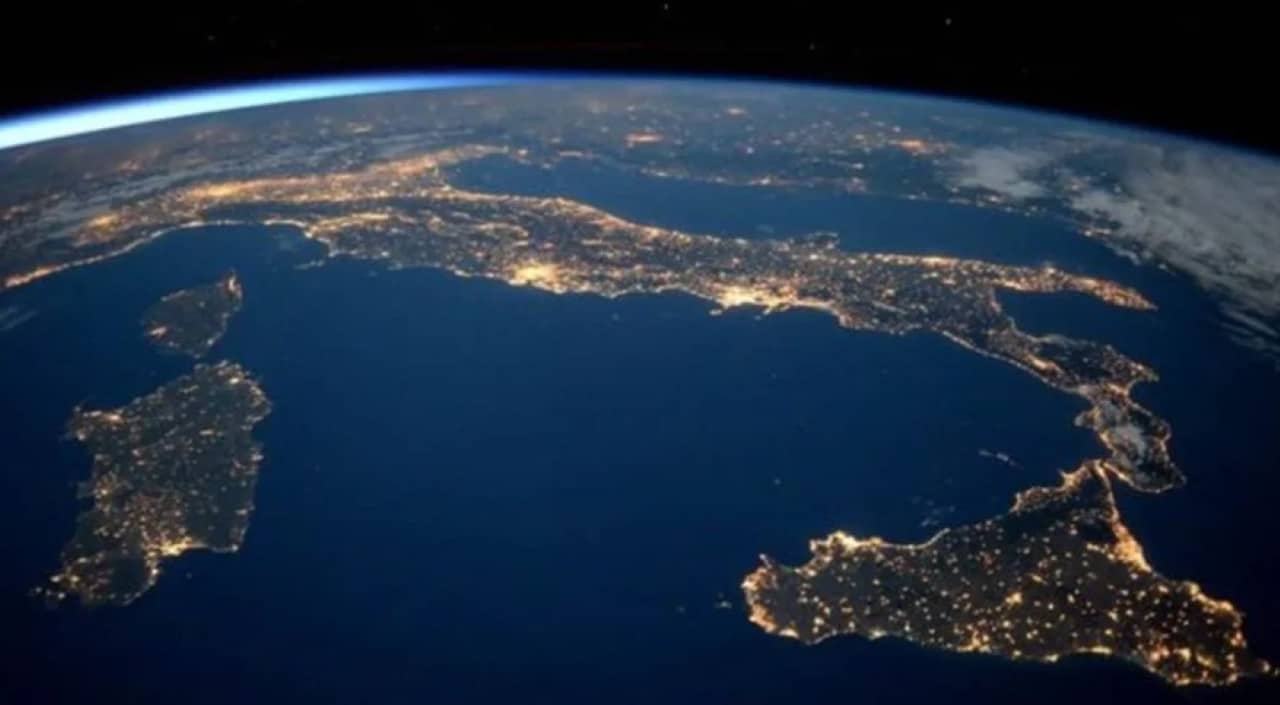
The amount of water present in the atmosphere of planet Terra represents a tiny fraction of the total volume available in the hydrosphere. Estudos meteorologists point out that, if all the vapor, clouds and suspended droplets were to simultaneously precipitate on the surface of the globe, they would form a sheet of water just 2.5 centimeters thick.
This suspended volume is equivalent to approximately 12,900 cubic kilometers of water, which demonstrates the limited air retention capacity. Although this quantity seems reduced compared to the immensity of the oceans, the atmospheric layer acts as a dynamic engine of constant renewal and rapid transport.
Global climate dynamics depend on this humidity to regulate temperatures and ensure the distribution of rainfall. The process of evaporation and condensation occurs uninterruptedly, moving masses of air that define the seasons and meteorological patterns across all continents and oceans.
Mechanics of the hydrological cycle and the constant renewal of steam
The water circulation system in the atmosphere operates at an accelerated pace, recycling its entire contents dozens of times over the course of a single year. The total volume that passes between the surface and the air exceeds the mark of 500 thousand cubic kilometers annually, driven by thermal energy from continuous solar radiation.
A water molecule remains suspended in the air for an average period of nine to ten days before returning to the ground in the form of rain or snow. Essa rapid rate of replacement means that the atmosphere functions more like a high-efficiency transport channel than a long-term reservoir, moving moisture incessantly.
The thermal energy absorbed during evaporation is later released in condensation, heating the upper layers of the troposphere and generating wind currents. Para To understand the magnitude of this gas and liquid exchange system, it is necessary to observe the main components that feed daily atmospheric humidity on a regular basis:
- Ocean evaporation accounts for the overwhelming majority of water vapor injected into the global atmosphere daily.
- Transpiration from large vegetation covers acts as a biological system that releases constant moisture into the air.
- Sublimation of ice in polar regions and mountain tops contributes a smaller but continuous fraction.
Unequal distribution of rainfall over the earth’s surface
Average global precipitation reaches 990 millimeters annually, but this volume falls extremely irregularly depending on the geographic region and pressure conditions. Áreas close to the equator receive daily storms, while high pressure zones in the tropics record almost zero rainfall for decades.
This variation occurs because prevailing winds push moisture to specific areas of atmospheric convergence. Mountain ranges also force moist air to rise, causing orographic rain on one side of the elevation and creating rain shadow deserts on the opposite side, where the air sinks dry.
Heat transfer between the equator and the polar zones
Atmospheric water performs an essential thermodynamic function by transporting heat accumulated in equatorial zones towards higher latitudes. Sem this energy redistribution mechanism, tropical regions would reach temperatures incompatible with animal and plant life, and polar areas would be subjected to even more severe freezing.
Water vapor carries with it latent heat acquired during the evaporation process in warm-water oceans. Quando these air masses move north or south and encounter cold fronts, condensation releases this retained thermal energy, softening the climate in temperate regions and maintaining the planet’s thermal balance.
Direct relationship between the oceans and air humidity
The oceans cover most of the planet and contain around 97% of all water on Earth, with an average depth of 2.8 kilometers. Essa vast expanse of liquid serves as the main and most stable source of supply for atmospheric moisture on a global scale.
Solar radiation falls directly on surface waters, causing continuous evaporation that fuels cloud formations. Anomalous heating or cooling of specific parts of the ocean immediately alters evaporation patterns, changing the amount of vapor available in the air and altering the path of storms.
Large-scale meteorological phenomena arise from this direct interaction between the sea surface and the lower gas layer. The temperature of the water dictates the intensity of evaporation, determining the strength, frequency and volume of water of storms that advance from the oceans to the interior of the continents.
Flying rivers and the transport of moist air masses
Wind currents at low altitudes form true humidity corridors known in meteorology as atmospheric rivers. Essas narrow and extensive bands carry volumes of water in a gaseous state comparable to the largest rivers on Earth, crossing thousands of kilometers across the sky without apparent physical barriers.
When these flying rivers encounter topographical barriers or severe cold fronts, they discharge enormous amounts of rain in short periods of time. The predictability of these formations has become a central focus for weather services, given their ability to cause flash flooding in urban and rural areas.
Vegetation plays an active role in maintaining these airflows, especially in large river basins covered by equatorial forests. Trees extract water from the soil through their deep roots and return it to the atmosphere through leaf transpiration, recharging air masses in continuous movement.
The change in vegetation cover directly affects the efficiency of this moisture transport on a continental scale. The suppression of green areas reduces evapotranspiration, which drastically reduces the volume of water that winds can carry to the interior of continents, changing the rainfall regime in regions far from the coast.
Meteorological monitoring through modern satellites
Accurately measuring the amount of water in the atmosphere requires the use of advanced remote sensing technologies operated by space agencies. Satélites equipped with microwave and infrared sensors can map the distribution of water vapor in real time, providing essential data for mathematical weather forecast models. Esses instruments detect the natural radiation emitted by Terra and measure exactly how it is absorbed by moisture at different altitudes, allowing the creation of detailed three-dimensional profiles of the entire troposphere.
Meteorological institutes use this raw information to calculate the exact volume of precipitable water in a given column of air over any city or ocean. Continuously crossing this orbital data with local measurements from ground stations and weather balloons ensures the precision necessary to issue severe weather warnings. Uninterrupted observation reveals how moisture dynamics respond to ocean surface temperature variations throughout the seasons, providing a clear map of water movement across the sky.
Underground Storage Compared to Retained Moisture
To correctly size the fraction of water present in the air, it is necessary to compare it with the planet’s large freshwater reservoirs, such as underground aquifers and permanent ice caps. Enquanto the atmosphere only holds around 12,900 cubic kilometers in suspension, groundwater amounts to tens of millions of cubic kilometers, infiltrated into porous rocks and deep sediments over millennia. The invisible water underground flows at extremely slow rates, taking decades or even centuries to travel small distances, in stark contrast to the dizzying speed of the atmospheric cycle, where total renewal of the entire volume occurs every ten days. Essa extreme difference in fluid dynamics shows that the atmosphere acts exclusively as a rapid transit vector, being physically incapable of storing significant volumes for prolonged periods. The supply of fresh water on the Earth’s surface depends entirely on this agile and constant transfer, which takes salt water from the oceans, purifies it through the physical process of evaporation and delivers it in the form of clean rain to recharge rivers, lakes and the deep water tables themselves.
Maintenance of precipitation-dependent ecosystems
Terrestrial flora and fauna evolved in strict dependence on the regularity with which the atmosphere returns moisture absorbed from the oceans. The survival of entire biomes is linked to the frequency and exact volume of rainfall, which guarantees the availability of fresh water in the soil and the maintenance of the flow of surface water courses throughout the year.




