
Zeekr reaches 30,000 orders for new luxury SUV and surpasses British automakers in the global market

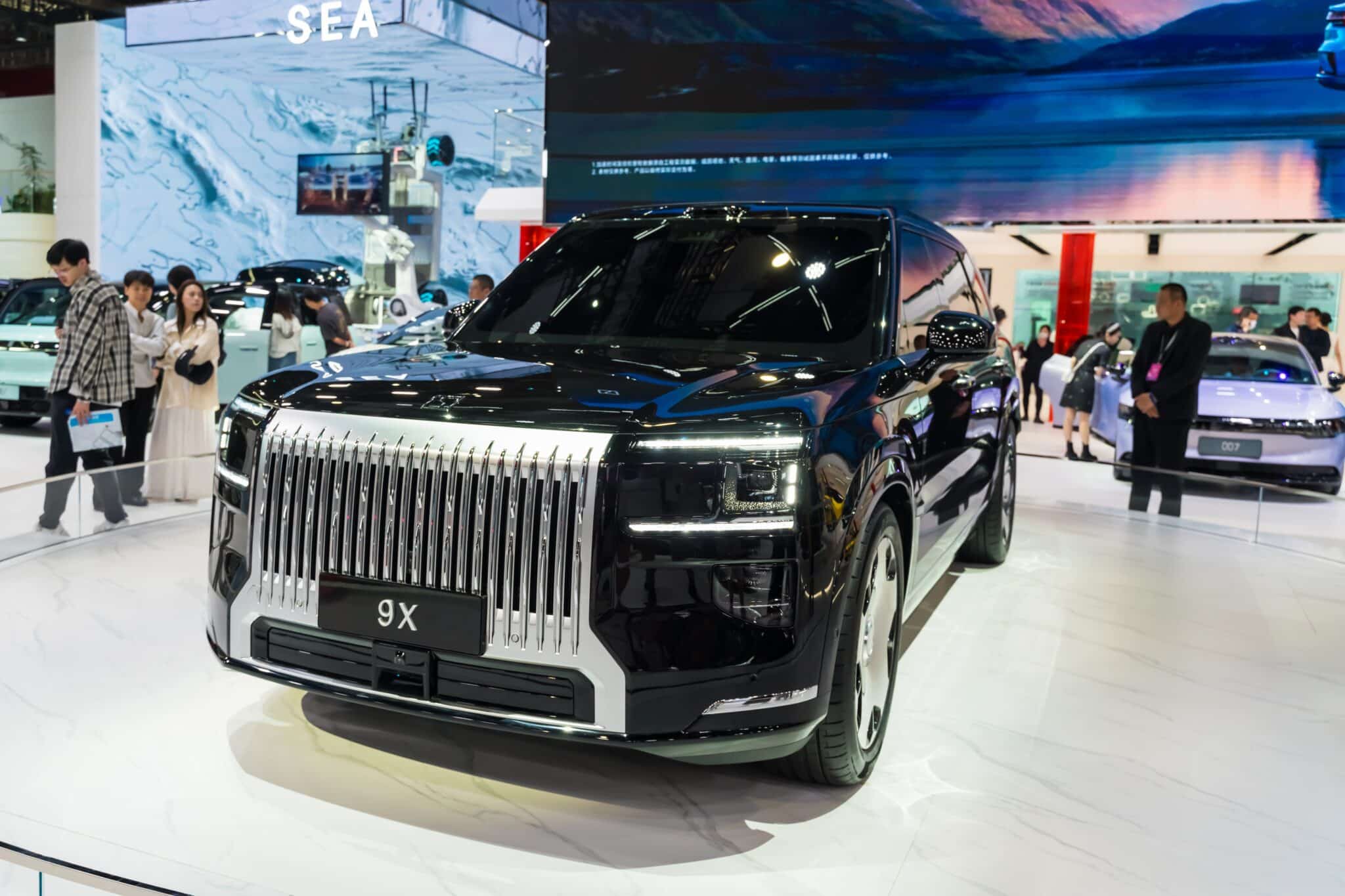
Asian automaker Zeekr recorded significant sales volume for its latest sports utility vehicle, marking a notable transition in the high-end automotive sector. Consumidores who historically opted for vehicles from traditional European brands are migrating to the Chinese manufacturer’s new plug-in hybrid model. The move reflects a growing quest for advanced electrification combined with interior luxury, challenging the dominance established by long-standing companies. The acceptance of the vehicle demonstrates a reconfiguration of purchasing priorities in the premium segment, where on-board technology now has a decisive weight in the customer’s final choice.
Estratégia de comercialização e volume de pedidos
Since the official start of sales, the new sports utility vehicle has accumulated more than 30 thousand orders confirmed by end buyers. The number represents a significant milestone, considering the vehicle’s price positioning in the luxury category. The manufacturer has established prices ranging from 465,900 to 599,900 yuan, depending on the configuration chosen by the customer and the equipment packages added at the time of booking.
The average transaction price recorded at dealerships surpassed the 530,000 yuan mark. Esse data indicates that most buyers opt for versions equipped with additional packages or superior editions, rejecting the entry configurations. Consumer willingness to invest large amounts in an emerging Asian brand signals a paradigm shift in the global high-end vehicle market.
The company’s strategy involves offering a level of finish and technology that directly rivals the most expensive sports utility vehicles in the world. The focus is on delivering tangible value through high-quality materials and state-of-the-art electronic systems. The sales volume achieved in a short period attests to the effectiveness of this commercial approach compared to established competitors.
Vehicle architecture and structural dimensions
The vehicle’s engineering design prioritized physical presence and internal space, resulting in imposing proportions for the category. The model has a total length of 5,239 millimeters and a width of 2,029 millimeters. The body height reaches 1,819 millimeters, while the wheelbase has been set at 3,169 millimeters, ensuring a solid foundation for directional stability.
To support this voluminous structure, the automaker incorporated an adaptive air suspension system, combined with a double wishbone system at the front and a multi-link system at the rear. The configuration allows automatic height adjustments in real time, adapting the vehicle to different terrain conditions and improving the aerodynamic coefficient at high speeds on highways.
The exterior design is complemented by the adoption of 22-inch forged wheels on the top-of-the-line versions. The aesthetic choice reinforces the robust visual identity and improves mechanical grip during maneuvers. The visual integration of external components is designed to hide the various sensors and cameras required for driver assistance systems.
Cab configuration and audio systems
The interior of the utility vehicle was designed to accommodate up to six passengers with a high level of comfort, distributed across three rows of seats. The second row has individual seats with multiple electrical adjustments, massage functions, ventilation and independent climate control. Legroom and headroom have been maximized to provide an experience similar to first class on commercial aircraft.
The third row offers enough space for adults, benefiting from the extended wheelbase and flat roof in the rear section. Access to the back seats is facilitated by an electronic folding system for the central seats. The internal lining uses materials from global suppliers recognized for their durability and refined touch, eliminating rigid plastics from visual and tactile contact areas.
The cabin’s acoustic environment received special attention from development engineers. The vehicle is equipped with a high-fidelity sound system supplied by the British brand Naim, consisting of 32 speakers strategically distributed throughout the cabin. Audio calibration was performed to create an immersive soundstage, actively compensating for external noise generated by tire rolling and wind.
Mechanical performance and energy efficiency
The vehicle’s powertrain represents one of the main attractions for the new luxury consumer profile. The plug-in hybrid system uses a 70 kWh battery, one of the largest ever installed in vehicles in this category. The energy storage capacity provides a pure electric range of up to 380 kilometers, according to the CLTC test cycle, meeting the daily demand of most urban users.
When operating in conjunction with the combustion engine, the total combined range exceeds the 1,000 kilometer mark. Dynamic performance is guaranteed by high-efficiency electric motors that deliver a maximum combined power of 1,381 horsepower. Essa motive force allows vigorous accelerations, even considering the total weight of the vehicle, which exceeds three tons in running order.
– The fast charging system supports high voltage currents in compatible stations.
– Battery recharge from 20% to 80% occurs in approximately 10 minutes under ideal conditions.
– Electrical architecture optimizes thermal distribution during long journeys, preserving the life of the power cells.
– Electronic management switches seamlessly between propulsion modes to maximize fuel economy.
Sensor integration and autonomous driving
The safety and driver assistance package incorporates the latest generation of high-precision LIDAR sensors installed on the vehicle’s roof. The equipment maps the environment around the car in real time, identifying obstacles, pedestrians, cyclists and other vehicles with extreme clarity, regardless of external lighting conditions or severe weather conditions.
The data processing capability enables the activation of advanced autonomous driving functions on highways and urban expressways. The system manages cruising speed, lane keeping and overtaking with minimal driver intervention. The redundancy of safety systems ensures that the vehicle can carry out emergency stops in a controlled manner if it detects the driver’s incapacity.
Transformation in purchasing behavior
The migration of customers from centuries-old European brands to Zeekr illustrates a profound change in the evaluation criteria of the luxury market. Today’s consumer values digital innovation, energy efficiency and smart connectivity above the historical heritage of traditional automakers. The integration of high-resolution screens and ultra-fast processors has become a more relevant decision factor than the track record in automobile competitions.
The perception of status, previously linked to classic emblems, is now directly related to the possession of cutting-edge technologies and clean propulsion systems. The commercial success of the new Asian sports utility vehicle confirms that the delivery of superior technical specifications and a robust digital ecosystem overcome the weight of tradition when making the purchase decision. Dealerships report that the ease of use of the user interface and immediate response to voice commands are frequently cited by new owners as key differentiators.
Established automakers face the need to accelerate their development cycles to keep up with the pace of innovation imposed by new entrants. The agility in implementing software updates and the ability to offer extensive electrical autonomy have become the new standards of excellence demanded by the high purchasing power market. The current scenario points to a continuous redivision of global market shares in the coming years.



