
Asus reduces the price of the ROG Ally console to $499 and intensifies competition in the notebook market


Hardware manufacturer Asus announced a strategic reduction in the retail value of its portable console, setting the new price at $499 for the international market. The measure changes the competitive scenario in the segment of mobile devices aimed at high-performance games, directly putting pressure on other technology companies that operate in this specific niche. The commercial move aims to attract consumers looking for a viable alternative to traditional desktop computers, offering mobility without sacrificing the processing capacity necessary to run modern titles.
Historically, the portable console sector was dominated by devices with closed systems and modest hardware, but the introduction of more efficient chips allowed the creation of true pocket computers. The new pricing puts the device in an advantageous position compared to direct competitors, especially considering the product’s internal architecture. Especialistas from the technology sector point out that price cuts of this magnitude generally indicate an attempt to consolidate the installed base before eventual line upgrades or a response to initial sales saturation.
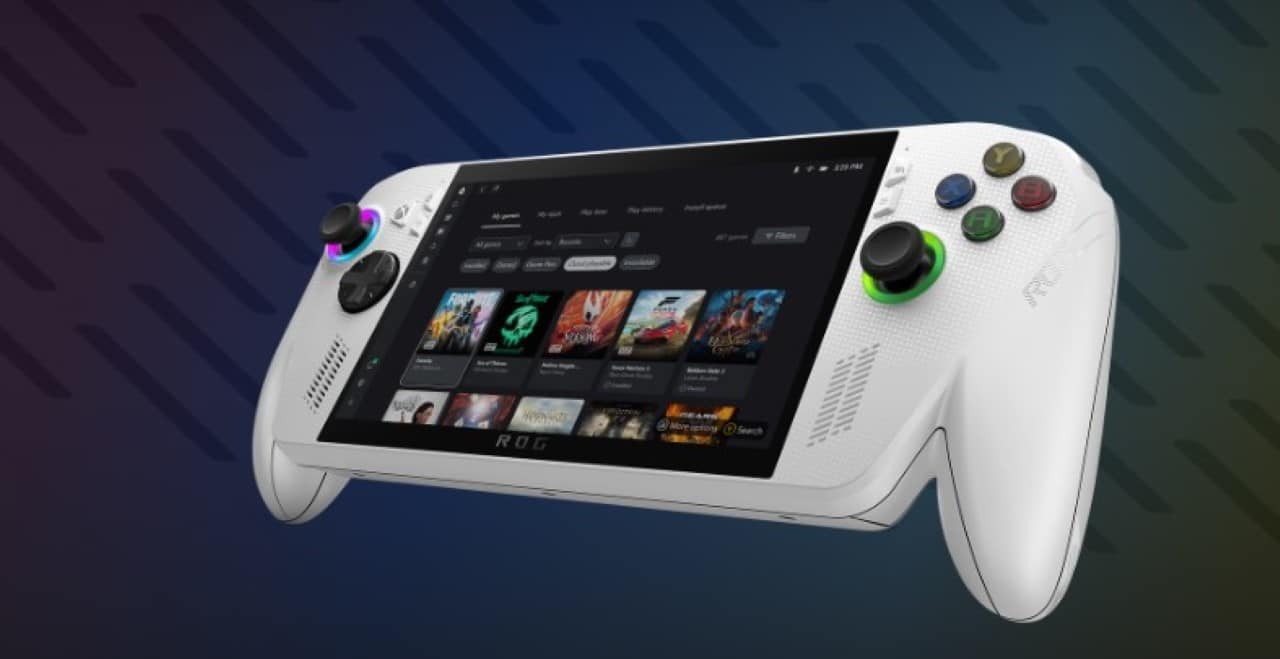
Rival companies now face the challenge of adjusting their own price lists or justifying higher prices through exclusive features. The Taiwanese company’s decision reflects an accurate reading of current consumer behavior, which demands flexibility of use and unrestricted access to digital game libraries anywhere, consolidating a new phase in the electronic entertainment industry.
Commercial dynamics compared to competitors
The financial adjustment implemented by Asus places the equipment on a head-on collision course with the Steam Deck, developed by Valve. Durante the previous months, the difference in cost between platforms kept consumers divided between the optimized interface of one and the raw power of the other. Agora, value parity eliminates the monetary barrier that kept potential buyers away from the Windows portable ecosystem.
Market analysts note that the aggressive pricing strategy reduces profit margin per unit but creates revenue opportunities through software partnerships and peripheral sales. The fight for dominance in the portable format directly benefits the end user, who now has access to cutting-edge technologies at considerably more affordable prices than in the year the category was launched.
Processing architecture and efficiency
The operating core of the device is based on the Ryzen Z1 processor, developed in a technical collaboration with AMD specifically to meet the demands of portable consoles. Este component integrates the Zen 4 architecture for core processing and RDNA 3 for graphics rendering, resulting in a chip capable of handling complex real-time calculations. The engineering behind the silicon focuses on delivering stable frame rates even under severe power consumption restrictions.
The processor’s adaptability allows the system to dynamically switch between different power profiles, optimizing battery usage as required by the running software. Independent Jogos with two-dimensional graphics require a fraction of the total power, while big-budget productions activate all available cores to maintain visual fluidity. Essa intelligent management prevents premature overheating and extends the life of internal components.
Performance tests demonstrate that the standard version of the Z1 chip offers superior value for money for most casual users who do not require the extreme power of the higher variant. Choosing this specific processor for the $499 model ensures that the user experience remains consistent, without the technical bottlenecks often found in entry-level hardware tailored for gaming.
Memory and internal storage capacity
To support the constant flow of data required by contemporary games, the manufacturer equipped the console with 16 gigabytes of RAM in the LPDDR5 standard. Esta technical specification guarantees substantial bandwidth, allowing the processor and graphics chip to access high-resolution textures and three-dimensional models without noticeable delays. The amount of memory allocated is identical to that found on many portable computers aimed at advanced productivity.
The main storage uses an NVMe solid-state drive with a capacity of 512 gigabytes, operating under the high-speed PCIe protocol. The read and write rate of this component drastically reduces loading times, eliminating long waits between game phases. Quickly transitioning between complex virtual environments has become a basic requirement for modern gamer immersion.
If the internal space fills up quickly due to the increasing size of the installation files, the device offers a simplified expansion route. The presence of a microSD card reader compatible with the UHS-II bus allows you to add hundreds of additional gigabytes in a matter of seconds. Esta modular solution prevents the user from having to open the console to replace the main unit, keeping the factory warranty intact.
The transfer speed of the integrated card reader is sufficient to play the vast majority of titles directly from removable media, with minimal impacts on overall performance. The storage flexibility suits both players who prefer to keep a large library installed simultaneously and those who rotate games as they complete the main campaigns.
Thermal control in compact chassis
Heat management in small form factor devices represents one of the biggest hurdles in hardware engineering, an issue that Asus addressed with the proprietary Zero Gravity system. The technology uses heat dissipation tubes constructed with a special internal mesh that defies gravity, ensuring that the coolant circulates efficiently regardless of the tilt of the device in the user’s hands. Dois ultra-thin profile fans work together to extract the hot air generated by the processor and expel it through the exhaust outlets located at the top of the case, away from the player’s fingers.
The acoustics of the cooling system have been calibrated to generate as little noise as possible, even when the fans reach maximum speed during intense use sessions. Maintaining safe temperatures not only prevents tactile discomfort during prolonged handling, but also prevents the phenomenon known as thermal throttling, where the processor automatically reduces its speed to prevent physical damage. The balance between thermal dissipation, operational noise and sustained performance defines the viability of any portable computer focused on high computational demand tasks.
Visual Dashboard Specifications
The equipment’s visual interface is made up of a 7-inch touchscreen, based on IPS panel technology, which delivers a native resolution of 1920 by 1080 pixels. The pixel density resulting from this combination surpasses that of many conventional desktop monitors, providing exceptional clarity for text and fine graphic details. The most significant technical difference of the display is the refresh rate of 120 Hertz, which updates the image one hundred and twenty times per second, resulting in extremely fluid animations and instant visual responses to the player’s commands. Integration with AMD FreeSync Premium technology synchronizes the frame rate generated by the graphics processor with the screen refresh rate, eliminating image breaks and visual artifacts that detract from the experience. Além In addition, the maximum brightness of the panel was designed to allow adequate viewing even in environments with strong artificial lighting or indirect sunlight, expanding the possibilities of use outside of closed environments. Protection against scratches and light impacts is provided by high-resistance tempered glass, essential for a device intended for daily transport in backpacks and cases.
Native software ecosystem
Unlike operating systems based on Linux with compatibility layers, the console leaves the factory running the full version of Windows 11. Esta engineering decision ensures immediate compatibility with all major digital distribution stores, including Steam, The user has complete freedom to install any traditional computer software, transforming the device into a mobile workstation when connected to an external monitor, keyboard and mouse.
Ergonomic design and power delivery
The external design of the chassis was sculpted after extensive ergonomic analysis, resulting in angled grips that adapt naturally to the contours of the hands. The internal weight distribution prevents wrist fatigue during prolonged periods of use, while the non-slip texture applied to the sides ensures firm handling. The action buttons, analog triggers and directional levers use highly durable components, designed to withstand millions of actuations without loss of mechanical precision.
The system’s power comes from an internal 40 watt-hour battery, whose autonomy varies drastically depending on the selected energy profile and software requirements. In high-end games with high graphics settings, the load sustains operation for approximately two continuous hours. Para extend usage time away from sockets, the operating system offers native frame limiting and resolution reduction tools, allowing the user to actively manage electrical consumption according to the needs of the moment.




