
Asus reduces the price of the ROG Ally portable console to $499 and intensifies competition in the gamer market


Hardware manufacturer Asus announced the official reduction in the price of the ROG Ally portable console to the $499 mark on the international market. The measure changes the device’s positioning in the category of handheld computers aimed at electronic entertainment. The adjustment specifically affects the version equipped with the standard AMD Ryzen Z1 processor. The commercial decision aims to attract consumers looking for a more accessible gateway to the computer gaming ecosystem in a mobile format.
The segment of portable devices based on personal computer architecture has seen continuous expansion in recent months. Diversas technology companies started investing in the development of compact hardware capable of running high-performance titles. The reduction in value establishes a new level of direct competition with other equipment already consolidated on virtual and physical shelves. The Taiwanese company’s move reflects an adaptation to the demands of a public sensitive to operational costs.
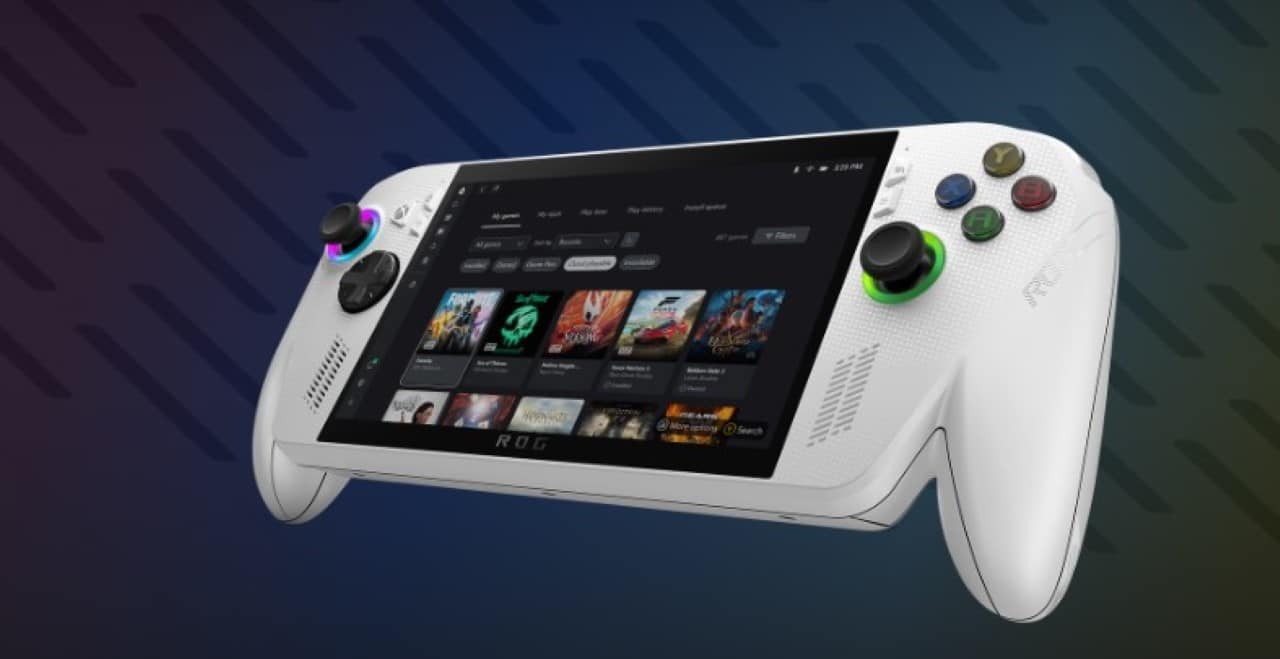
Previously sold at higher prices, the base model of the ROG Ally is now positioned as one of the cheapest options with the Microsoft’s native operating system. The price change comes at a time of stabilization in the global semiconductor supply chain. Analistas from the technology sector point out that price cuts on first generation hardware are common tactics to maintain retail sales volume. The strategy also sets the stage for future updates to the brand’s product catalog.
The manufacturer’s commercial strategy in the notebook segment
The console-style portable computer market gained significant traction with the entry of multiple strong competitors. The manufacturer’s decision to reduce the acquisition cost of its entry-level model aims to put direct pressure on market shares dominated by rival companies. With the new value stipulated, the equipment becomes a financially viable alternative for a broader demographic of consumers. The commercial maneuver also seeks to clear stocks of the version equipped with the standard chip before possible line renewals.
Electronics retail experts note that the five-hundred-dollar barrier is a crucial psychological point for the adoption of new hardware platforms. By positioning the product below this mark, the Taiwanese company makes it easier to make an impulse purchase decision or choose the device on commemorative dates. The aggressive pricing strategy is accompanied by campaigns focused on the device’s versatility as a complete personal computer. The sector’s expectation is that other brands will need to adjust their own price lists to maintain competitiveness.
Processor technical specifications and graphics performance
The computational core of the readjusted version is the Ryzen Z1 processor, developed in partnership with semiconductor manufacturer AMD. Este silicon component is built on the Zen 4 architecture, featuring six physical processing cores and twelve simultaneous execution threads. The advanced lithography used to manufacture the chip allows for a high density of transistors, resulting in greater energy efficiency. The processor was specifically designed to meet the stringent power consumption requirements of portable devices.
Image rendering is handled by the integrated graphics unit based on the RDNA 3 architecture, which has four dedicated computing units. Esta configuration delivers graphics processing power capable of running modern titles with quality settings adjusted for the portable format. AMD’s image scaling technology is present at the hardware level, allowing games to be rendered at lower resolutions and scaled up without significant loss of sharpness. State-of-the-art graphical instruction support ensures compatibility with the latest software libraries on the market.
The flexibility of the processor allows the user to switch between different power consumption thresholds, ranging from nine to thirty watts. In low power profiles, the chip prioritizes battery life, limiting the maximum operating frequencies of the cores. Quando plugged in and set to maximum performance mode, the silicon reaches its full data processing potential. Esta thermal and energy adaptation capacity is fundamental to the proposed hybrid use of the equipment.
Device memory and internal storage capacity
The system is equipped with sixteen gigabytes of LPDDR5 random access memory, soldered directly to the main board. Esta memory configuration operates at high frequencies, ensuring substantial bandwidth for communication between the processor and graphics unit. The amount of memory installed meets the requirements recommended by the vast majority of today’s software developers. Dual-channel architecture maximizes data throughput, reducing bottlenecks when loading heavy textures.
The lack of RAM memory expansion options requires the operating system to manage the available resources in an extremely optimized way. Dynamic memory allocation allows the graphics unit to use part of the system’s RAM as dedicated video memory, adapting to the demands of each application. Testes laboratory tests indicate that the speed of LPDDR5 memory compensates for physical capacity limitations in intense usage scenarios. System stability is maintained even with multiple applications running in the background.
Primary data storage is provided by an NVMe solid-state drive with a capacity of five hundred and twelve gigabytes. The physical format of the storage component follows the M.2 2230 standard, characterized by its extremely small dimensions. The SSD’s sequential read and write rates ensure operating system boot times in the few seconds and fast loading of complex phases. The direct connection interface to the motherboard’s main bus eliminates latency associated with older storage protocols.
To overcome factory space limitations, product engineering included a memory card reader in the microSD UHS-II standard. Este expansion slot provides a low-cost and easy-access storage upgrade route for the end user. The card reader’s transfer speed is sufficient for running previous generation games or independent titles with moderate file sizes. Managing extensive software libraries becomes feasible by combining fast internal storage with high-capacity removable cards.
Thermal engineering and integrated cooling system
The device’s thermal management is carried out by a proprietary system called Zero Gravity. Esta cooling engineering utilizes a dual fan configuration designed to operate efficiently regardless of the physical orientation of the device in the user’s hands. The heat generated by internal components is dissipated through heat pipes specially designed to combat gravity and maintain a constant flow of coolant. The internal structure directs hot air to exhaust outlets located on the top of the chassis, away from the operator’s fingers. Este mechanism ensures that the processor maintains high operating frequencies without suffering performance reduction due to overheating.
In addition to efficiency in thermal dissipation, the acoustic design of the fans was optimized to generate the lowest possible noise level during intense processing loads. The fluid dynamic bearings used in the fans reduce mechanical friction, prolonging the useful life of the part and reducing sound emission. The device’s housing works together with the cooling system, using materials that do not retain excessive heat in the areas in contact with the palms of the hands. Sensores of temperature distributed across the motherboard constantly monitors the thermal state and adjusts fan rotation in real time. The control software allows the user to select aggressive or silent ventilation profiles depending on the environment in which they are located.
Visual panel quality and screen refresh rate
The console’s visual interface is built around a seven-inch touch-sensitive panel with IPS technology. Esta screen offers a native resolution of 1920 by 1080 pixels, which ensures adequate pixel density for reading text and viewing complex graphic details. One of the main differentiators of the component is the 120 hertz refresh rate, responsible for delivering more fluid image transitions in fast action games. The display reaches a peak brightness of 500 nits, allowing the device to be used outdoors with moderate natural lighting. To mitigate frame drop problems, the manufacturer has integrated adaptive synchronization technology, which aligns the screen’s refresh rate with the frame generation of the graphics processing unit. Protection of the front panel is guaranteed by the application of Gorilla Glass Victus glass, known for its resistance against scratches and accidental impacts. The screen coating also has a special treatment to reduce unwanted reflections during use sessions. The adopted aspect ratio follows the sixteen by nine standard, compatible with the overwhelming majority of audiovisual productions and games developed for desktop computers. Factory color calibration seeks fidelity in the reproduction of the sRGB spectrum, meeting the demands of art directors in development studios. Toda This visual framework is designed to operate in harmony with operating system power profiles.
Integration with operating system and gaming ecosystem
Unlike some competitors that use systems based on Linux, this equipment runs the full version of Windows 11 natively. The choice of Microsoft’s operating system guarantees immediate compatibility with all digital software distribution stores, including third-party platforms and emulators. The manufacturer developed a proprietary software layer that acts as a library aggregator, facilitating navigation with physical controls without the need to use the touch screen. The retail package includes a period of free access to the Microsoft gaming subscription service, adding immediate value to newly purchased hardware.
Power autonomy and ergonomic chassis design
Power supply in portable mode relies on a lithium polymer battery with a capacity of forty watt-hours. Device autonomy varies drastically depending on the selected performance profile and screen brightness level, requiring conscious management on the part of the user. The recharging process is carried out via a USB Type-C port, supporting fast charging protocols that restore half of the battery’s capacity in a few minutes. The power adapter provided in the box has enough power to charge the device while it operates at maximum load.
The equipment’s chassis was sculpted with a focus on ergonomics, resulting in a total weight of six hundred and eight grams. The side grips have microscopic textures that increase friction and prevent the device from slipping during prolonged use sessions. The arrangement of action buttons, analog sticks and triggers follows the industry standard, ensuring immediate familiarity for experienced players. The slope of the contact surfaces has been calculated to keep the wrists in a neutral position, minimizing muscle fatigue.



