
BYD installs 1,600 ultra-fast charging stations in Europe and opens network to rival carmakers
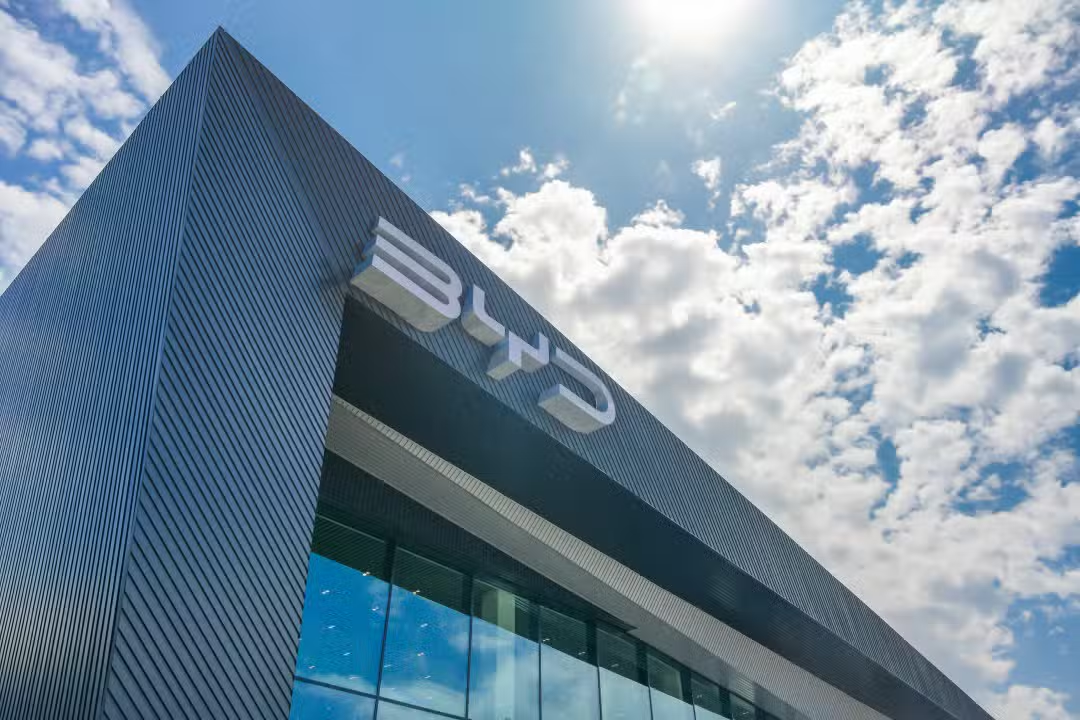
Asian manufacturer BYD has begun implementing a broad project focused on installing very high-power charging stations on the European continent. Strategic planning involves creating a robust infrastructure designed to support electric vehicles that require extreme power transfer rates. The first operational units begin operating in April.
The project envisages the installation of approximately 1,600 high-capacity plants, which will be strategically distributed across several countries in the region. Estas structures have integrated energy storage systems, specifically developed to manage peaks in demand on the local electrical grid. The initiative seeks to solve one of the main current bottlenecks in electric mobility in the world.
Currently, the vast majority of public chargers available in the region operate with powers of less than 400 kW, which limits the speed of supply. The new network will introduce equipment capable of reaching peaks of up to 1,500 kW in specific usage situations. Esta change drastically alters drivers’ waiting time at gas stations.
Technological expansion and strategic routes
The ultra-fast charging technology developed by the automaker allows premium models to increase the battery level from 10% to 97% in around nine minutes. The performance far exceeds the averages recorded by conventional electric vehicles that are already in circulation on the roads. The reduced time brings the recharging experience closer to traditional combustion refueling.
The implementation of this network follows a successful model that has already been tested and validated in the Asian market in recent years. In the company’s home region, thousands of chargers with similar specifications are in full daily operation. The company mapped strategic routes and high-flow highways to position the new stations.
The central objective of mapping is to ensure a sufficient density of points to sustain the increase in sales of its own automobiles. The constant presence of chargers eliminates range anxiety, a factor that still keeps many consumers away from the energy transition. Logistics planning considers the main commercial and tourist routes on the continent.
In addition to the very high power connections, the locations will have smaller capacity secondary plugs, operating in the 50 kW range. Operational flexibility guarantees service for a wider range of vehicles traveling on the highways. Isso includes older models or those that have factory technical limitations for receiving fast charging.
Access released for Asian automakers
A central decision in BYD’s strategy involves granting access to its stations to vehicles manufactured by other Asian companies in the automotive sector. Marcas of weight such as Xpeng, Nio, Geely and Xiaomi will have technical and commercial permission to use the new infrastructure when recharging their cars. The measure directly facilitates the introduction of new models from these manufacturers in the strict European market, which demands high standards of efficiency and availability of power points. The action represents an unusual movement of cooperation between companies that, in their country of origin, compete fiercely for the preference of local consumers.
By providing the technological base for rivals, the automaker acts as a facilitator of Asian penetration on the continent, creating a stronger and more unified commercial bloc. The creation of this shared network significantly reduces barriers to entry for new competitors, allowing partner brands to focus their investments on marketing and product development. The joint ecosystem strengthens the perception of reliability of imported vehicles among local consumers, as the availability of ultra-fast charging points is usually the decisive factor when purchasing an electric car. The standardization of connectors and the compatibility of payment systems between different manufacturers simplify the routine for owners.
Direct pressure on Western brands
Asian cars equipped with the new generation of charging systems have energy absorption speeds that surpass many equivalent Western models available in dealerships. Enquanto vehicles from premium German and French brands still require longer periods connected to lower power stations, new entrants demonstrate the ability to recover hundreds of kilometers of autonomy in just a few minutes of connection. The technological disparity puts immediate pressure on infrastructure networks already established on the continent, forcing an acceleration in modernization plans and an increase in the power of their own equipment so as not to lose relevance in the sector. The difference in performance highlights recent advances made in the development of 800 volt and higher electrical architectures, which have become the new high-performance industry standard. Local manufacturers are now faced with the need to quickly update their thermal management hardware and software to keep up with the pace set by foreign competitors. The introduction of chargers that offer up to four times more power than the current average available on public roads completely redefines drivers’ expectations. Consequentemente, recharging speed becomes one of the main selling points in the luxury and high-performance vehicle segment, changing the dynamics of competition.



Engineering applied to power units
1 MW charging units represent a leap forward in electrical engineering, requiring advanced liquid cooling components in cables and connectors. The continuous cooling system prevents overheating during the massive transfer of electrons to the automobile’s power packs. Operational safety remains the absolute priority in equipment design.
To avoid the collapse of local distribution networks, some stations incorporate banks of large stationary batteries into their physical structure. Accumulators store energy during periods of low demand and release it quickly when multiple vehicles connect simultaneously. The technological solution alleviates the strain on public infrastructure in European cities.
Compatibility with high-density cells
The network’s initial compatibility prioritizes cars equipped with Blade batteries, which were developed and patented by the Asian automaker itself. The components use lithium-iron-phosphate chemistry structured in a sheet format, which guarantees greater energy density and thermal resistance. The architecture withstands the stress caused by rapid injection of direct current.
The continuous improvement of this technology is based on the massive collection of real data from daily operations in the Asian market. Engineers adjust recharging algorithms remotely to optimize the equipment’s power curve. Constant monitoring ensures that the battery receives the maximum amount of energy without compromising its long-term lifespan.
Transformation in mobility policies
The aggressive expansion of charging infrastructure comes at a time of intense transformation in mobility policies on the European continent. Strict environmental legislation drives the mandatory transition to zero-emission fleets in the coming years. The arrival of an independent ultra-fast network changes the power dynamics between automakers.
The move reduces dependence on European energy consortia and creates a self-sufficient ecosystem for imported vehicles. The scenario forces local governments and energy companies to review their own investment schedules in electrical grids. The demand for high voltage connection points grows exponentially every quarter.
The presence of stations capable of delivering 1,500 kW on crucial highways facilitates long-distance travel throughout the territory. The infrastructure acts as a catalyst for the mass acceptance of Asian brands by the European public. Manufacturers now offer not just vehicles, but a complete fueling solution that rivals the convenience of fossil fuel stations.
Structures activation schedule
The installation of additional units will occur progressively over the next few months, with an initial focus on countries that record the manufacturer’s highest sales volumes. The expectation of the company’s management is that the network will achieve comprehensive and robust territorial coverage by the end of the stipulated expansion cycle. The works schedule follows strict planning to ensure the availability of services without operational interruptions.
Veja Tambem em News (EN)

Research reveals that parents are unaware of how their children use artificial intelligence

Samsung releases new system update with new features for Galaxy Watch 4 users

Digital retail reduces the value of the Galaxy S25 5G smartphone with bank bonuses and device exchange

Amazon’s wireless CarPlay adapter has a 50% discount and high approval ratings from drivers

Zach Cregger’s new Resident Evil ignores games and focuses on an unprecedented story with new characters

Rumor suggests that Nintendo is preparing a special edition of the Switch 2 with a remake of Ocarina of Time

Apple accelerates production of the iPhone 17e and develops new Air model with dual camera system

Epic Games platform releases twelve high-budget games at no permanent cost for PC users

PlayStation 5 Pro price drop accelerates digital retail sales and eliminates global stocks

New Galaxy Watch 9 firmware appears on server and confirms progress in software development

Apple’s commemorative project tests cell phone with 1.1 millimeter edge and curved screen for 2027
