
Diogo Moreira breaks a fast of almost two decades and secures an unprecedented place in MotoGP for the season

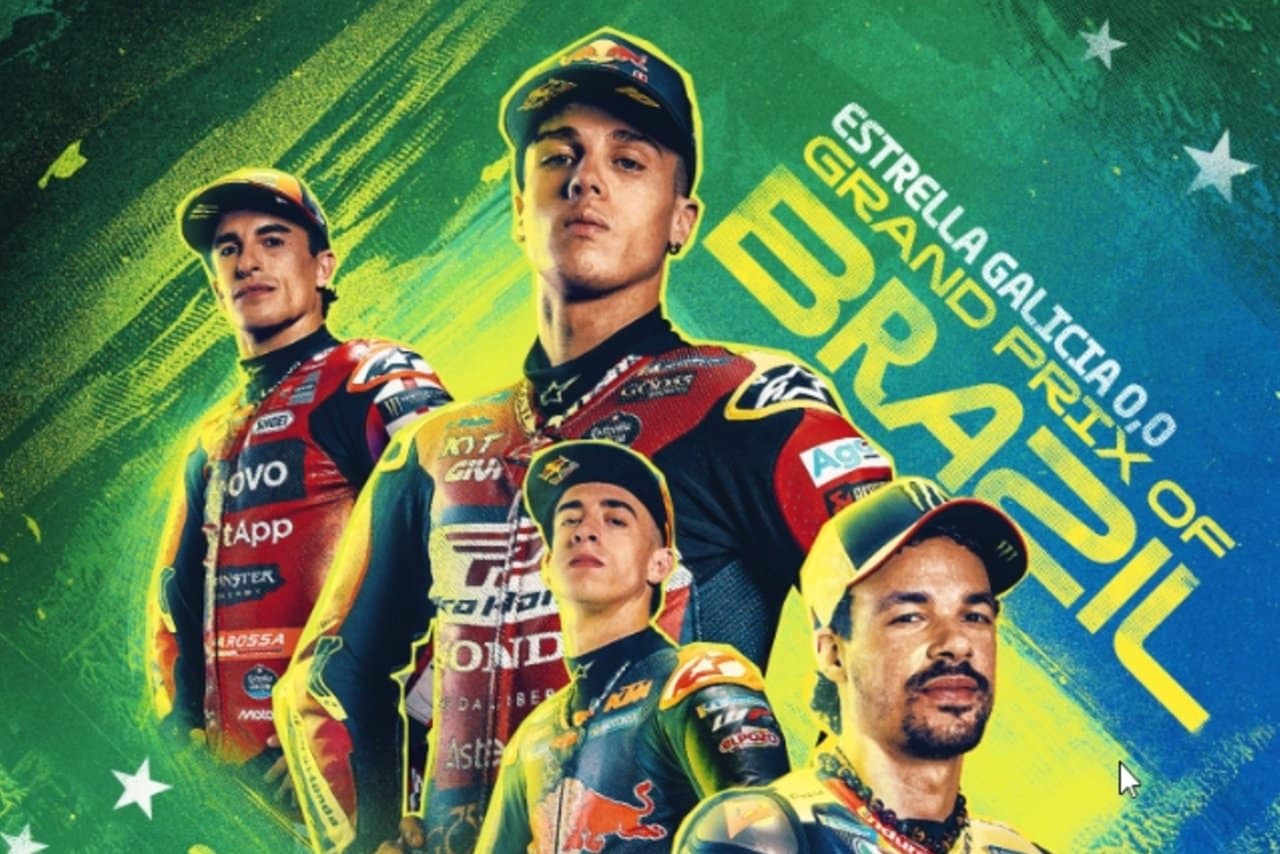
National motorcycling resumes its place in the main category of world motor sport after a long period of absence from the premier class grids. The São Paulo driver Diogo Moreira signed an official contract with the LCR Honda team and will compete in the top category world championship starting next season. Confirmation of the agreement seals the rise of the athlete, who recently secured the title in the access division and caught the attention of the main manufacturers in the paddock.
The negotiation involves direct support from the Japanese factory, guaranteeing updated equipment and cutting-edge engineering support for the newcomer. The agreement ends the intense speculation that had been circulating behind the scenes in Europe since the final stretch of the previous championship, when the competitor’s consistent performance placed him at the top of the wish list of several team managers who were looking for renewal in their driver ranks.
The return of a country representative to the two-wheel elite comes exactly nineteen years after the last regular participation of a compatriot in the championship. The move generates strong expectations among motor sport enthusiasts and moves the sponsorship market aimed at the South American automotive sector, which once again has a strong showcase in the main motorcycle racing competition on the planet.
Initial trajectory on dirt tracks and transition to asphalt
The initial contact with motor sport occurred early, with the first experiences recorded in motocross when the rider was just five years old. The base built on the ground provided fundamental motorcycle control skills in low-grip conditions, a technical feature that proved essential years later in high-level competitions on European asphalt.
The decision to migrate to motorcycle racing required a drastic change of scenery, leading the young talent to cross the ocean in search of more structured competitions. Adaptation to the paved circuits was quick, culminating in significant victories in the Spanish training categories, which serve as the main talent pool for the world championship.
Absolute dominance and winning the world title in the intermediate category
The victorious campaign in the Moto2 class was the determining factor for signing the contract with the Honda structure. Pilotando for the MT team
The championship was marked by fierce disputes against experienced opponents, requiring accurate race reading and impeccable management of tire wear. Consistency in the scoring zones, combined with strategic victories on highly technically complex circuits, paved the way for winning the trophy in advance.
The transition from Moto3 to Moto2, which took place years before, had already demonstrated the competitor’s ability to adapt to heavier and more powerful machines. The world title in the intermediate category served as the definitive credential, proving to the directors of the main class that the rider has the necessary psychological and technical preparation to face the motorcycling elite.
Contract details with satellite team and Japanese machinery
The LCR structure, led by former pilot Lucio Cecchinello, has a solid history of developing new talent and close collaboration with the Honda headquarters. The agreement provides for the supply of a factory-spec RC213V prototype, ensuring that the rookie will have access to the same aerodynamic and electronic upgrades made available to the official team.
Sharing telemetry data with his teammate, the experienced Frenchman Johann Zarco, will be a crucial tool in the learning process. The presence of a veteran on the other side of the garage provides a valuable technical reference for suspension fine-tuning and engine mapping during race weekends.
The Japanese automaker is going through a period of technical restructuring, seeking to regain competitiveness against the European manufacturers that have dominated in recent seasons. Hiring a young driver with an aggressive driving style is part of the brand’s strategy to extract the maximum potential from the new chassis and direct the future development of the prototype.
The contract sets progressive performance targets, with an initial focus on adapting to complex electronics and carbon brakes. The technical team designated to accompany the pilot has engineers dedicated exclusively to data analysis, aiming to accelerate the learning curve in the first stages of the international calendar.
Physical demands and aerodynamic adaptation in elite motorcycling
The technological leap between the intermediate category and the premier class represents the biggest challenge in the career of any professional competitor. Current prototypes easily exceed the three hundred and sixty kilometers per hour mark, driven by engines that generate almost three hundred horsepower. Além of brute force, modern motorcycles are equipped with on-the-go height adjustment devices and intricate aerodynamic packages, which require the rider to have exceptional hand-eye coordination to operate buttons and levers while negotiating curves at extreme lean angles.
To withstand the intense gravitational forces generated during braking and acceleration, the physical training regime needs to be completely overhauled. Preparation involves specific work on strengthening the neck, shoulders and forearms, areas of the body subjected to continuous stress during the forty-five minutes of a main race. Cardiovascular endurance is also pushed to the limit, considering that athletes’ heart rates remain close to maximum capacity throughout the duration of the event, under conditions of extreme heat on Asian circuits and constant mental exhaustion.
The historical legacy left by motorbike riders
The arrival of a new talent in the top category revives a tradition that has remained dormant since the retirement of Alex Barros, the most successful South American driver in the history of the world championship. Durante his long stay in the elite, Barros accumulated memorable victories against legends of the sport, establishing a standard of excellence that inspired subsequent generations. The prolonged absence of a permanent representative on the main grid has created a gap in the public’s following of the sport, which now finds a new idol to support on Sunday mornings. The impact of this hiring goes beyond the results on the tracks, acting as a catalyst for the resurgence of commercial interest from television stations and large corporate brands, which see motorcycle racing as a marketing platform with high impact and global reach.
Official testing schedule and first contacts with the new prototype
The first official contact with the new motorcycle will take place during post-season testing on the Ricardo Tormo circuit, in Valência. Esta initial session will be used for basic ergonomic adjustments, such as the positioning of the footpegs, handlebars and shape of the fuel tank, allowing the rider to find the ideal posture before the start of the rigorous winter development program.
Basic structure and the promotion of new talents on the national scene
Ascension to the premier class acts as a motivating element for young riders competing in regional and national motorcycle championships. The practical demonstration that it is possible to follow the path from the youth categories to the top of world sport validates the efforts of training academies and independent teams that invest in discovering new talents.
Sports federations and organizers of local championships are already registering an increase in demand for registrations in initiation categories. The phenomenon reflects the importance of having a representative in a prominent position on the international scene, creating a positive cycle of investments in racetrack infrastructure and professionalization of technical teams that work in base training.




