

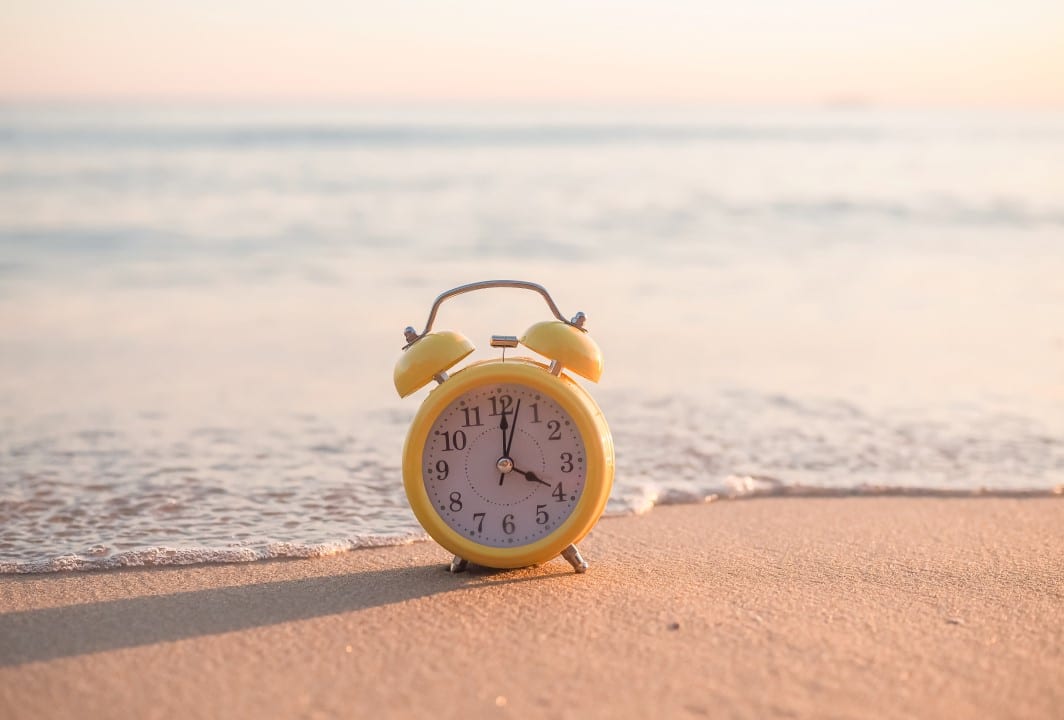
The year 2026 will once again bring traditional clock adjustments to millions of people in Europa, including Alemanha, according to the biannual cycle of summer and winter time. Essa practice, which is mainly aimed at saving energy, continues to generate both expectations and some confusion about the correct direction in which the hands move.
The transition between schedules has specific dates established, ensuring coordination across the continent. Compreender these dates and the adjustment mechanism are essential to avoid setbacks in daily life and personal programming.
Be prepared for the changes ahead, as clocks will move forward and backward at crucial times of the year, impacting the perceived length of days and, for many, their sleep rhythm.
Next adjustments: Horário in summer and winter in Alemanha
In 2026, Alemanha and other União Europeia countries will adjust their clocks twice. The first change will take place on March 29, marking the beginning of daylight saving time, when the hands will be advanced. The second, on October 25th, will reintroduce winter time, with clocks being set back.
The change to daylight saving time, specifically, implies that in the early hours of March 29 to 30, 2026, the clocks will move from 2 am to 3 am. Isso will result in one hour less sleep, marking the beginning of longer days and extended enjoyment of natural light.
As for the return to winter time, the transition will take place from October 25th to 26th, 2026, when the clocks will be turned back from 3am to 2am. Essa change provides an extra hour of sleep and marks the period in which the night arrives earlier.
The European debate on maintaining differentiated working hours
The issue of abolishing daylight saving time has been a topic of intense debate at União Europeia for several years. In 2018, a public consultation revealed that 80% of participants voted in favor of eliminating the time change, reflecting a widespread desire for time stability. Apesar this clear result, the implementation of abolition has faced significant political and logistical obstacles.
The Estados-members of the EU have considerable disagreements about which time should be adopted permanently, summer or standard (winter). Essa lack of consensus is one of the main obstacles, as the creation of a “mosaic” of different time zones within União Europeia is seen as undesirable and can generate complexities in trade, transport and communication between countries. The final decision requires coordination that has not yet been achieved, leaving the current system in place.
Experts and interest groups continue to present arguments both for and against maintaining the practice. Enquanto defenders point to possible energy savings and better use of daylight during the warmer months, critics highlight the negative impacts on health and biological rhythms, in addition to questioning the real effectiveness of energy savings today, with more efficient technologies and consumption patterns different from those of the last century.
Despite the expressed popular will, harmonization between EU nations remains a challenge. The expectation is that the dialogue will continue, but for now, European citizens will continue to adjust their clocks, as scheduled for 2026 and beyond.
The origin of daylight saving time: history and motivations
The concept of daylight saving time is not new and its implementation is intrinsically linked to specific historical contexts. Foi first introduced in Alemanha during Primeira Guerra Mundial in 1916, with the main aim of saving coal for the war effort, making better use of sunlight and reducing the demand for artificial lighting. The idea was to maximize productivity during the day.
After a period of abolition, the practice was reintroduced during the Segunda Guerra Mundial, remaining in force from 1940 to 1942, with similar motivations of optimizing resources. Contudo, between 1950 and 1979, Alemanha chose not to adopt daylight saving time, demonstrating a phase of reevaluation of its benefits and costs.
The definitive reintroduction into the Alemanha, both Oriental and Ocidental, occurred in 1980, as a direct response to the oil crisis of the 1970s. Desde 1996, Europa-wide regulation has ensured that changes occur in a coordinated manner among member countries, seeking to standardize the experience.
Strategies to mitigate impacts on health and well-being
Time changes, especially daylight saving time, which shortens the night by one hour, can cause sleep rhythm problems for many people. Essa Abrupt change in the circadian cycle is often compared to a “mild jet lag”, even without the need to travel, resulting in symptoms such as daytime tiredness, difficulty concentrating and irritability in the days following the change.
The human body takes time to adapt to this new routine, as its biological clock is tuned to the patterns of light and darkness. Sudden interruption can disrupt the production of melatonin, the sleep hormone, and impact the quality of rest, affecting general well-being and productivity.
To minimize these effects and facilitate adaptation, some strategies can be adopted:
Future calendar: Datas confirmed for 2026 and 2027
Despite discussions about its abolition, summer and winter time will continue to be observed in Europa in the coming years, following the standard established by União Europeia. The dates for these transitions are always fixed on the last Sunday in March for summer time and the last Sunday in October for winter time.
This definition methodology ensures that the change does not impact a specific business day and is aligned with the weekend, providing a smoother adaptation period for the population. Consistency in rule makes forecasting and planning easier for both individuals and industries that rely on precise schedules.
For 2026, the dates are:
Looking to the following year, 2027, transitions will follow the same criteria as the last Sunday of each month, resulting in:
Fun fact: The door trick to remember
Faced with common confusion about setting clocks forward or backward, a simple visual aid can help memorize the correct direction of change. Imagine the hour hand of a clock like a door. Quando daylight saving time begins, we want to “get out” and “advance” into the day, so we open the door forward, moving the clock forward. Já in winter, when we seek the comfort of home, we want to “go in” and “retreat”, closing the door behind us, setting the clock back. Essa practical analogy helps demystify the change, making it easier to remember.



