
Honda reveals CB400 Super Four and CBR400R concepts with four-cylinder engine and E-Clutch clutch
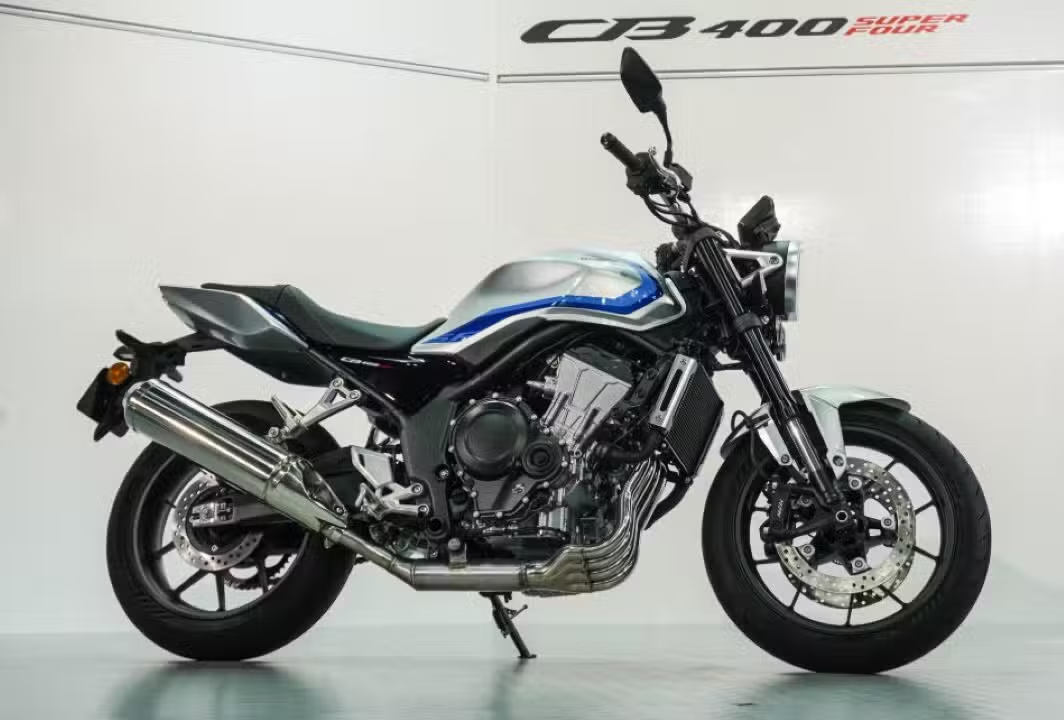
Japanese manufacturer Honda surprised the global two-wheeled vehicle market by officially presenting two new concept motorcycles during the 42nd edition of Osaka Motorcycle Show, at Japão. The models revealed mark the return of a mechanical configuration highly valued by enthusiasts in the sector: the in-line four-cylinder engine aimed at the medium-displacement category. Durante the press conference, the automaker detailed the technical and visual characteristics of the projects, which promise to unite the brand’s tradition with recent technological innovations.
The new products presented are the CB400 Super Four E-Clutch Concept and the CBR400R Four E-Clutch Concept. Ambas the motorcycles were developed on an unprecedented platform, specifically designed to optimize sporting performance without giving up the comfort necessary for daily urban commutes. The main technological innovation incorporated into the models is the automated clutch system, which eliminates the need to manually operate the lever in stopping and starting situations.
Honda 0日(金)から22日(日)>において、プレスカンファレンスを実施し、コンセプトモデル「CB400
CB400 SUPER BỐN ly hợp điện tử…pic.twitter.com/mZ16Gcd6ki
— Xe đạpNgày 20 tháng 3 năm 2026
In addition to the practicality offered by the new transmission system, the automaker’s engineering team implemented electronic accelerator technology, known as throttle-by-wire. Esse feature guarantees an immediate and precise response to the pilot’s commands, adapting to different speed ranges and riding conditions. The combination of the characteristic sound of the four-cylinder engine with advanced electronics positions the concepts as strong bets for the future of the medium-displacement segment in the international market.
Visual identity and design features of new motorcycles
The CB400 Super Four E-Clutch Concept was designed based on the historical heritage of the Japanese manufacturer’s naked motorcycles. The visual design preserves aesthetic elements that refer to classic models launched in the nineties, but incorporates modern finishes and state-of-the-art materials. The round LED headlight and the flowing lines that connect the fuel tank to the tail reinforce the identity recognized globally as the standard of the CB line.
「Khái niệm ly hợp điện tử CBR400R FOUR」も本日初公開しました👀💘pic.twitter.com/SsssqQKCp4
— Xe đạpNgày 20 tháng 3 năm 2026
On the other hand, the sporty variant CBR400R Four E-Clutch The body surface features pronounced creases and a finish that simulates machined metal, giving the front part an aerodynamic and technological appearance. The design team’s goal was to create a vehicle capable of conveying the sensation of speed even when parked.
The seat structure and footpeg positioning have been adjusted on both models to offer superior ergonomics. Essa suitability allows motorcyclists of different heights to operate machines safely and comfortably. The new generation sets a standard of versatility for four-cylinder motorcycles, making them suitable for both heavy urban traffic and high-speed highway use.
Mechanical specifications and structural components
The development of the new mechanical platform required extensive revisions to the chassis architecture and suspension components. The main structure was redesigned to support the power of the new engine and provide greater torsional rigidity, an essential feature for maintaining stability in tight curves and fast maneuvers. Engineers sought an exact balance between the lightness necessary for agility and the robustness required by a high-speed engine.



The engine’s internal components were designed with low-friction materials, aiming not only for performance, but also compliance with strict environmental standards for gas emissions. The exhaust system has undergone optimizations to maintain the classic four-cylinder noise while efficiently filtering pollutants through new generation catalytic converters.
The technical specifications released during the event include the following elements:
- The new 400 cc engine has liquid cooling and double overhead camshafts.
- The tubular chassis was restructured to ensure greater agility when changing direction.
- The front suspension system uses high-performance inverted forks for accurate terrain reading.
- The high-resolution digital instrument cluster allows full connectivity with the driver’s smartphone.
- The braking system features dual-channel ABS technology for greater safety during emergency braking.
Functioning and advantages of the automated transmission system
E-Clutch technology represents one of the manufacturer’s biggest advances in terms of the interface between the rider and the machine in recent years of research. The system uses electronic actuators to activate and disengage the clutch in fractions of a second, ensuring fluid gear changes without interruption in power supply. Diferente of a fully automatic system, the driver maintains the gearshift pedal, preserving the tactile sensation and control over gear selection.
This engineering solution proves to be particularly useful in dense traffic conditions in large cities, where the continuous operation of the manual clutch can cause fatigue to the motorcyclist. The system management software is programmed to interpret the user’s riding style, adjusting the coupling speed according to the pressure exerted on the accelerator.
During use on closed tracks or winding roads, the driver has electronic assistance from the intelligent clutch, which manages gear reductions almost imperceptibly. The electronic system continuously monitors engine speed and wheel speed to prevent locking or unwanted loss of traction.
The integration between the four-cylinder engine and on-board electronics allows the driver to focus their attention completely on the trajectory and braking. With this technology, the manufacturer is able to offer a motorcycle that suits both beginners looking for ease of riding and veterans looking for pure performance and mechanical precision.
Value estimates and commercial positioning in the sector
With regard to acquisition costs, market projections indicate that the new 400 cc machines will have a higher value than previous generations, justified by the mechanical complexity and the addition of new technologies. The estimated market value ranges between 1.15 million and 1.3 million yen, reflecting investments in new materials and state-of-the-art electronic control systems. Esse price level places the new CB and CBR line in a premium segment, aimed at consumers looking for the refinement of a multi-cylinder engine in a compact and light chassis.
The manufacturer is betting that the recognized durability of its four-cylinder engines will be the decisive difference in attracting buyers who value traditional engineering combined with modernity. Além In addition, the ease of maintenance and the extensive global technical assistance network should sustain sales of the new models in the long term. The automotive sector is now awaiting confirmation of the final power and torque figures, which will be released in the coming months, as homologation tests progress at the company’s development centers.
Riding dynamics and suspension adjustments
The riding dynamics of the new concept motorcycles have been extensively tested to ensure predictable and safe behavior in a variety of asphalt conditions. The calibration of the rear suspension, combined with the inverted forks at the front, provides efficient absorption of road irregularities, minimizing the transfer of bumps to the handlebars and seat. The engine was adjusted to deliver linear torque, avoiding sudden power fluctuations at low speeds, which makes it easier for less experienced riders to control the motorcycle. Weight distribution was calculated down to the millimeter to keep the center of gravity low, favoring directional stability at high speeds and agility in parking maneuvers. The set of brakes, sized to support sports use, acts in perfect synchronization with the engine brake managed by the electronic system, offering progressive and highly reliable stopping power in any weather situation.
Global availability and production stages
Although they were presented as conceptual vehicles, the motorcycles display a level of finish and detailing that indicates an immediate proximity to series assembly lines. Especialistas from the sector point out that the manufacturer will follow its traditional global expansion schedule for medium-displacement models. The effective commercial launch at dealerships should take place in the coming months, starting with the Asian market and then moving on to the European continent and other regions with high demand for compact sports vehicles.
Veja Tambem em News (EN)

Research reveals that parents are unaware of how their children use artificial intelligence

Samsung releases new system update with new features for Galaxy Watch 4 users

Digital retail reduces the value of the Galaxy S25 5G smartphone with bank bonuses and device exchange

Amazon’s wireless CarPlay adapter has a 50% discount and high approval ratings from drivers

Zach Cregger’s new Resident Evil ignores games and focuses on an unprecedented story with new characters

Rumor suggests that Nintendo is preparing a special edition of the Switch 2 with a remake of Ocarina of Time

Apple accelerates production of the iPhone 17e and develops new Air model with dual camera system

Epic Games platform releases twelve high-budget games at no permanent cost for PC users

PlayStation 5 Pro price drop accelerates digital retail sales and eliminates global stocks

New Galaxy Watch 9 firmware appears on server and confirms progress in software development

Apple’s commemorative project tests cell phone with 1.1 millimeter edge and curved screen for 2027
