
Martial arts and action film legend Chuck Norris dies at age 86 in Hawaii hospital
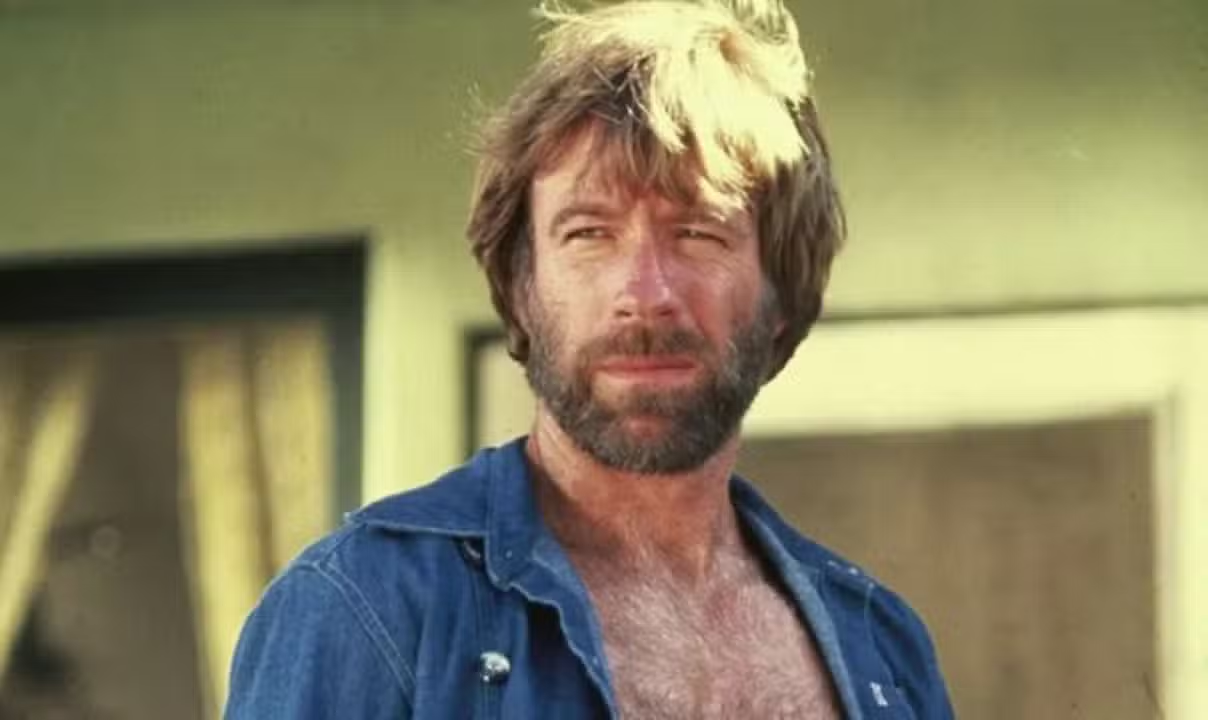
The renowned American actor and martial arts master passed away peacefully after a period of hospitalization in a medical unit located in the state of Havaí. Aos 86 years old, the artist was accompanied by his closest family members during his last moments in the health facility. The death was confirmed through an official statement issued by family representatives, who requested privacy during the mourning period. The exact clinical causes that led to death were not immediately detailed by the medical team, but hospital professionals reported that the transition occurred smoothly and without additional complications.
Official statements and final moments in the medical unit
The actor’s advisory team released a press release informing about the loss to the entertainment industry and the global martial arts community. The document highlights the strength and resilience that have always characterized the artist’s public and private figure, highlighting that he maintained his lucidity and combative spirit until his last moments. Familiares direct, including his wife Gena O’Kelley, were present in the hospital room, ensuring that the atmosphere was one of tranquility and absolute respect.
In the days leading up to his death, movement at the Hawaiian health unit was kept strictly confidential to avoid crowds and preserve the privacy of relatives. Profissionais health professionals who treated the patient reported a cordial and grateful behavior on the part of the actor, even in the face of the physical adversities inherent to the treatment. The choice of Havaí for his final days reflects the personal connection he maintained with the state, a place he frequently visited for retreats and moments of rest away from the spotlight of the major film studios.
Beginning of the military trajectory and discovery of struggles
Born on March 10, 1940, in the city of Ryan, Oklahoma, the future star’s childhood was marked by financial difficulties and a personality described by himself as shy. The big turning point in his life occurred at the end of the 1950s, when he made the decision to enlist in Força Aérea of Estados Unidos, and was subsequently sent to serve at the Osan air base, located in Coreia of Sul.
It was during his military service on Asian soil that he had his first contact with Eastern combat disciplines, dedicating himself intensely to training the martial art Tang Soo Do. The physical fitness and mental discipline acquired in the Forças Armadas shaped not only his body, but also his philosophy of life, transforming the reserved young man into a formidable competitor focused on his goals.
Upon returning to the Estados Unidos, he began participating in regional and national tournaments, accumulating significant victories and winning the title of world middleweight karate champion. Essa competitive phase established his reputation as one of the most technical and respected fighters in the country, opening doors for teaching the sport and creating his own fighting system, Chun Kuk Do.
Transition to cinema and international acclaim
Entry into the cinematic universe happened gradually, initially providing technical consultancy and training celebrities from Hollywood in their academies at Califórnia.
– The turning point in his on-screen career occurred in 1972, when he was invited to act in the feature film O Voo do Dragão, a production recorded at Itália.



– The epic fight scene in Coliseu from Roma, where he faced the legendary Bruce Lee, became a historic landmark in world martial arts cinematography.
– Durante the 1980s, the actor consolidated his status as an absolute protagonist in films that portrayed military heroism, dominating the box office at the time.
Television success and audience expansion
In the 1990s, the artist made a strategic transition to television, taking on the lead role in the series Walker, Texas Ranger. The production, which premiered in 1993, remained on the air for eight consecutive seasons, achieving impressive audience ratings and being broadcast to dozens of countries around the world. The episodic format allowed him to explore themes of morality, community justice, and law enforcement with an approach that consistently blended physical action and traditional values.
The series’ reach was profound, introducing the actor to an entirely new generation of viewers who hadn’t caught up with his films from the previous decade. The figure of the Texas ranger, with his signature hat and precise blows, solidified his position as an enduring cultural icon on American television. The production also served as a platform to promote messages against the use of drugs and in favor of youth education, themes that he actively defended off the recording screen.
Expansion into literature and entrepreneurship
Outside of the recording studio, the artist has also built a diverse portfolio as a writer and entrepreneur in the wellness sector. Ele has published numerous literary works ranging from detailed autobiographies to books focused on life philosophy, fitness, and family values. Suas publications frequently reached the bestseller lists, demonstrating that their influence went far beyond physical performance on movie screens.
In the field of entrepreneurship, he invested in the development of gym equipment and endorsed products aimed at physical health. The personal brand he built over decades of sporting discipline gave great credibility to his business ventures. Essa business vision allowed him to maintain an active presence in the consumer market even during periods in which he reduced his filming and public appearances.
Internet phenomenon and digital reinvention
With the advent of social media and the popularization of broadband internet in the early 2000s, the actor’s image underwent an unexpected and massive reinvention on a global scale. The emergence of so-called satirical facts about his invincibility and superhuman strength turned him into one of the first great memes of the digital age. Frases exaggerations about his physical capabilities circulated on forums, humor websites and video platforms, creating a virtual mythology that transcended his original filmography. Longe After rejecting the joke, the artist embraced the phenomenon with good humor, participating in advertising campaigns, talk shows and even launching books that compiled the best jokes created by internet users. Essa’s ability to laugh at himself and interact with internet culture ensured his continued relevance in the current century, keeping his name top of mind for a young, highly connected audience who saw him not just as a classic action hero, but as a ubiquitous entity in contemporary pop culture.
Philanthropic foundation and work in schools
In addition to his success in entertainment, the martial arts master’s most significant work lies in his social work through the Kickstart Kids foundation. Criada in 1990, the non-profit organization integrated martial arts teaching into the public school curriculum, with the aim of removing teenagers from risky situations and building character, discipline and respect. The program has served tens of thousands of young people over the decades, using the philosophy of Eastern combat as a tool for social transformation and continuous personal development.
Farewell to a global icon
His death closes a fundamental chapter in the history of action cinema and martial arts in Ocidente. The artist leaves behind five children, including directors and producers Mike and Eric, as well as grandchildren and an incalculable legion of admirers around the world. Sua trajectory, which started from a humble childhood in the interior of the Estados Unidos to global stardom, remains a record of perseverance, adaptation and willpower, elements that defined both its fictional characters and its real journey.
Veja Tambem em News (EN)

Research reveals that parents are unaware of how their children use artificial intelligence

Samsung releases new system update with new features for Galaxy Watch 4 users

Digital retail reduces the value of the Galaxy S25 5G smartphone with bank bonuses and device exchange

Amazon’s wireless CarPlay adapter has a 50% discount and high approval ratings from drivers

Zach Cregger’s new Resident Evil ignores games and focuses on an unprecedented story with new characters

Rumor suggests that Nintendo is preparing a special edition of the Switch 2 with a remake of Ocarina of Time

Apple accelerates production of the iPhone 17e and develops new Air model with dual camera system

Epic Games platform releases twelve high-budget games at no permanent cost for PC users

PlayStation 5 Pro price drop accelerates digital retail sales and eliminates global stocks

New Galaxy Watch 9 firmware appears on server and confirms progress in software development

Apple’s commemorative project tests cell phone with 1.1 millimeter edge and curved screen for 2027
