
Meteorite fall destroys roof in Germany and generates false rumors about military attack in the country

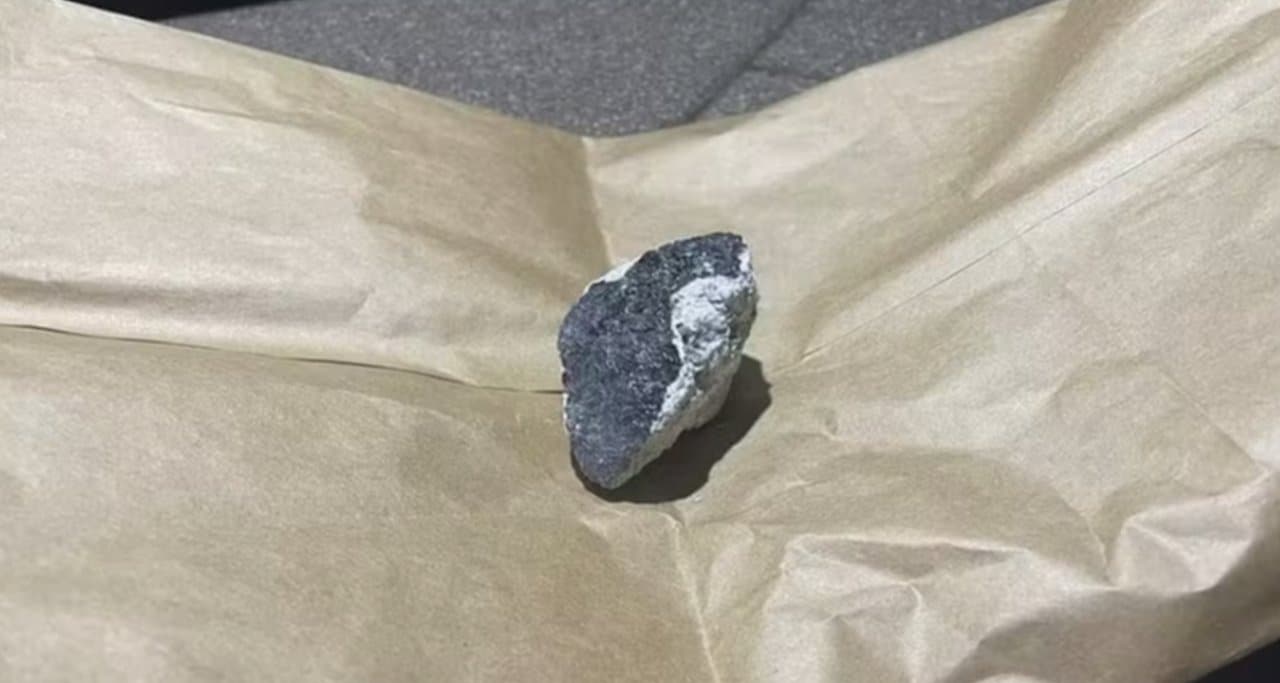
A rocky object from space hit a residence in the city of Koblenz, in the state of Renânia-Palatinate, southwest of Alemanha. The impact occurred at night last Sunday, when the celestial body ruptured the upper structure of the property, leaving a circular perforation with the approximate diameter of a football. Local emergency crews cordoned off the perimeter immediately upon notification of the event to assess structural damage.
At the time of the fall, the residents were inside the house, but the exact room where the fragment landed was unoccupied. Benjamin Marx, head of the operation of Corpo of Bombeiros of Koblenz, confirmed that there were no injuries reported during the incident. The corporation carried out a technical sweep of the site to ensure the stability of the building and eliminate secondary risks to the region’s inhabitants.
The confirmation that it was a meteorite occurred after the first visual inspections carried out by the competent authorities. The collection of the material followed standard safety protocols to avoid contamination of the sample, which will be sent for laboratory analysis at research institutes specializing in geosciences and astronomy.
Dissemination of false information and police response
The flash generated by the object’s entry into the Earth’s atmosphere provoked an immediate reaction on digital platforms. Within minutes, social media users began sharing images of the light trail, accompanied by theories without scientific basis. The main incorrectly disseminated hypothesis pointed to the use of a foreign military device against German territory.
The rapid spread of these rumors required direct intervention by public security forces. The Kaiserslautern police issued official statements on their communication channels to deny allegations of an alleged attack. The agents clarified the strictly astronomical nature of the phenomenon, advising citizens to ignore alarmist messages.
Authorities also reinforced the importance of seeking information only from government sources and certified research institutes. The police’s quick action was essential to contain misinformation and restore normality in the region, preventing the natural event from causing additional disruption to the local population.
Light trajectory and visual records of the phenomenon
The celestial body’s passage through the European sky was described by witnesses as a point of light of very high intensity, followed by an incandescent trail that lasted just a few seconds. The breach of the atmospheric barrier resulted in a visual spectacle that ended up being widely documented by home security cameras, highway traffic monitoring systems and the equipment of amateur astronomers. Devido At the high altitude at which the initial fragmentation of the rock occurred, the luminosity generated by friction surpassed the borders of German territory, making the event visible across a vast geographic area.
Residents of neighboring countries, including Holanda, Bélgica, França and Carolin Liefke, deputy director of Casa of Astronomia in Heidelberg, managed to record the moment accidentally during a routine observation. The expert provided technical details about the luminous trail, which remained visible long enough to allow the collection of essential preliminary data on the angle of descent and estimated speed of the rocky material before the impact on Koblenz.
Dynamics of entry into the Earth’s atmosphere
Celestial bodies that orbit space are scientifically classified as meteoroids before any interaction with Terra gravity. Quando these objects cross the planet’s atmosphere, the extreme speed causes severe friction with the gases present in the upper layers.
The scientific community divides the stages of this atmospheric entry process into distinct phases. The phenomenon includes:
– Entrada in the atmosphere at speeds ranging between 11 km/s and 72 km/s.
– Aquecimento extreme surface due to air compression in front of the rock.
– Ablação thermal, process in which the outer layers melt and vaporize.
– Desaceleração abrupt when reaching the densest layers of the lower atmosphere.
This process of continuous friction raises the temperature of the object to critical levels, which results in incandescence visible from the ground. The luminous trail generated by this burning is called a meteor, a technical term for what is popularly known as a shooting star.
The vast majority of these fragments undergo total disintegration during free fall, turning into dust before touching the Earth’s surface. Apenas rocks that have sufficient structural density and size are able to resist aerodynamic forces, receiving the official name of meteorite when they land.
Geological composition and relevance to astronomy
Consolidated astronomical studies indicate that the vast majority of space rocks that intercept the orbit of Terra come from the asteroid belt, an extensive region of Sistema Solar located between the orbits of the planets Marte and Júpiter. Esses fragments are considered to be of extreme scientific value because they function as intact physical records of the primordial conditions of the universe, housing minerals and isotopes that were formed billions of years ago. Thorough laboratory analysis of meteorites allows researchers to map the exact distribution of chemical elements that gave rise to the rocky planets in our system. Instituições cutting-edge research uses mass spectrometry equipment to date the samples collected and understand the complex condensation processes of the original solar nebula. The classification of materials is mainly divided between chondrites, which are composed of silicate rocks, and siderites, formed by metallic alloys of iron and nickel. The precise identification of the composition of the fallen object in the city of Koblenz will depend on spectrometric tests and isotope analyzes in accredited laboratories. Especialistas use these rare samples to calibrate theoretical models about the formation of galaxies and the thermal evolution of smaller celestial bodies, providing the exact chronology of the first million years of the planetary system.
History of documented falls on Europa
The territory of Alemanha has well-documented records of similar astronomical events in its recent history. In April of a previous year, the region of Elmshorn recorded the fall of multiple rock fragments, which resulted in the recovery of a main piece with an approximate mass of 3.7 kilograms.
This find was cataloged by scientific institutions as the largest discovery of its kind in the country in a century. The recurrence of these episodes drives the maintenance and improvement of cross-border monitoring networks, which integrate observatories and space agencies across the Europa to track luminous bolides.
Sweeping procedures in the urban perimeter
Teams of experts and researchers began detailed mapping of the surroundings of the affected residence to locate possible additional pieces of the space rock. The fragmentation of the meteoroid during the flight suggests the existence of a wider scattering field, which requires systematic sweeps of the urban perimeter and adjacent rural areas with the aid of metal detectors and high-precision drones.
Mathematical probabilities and housing security
The occurrence of direct structural damage caused by space debris in residential areas constitutes a statistical deviation that is extremely rare in science. Modelos risk mathematicians point out that the probability of a meteorite hitting a human building is substantially lower than that of other natural disasters.
This is mainly because most of the earth’s surface is covered by oceans and uninhabited areas. Programas global planetary defense systems maintain uninterrupted tracking of objects close to Terra, but for rocks of reduced dimensions such as that of Koblenz, prior detection remains technically unfeasible due to the limitations of current radars.
Sample collection and curation protocols
The recovery of a meteorite requires the immediate application of rigorous protocols to avoid contamination of the sample by terrestrial organic compounds. Specialists use sterilized gloves, Teflon tweezers and vacuum-sealed containers when collecting the material from the exact location of the impact, preventing the oxidation of the metals present in the structure.
After primary collection, the pieces are sent to curation facilities in natural history museums or geoscience institutes. In strictly controlled environments, meteorites undergo drying processes in nitrogen chambers, three-dimensional photographic cataloging and precision weighing before being made available for scientific research.




