
Military escalation in the Middle East consolidates Sicily as NATO’s strategic shield in Europe

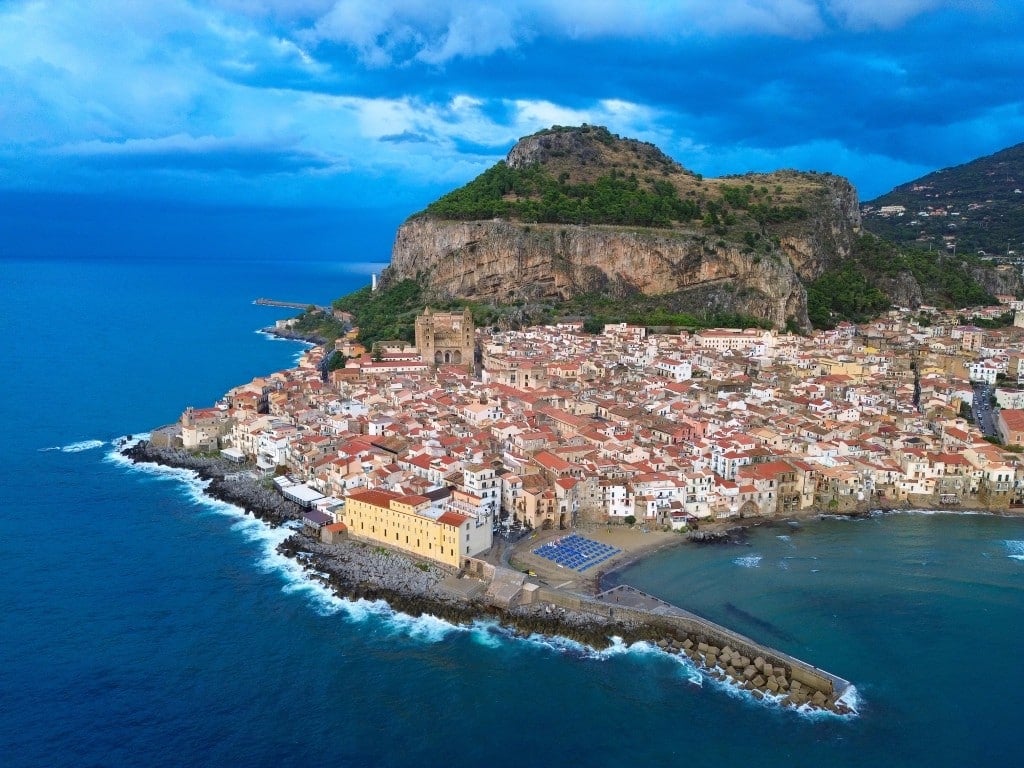
The geographical position of the Sicília is once again at the center of global security strategies in the face of heightened tensions between the Irã and Western powers. The Italian territory, historically recognized as a point of convergence in the Mar Mediterrâneo, currently houses some of the most important military and energy installations in the Atlantic alliance. The movement of troops, unmanned aircraft and warships in the region reflects the need for constant monitoring of the routes that connect Europa to Oriente Médio.
As a southern outpost of the European continent, the island functions as a true crossroads of geopolitical interests. The recent exchanges of hostilities in Golfo Pérsico and Levante, involving the use of drones and missiles against specific targets, place the bases installed in Sicilian territory on high alert. The relative proximity to conflict zones requires precise coordination between the Italian armed forces and international commands.
International security experts assess that a direct attack on Italian soil remains unlikely in the current scenario. However, the density of critical infrastructure turns the region into a thermometer of global tensions. Intelligence assessments indicate that the protection of these facilities is a priority to ensure the stability of military operations and the continuity of energy supply to several European countries.
Defense infrastructure and aerial monitoring
The core of operational capacity in the region is concentrated at the Sigonella air base, a facility that acts as a fundamental logistical pillar for Marinha of the Estados Unidos. The location serves as a starting point for RQ-4 Global Hawk drones, high-tech aircraft used in continuous reconnaissance missions. Esses equipment collects crucial intelligence data on movements in Oriente Médio, ensuring a detailed view of the theater of operations.
A few kilometers away, the territory is home to the MUOS system in the location of Niscemi, province of Caltanissetta. Esta network of ultra-high frequency satellites manages military communications on a global scale, connecting naval, air and land units. The infrastructure allows allied commands to coordinate complex actions across different continents with minimal latency and advanced cryptographic security.
The Sicilian military apparatus also has the base of Trapani-Birgi, headquarters of the 37th Ala of the Força Aérea Italiana. The military airport serves as one of the main operational centers in Mediterrâneo, assuming vital responsibilities in defending the southern airspace of Europa. The squadrons allocated to this installation carry out daily maritime patrols, identifying and intercepting potential threats before they approach Allied borders.
In addition to interception missions, Trapani-Birgi provides continuous support to AWACS radar aircraft, responsible for orchestrating long-distance operations. Ministério of Defesa of Itália develops projects to modernize the base, with the aim of transforming it into an international training center for F-35 fighter pilots. To ensure the integrity of this entire complex, anti-aircraft missile batteries were strategically positioned along the coast.
Ballistic capacity and geographic limits
O desenvolvimento do arsenal balístico iraniano gera debates frequentes nos fóruns de segurança internacional, especialmente devido ao aumento do alcance de seus vetores. Relatórios de inteligência apontam que o país possui mísseis capazes de atingir alvos situados entre mil e quinhentos e dois mil quilômetros de distância. Algumas variantes mais modernas e aprimoradas podem teoricamente alcançar marcas próximas a dois mil e quinhentos quilômetros, alterando o cálculo estratégico das defesas regionais.
Despite this technological advance, geography acts as a natural protection factor for the Italian territory, since the distance to Irã exceeds three thousand kilometers. Essa physical separation places the island beyond the effective operational range of the absolute majority of Teerã’s ballistic missiles. The residual threat would lie in the use of long-range drones, which would need to traverse airspace densely monitored by radars and allied fighters, making the success of an incursion highly unlikely.
Anti-missile shield and joint naval operations
The defense architecture established on the Mediterrâneo Oriental is based on an integrated network of state-of-the-art sensors and interceptors. Navios North American destroyers patrol the waters equipped with the Aegis system, capable of tracking and destroying ballistic threats outside the Earth’s atmosphere. On the ground, this naval protection is complemented by Patriot and SAMP/T missile batteries, which form multiple layers of air defense over critical installations. Coordination between sea- and land-based defenses creates an impenetrable umbrella designed to nullify swarm attacks and ensure freedom of navigation on trade and military routes crisscrossing the region.
To maintain the readiness of this complex military apparatus, allied forces conduct rigorous and periodic training, such as exercise Dynamic Manta. Realizado in Sicilian coastal waters, this training represents the culmination of the Western military alliance’s anti-submarine preparedness. Durante weeks, fleets made up of attack submarines, frigates and maritime patrol aircraft from different nations simulate combat scenarios on the high seas. The central objective is to refine tactics for detecting and neutralizing underwater threats, ensuring that crews are prepared to operate in highly complex environments and under conditions of extreme stress.
Direct military escalation hypotheses
The transformation of Italian territory into a primary target would require a drastic change in the current geopolitical dynamics, culminating in an open and unrestricted confrontation between global powers. Analistas of military intelligence point out that only a large-scale war, directly involving the Estados Unidos and the Irã, would justify attacks against installations like Sigonella or the satellite system in Nesse extreme scenario, the bases that guarantee the air and informational superiority of Western forces in Mediterrâneo would start to be treated as targets of extremely high strategic value. Destroying or neutralizing these logistical capabilities would be a priority for any adversary seeking to blind Allied surveillance or disrupt the flow of military supplies to the Oriente Médio. Contudo, the current phase of international relations, although marked by constant friction and demonstrations of force, operates under the logic of containment and mutual deterrence. Recent military actions are characterized by calculated and proportional attacks, designed specifically to prevent the conflict from spilling over to the European continent. Dessa way, the risk of direct bombings against Sicilian infrastructure remains contained, restricted to theoretical simulations in the strategic planning offices of the armed forces.
Energy security and supply routes
The region’s most immediate vulnerability does not lie in its military aspect, but in its vital importance for the energy matrix of the European continent. The island concentrates petrochemical complexes of international magnitude, highlighting the industrial complexes of Priolo-Augusta, located in the province of Siracusa, and the facilities of Milazzo, in Messina. Essas refineries process immense volumes of crude oil, transforming it into fuels that supply markets throughout the Mediterrâneo basin.
The port of Augusta performs an extremely important dual function, operating simultaneously as an oil terminal and a naval support base. The location frequently receives vessels from Sexta Frota to Estados Unidos for refueling and technical maintenance procedures. The interconnection between the military docks and the Priolo Gargallo industrial complex highlights the fusion between national security interests and the civilian hydrocarbon processing infrastructure.
Faced with global instability, the companies that manage these refineries implemented aggressive supplier diversification strategies. Após changes in the shareholding structure of complexes such as ISAB, the logistics system was redesigned to process oil from nations such as Cazaquistão, Líbia, Iraque and Estados Unidos. Essa restructuring aims to mitigate the risks of shortages caused by embargoes or blockages on specific maritime routes.
Reflections on the economy and flow of visitors
The ramifications of geopolitical tension extend far beyond barracks and refineries, directly affecting the local economic fabric. The tourism sector, responsible for a substantial portion of job and income generation in the region, had been registering significant rates of expansion. Recent Dados indicated a consistent increase in the number of international visitors, consolidating the destination as one of the most sought after by travelers in search of historical heritage and natural beauty.
The continuation of conflicts in Oriente Médio, however, introduces an element of uncertainty into the planning of future tourist seasons. The perception of instability throughout the Mediterrâneo basin may negatively influence the decision of intercontinental tourists, who tend to redirect their trips to areas considered immune to diplomatic tensions. The challenge for local authorities is to dissociate the island’s image from regional conflicts, ensuring the flow of visitors is maintained.
Continuous preparation of the armed forces
Uninterrupted monitoring of air and sea space remains the primary directive for troops stationed south of Itália. The constant modernization of radar equipment and the rotation of fighter squadrons ensure that the level of readiness does not suffer during periods of greater diplomatic instability. Security forces maintain strict surveillance protocols, ensuring full protection of the territory and adjacent navigation routes.




