
NASA’s new strategy moves manned landing on the Moon to 2028 with a focus on space safety

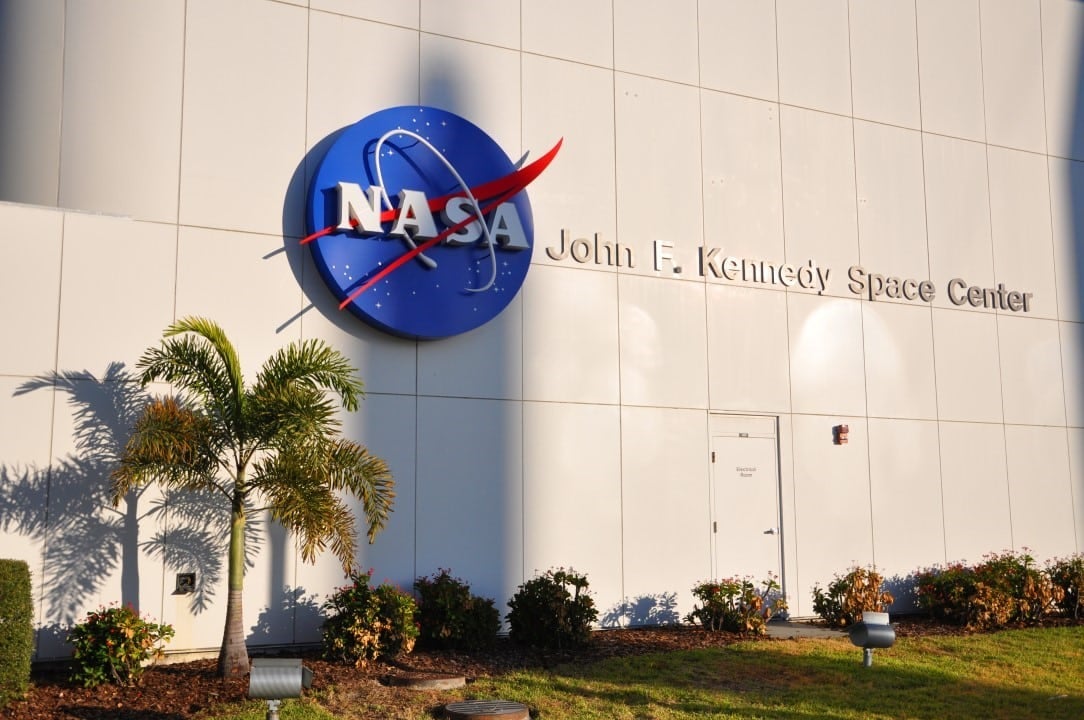
The American space agency has restructured the schedule of its operations aimed at exploring the Terra natural satellite, establishing new dates for the main milestones. The strategic adjustment moves the first descent of astronauts to the lunar surface to the year 2028, prioritizing the validation of critical life support and navigation systems.
This change in planning aims to guarantee the integrity of the crews and the long-term sustainability of operations. The engineers responsible identified the need for additional tests in low orbit before authorizing descent into extraterrestrial terrain.
The current space program seeks not only to repeat the achievements of the past, but to establish a permanent infrastructure that serves as the basis for future interplanetary travel. Cooperation with private companies in the aerospace sector has become a fundamental pillar to make this new phase of exploration financially and technologically viable.
Restructuring the space flight schedule
The mission architecture has undergone a complete overhaul to accommodate the technical complexities of developing new landing vehicles. An intermediate stage was added to the official calendar in 2027, focused exclusively on docking maneuvers in Earth orbit.
This additional test flight will serve to certify the transfer modules and communication systems between different ships. Apenas upon successful completion of this phase, the landing mission, designated as Artemis 4, will receive authorization to proceed in 2028.
Relaxing the original requirements allows industrial partners more time to refine their engineering designs. The vehicles that will carry out the final transport between lunar orbit and the surface require unprecedented propulsion and descent control technologies.
The date adjustment reflects a conservative approach to operational risk management. The absolute priority falls on the impeccable functionality of extravehicular spacesuits and life support systems in an environment of microgravity and intense radiation.
Preparations for orbital travel
The focus in the short term is on the Artemis 2 mission, which is scheduled to launch in April 2026 from Centro Espacial Kennedy, located at Flórida. Este inaugural crewed flight aboard the Space Launch System rocket and Orion capsule will not perform a landing, but will take four astronauts for an approximately ten-day journey around Lua. The selected team consists of Commander Reid Wiseman, Pilot Victor Glover, Mission Specialist Christina Koch and Canadian Specialist
During its orbital path, the spacecraft will reach distances that will surpass records set during the Apollo era, testing the limits of the Orion capsule’s life support systems. The astronauts will perform a series of manual maneuvers to assess the vehicle’s handling qualities, as well as monitor the behavior of heat shields and solar panels in deep space conditions. Essa expedition will serve as an indispensable dress rehearsal, providing vital telemetry data that will dictate safety parameters for subsequent missions involving descent to the surface.
Intensive training in geology and observation
Crew preparation required three years of rigorous activities in simulators and similar environments at Terra. The training curriculum was heavily inspired by techniques developed in past decades, but updated with modern digital tools.
Astronauts have participated in field expeditions to meteorite craters and volcanic fields to hone their rock identification skills. The objective is to make them highly skilled scientific observers, capable of describing topography with technical precision.
Clear and objective communication with ground control teams is a vital part of this training. Relatos detailed verbal information about geological formations will help scientists select the most promising landing sites for future expeditions.
Visual mapping and the use of interactive atlases
During the passage through the hidden side of Lua, the crew will use portable cameras and tablets equipped with an interactive atlas developed specifically for the mission. Esse software will guide astronauts in identifying priority targets, adjusting in real time to the spacecraft’s trajectory and solar lighting conditions.
Human perception remains an irreplaceable tool in space exploration, capable of noticing subtle variations in color and texture in relief that often escape automated sensors. Essas direct observations will complement the vast database generated by robotic probes over the past few years.
Exploration aimed at the lunar south pole
The south polar region of the natural satellite remains the main destination for the entire exploration program due to its unique geological characteristics. The area’s permanently shadowed craters house vast reserves of frozen water, a vital resource for sustainable operations.
Extracting and processing this ice could provide drinking water, oxygen for breathing, and hydrogen for rocket fuel. Mastering these technologies for using resources in situ is the fundamental step towards enabling continuous human presence outside our planet.
Integration of commercial vehicles and orbital infrastructure
The technical feasibility of returning to the lunar surface intrinsically depends on the success of partnerships signed with the private sector, specifically in the development of landing modules known as Human Landing Systems. Empresas like SpaceX, with its architecture based on the Starship spacecraft, and Blue Origin, with the Blue Moon project, are building vehicles of unprecedented proportions that will need to be refueled in orbit before continuing their journey. The complexity of this orbital logistics requires multiple launches of cargo rockets just to prepare the landing vehicle, justifying the need for exhaustive docking and transfer tests of cryogenic fluids in the vacuum of space. The space agency serves as the coordinator and primary customer for these services, establishing rigorous safety standards while allowing industry to dictate engineering solutions. Esse contracting model reduces direct development costs for the public sector and encourages the creation of an independent cislunar economy, where different suppliers compete to offer cargo and crew transportation in an increasingly efficient and routine manner.
Precursor robotic operations and data collection
Before human return, a fleet of automated probes and rovers will be sent to the polar region from 2027 to take precise temperature and radiation measurements. Esses robotic instruments will act as scouts, analyzing the chemical composition of the regolith and testing the broadband communications networks that will connect future lunar bases to ground-based control centers.



