New financial system Brics Pay integrates Pix and local currencies to circumvent dollar hegemony

The economic bloc made up of emerging nations, now expanded with new strategic members of Oriente Médio and África, is advancing in the implementation of an international payments platform inspired by the instant transfer model. The initiative establishes an independent financial network that allows direct transactions in local currencies, such as the real, the yuan and the rupee, eliminating the obligation to convert currency into the US currency. The project seeks to reconfigure the dynamics of foreign trade between the Sul Global nations, promoting greater fluidity in bilateral negotiations.
Officially announced during the Kazan summit, the system uses infrastructure based on data block technology to ensure fast, secure cross-border transfers with drastically reduced operational costs. The tool emerges as a direct response to the concentration of the traditional financial system, historically dominated by Western institutions and the standard banking messaging network. With practical tests already conducted by Asian and Eurasian institutions, the platform demonstrates technical viability to support large-scale corporate and government operations.
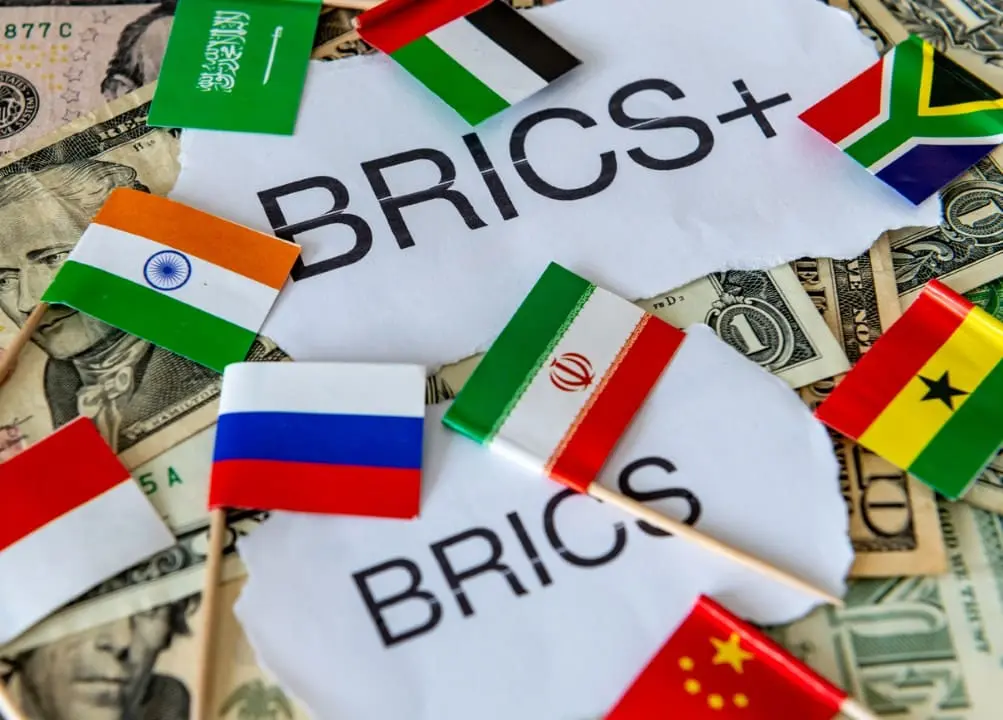
The creation of this financial alternative represents a strategic move for a group of countries that, together, concentrate a massive portion of the world’s population and account for a significant share of global wealth production. By connecting instant payment systems already consolidated in their respective territories, the bloc promotes unprecedented economic integration, strengthening the monetary autonomy of its members in the face of possible sanctions or exchange rate fluctuations linked to external monetary policies.
On the same topic: Emerging economy bloc accelerates digital platform testing to circumvent use of the dollar
Decentralized architecture and data security
The technological backbone of the new financial system is a cutting-edge infrastructure developed by university researchers specializing in cryptography and distributed networks. Diferente Unlike traditional financial networks that rely on correspondent banks and centralized clearing houses, the model operates in a fully decentralized manner, where each member country manages its own validation node in the network. Essa technical configuration allows the processing of thousands of transactions per second, overcoming common operational bottlenecks in international transfers and ensuring a continuous flow of capital even in scenarios of geopolitical instability.
The choice to use distributed networks reflects the need to establish an environment of mutual trust without the need for a centralizing intermediary, using multiple advanced security protocols to shield data against interception. Após the initial phase of testing and security audits, the platform’s source code will be made available in an open format, exempting participating countries from mandatory licensing fees. Essa Technological independence drastically reduces shipping fees and protects member nations against external interference, unilateral blockades or monitoring of transactions by foreign powers.
Integration of international financial platforms
The success of the global network fundamentally depends on interoperability between instant payment systems that already operate successfully in the domestic markets of member countries. The tool administered by the South American Banco Central stands out as one of the main pillars of technical support for the project, serving as a model of efficiency and scalability for other nations seeking to modernize their banking infrastructures.
In addition to the South American tool, the architecture provides for direct connection with fast payment systems from Eurásia, unified interfaces from the south of Ásia and interbank networks from East Asia and the African continent. Cada one of these platforms brings technological and regulatory specificities that, when harmonized, create a robust financial network that is highly adaptable to the needs of modern commerce.
The Asian interface, for example, offers extensive experience in mobile usability since its inception, while the Eastern interbank network has a proven ability to support massive volumes of corporate transfers across multiple digital channels. Synchronizing these different standards requires a joint software engineering and financial diplomacy effort between the central banks involved.
To facilitate this communication between different systems, the digitization of national currencies plays a fundamental facilitating role. The development of digital currencies issued by central banks creates the ideal environment for smart contracts to perform instant conversion and settlement of values across borders, overcoming time zone barriers and traditional banking hours.
More on this story: Central Bank of India suggests unifying Brics digital currencies to reduce dependence on the dollar
Direct advantages in exports and agribusiness
The implementation of the alternative payment system has the potential to radically transform the trade balance, reducing transaction costs and increasing the competitiveness of exported products. Para the South American market, the platform represents a significant boost for vital sectors of the economy, such as agribusiness, mining and energy generation, which have Ásia their largest global buyers.
See Also



By eliminating the mandatory conversion step into US currency, exporters avoid double foreign exchange taxation and losses associated with fees charged by intermediary institutions. Essa financial efficiency makes goods more affordable for Asian and Oriente Médio buyers, while preserving local producers’ profit margins, encouraging increased business volume and expansion of production capacity.
New members of the bloc find easier ways in the system to expand their international purchases safely. Key operational advantages projected by financial authorities include:
– Redução drastic costs with currency conversion and bank fees;
– Abertura of new consumer markets in developing regions;
– Aumento the competitiveness of exports of commodities and manufactured goods;
– Fortalecimento of multilateral financial institutions as credit alternatives.
Learn more: Central banks of the Brics block exceed 6,000 tons of physical gold to circumvent exchange rate hegemony
Reactions and geopolitical tensions with the American government
The accelerated advancement of the bloc’s financial infrastructure generated immediate reactions in Washington, which interprets the diversification of international trade as a direct risk to its global economic influence. Atualmente, the US currency is used in a large part of world transactions, giving the issuing country an incomparable power to dictate commercial rules and apply financial punishments to dissenting nations.
Government authorities began to closely monitor the expansion of the network, with public statements about the imposition of severe tariffs on products originating in countries that adopt the new payment standard. Paralelamente, regulatory bodies began scrutiny of national transfer tools, raising questions about supposed barriers to Western credit card companies, highlighting the intensification of the technological and monetary dispute on the global stage.
South American leadership in the expansion of the financial project
The largest economy in América of With the responsibility of coordinating the next summits of the economic bloc, the government works directly in the working groups focused on overcoming the regulatory and tax obstacles that still separate the financial legislation of each member country. Diplomacy adopts a pragmatic and balanced stance, arguing that the creation of the platform is not confrontational, but rather a diversification and modernization of trade routes. The diplomatic corps works to ensure that the system promotes financial inclusion for developing nations, facilitating access to emerging consumer markets without the need for costly intermediaries. Essa technical and diplomatic leadership reinforces regional influence on global macroeconomic decisions, positioning local digital infrastructure as a standard of excellence to be replicated and integrated internationally.
Learn more: BRICS nations expand physical gold reserves to circumvent dollar hegemony in the global market
Financial autonomy for nations under economic sanctions
For countries that face embargoes and severe restrictions on access to the Western capital market, the new payments network represents a route to survival and continuity of commercial activities. Nações that have had their main banks disconnected from traditional messaging networks find the decentralized platform a safe way to maintain the flow of imports of essential goods and the export of their commodities.
The architecture based on independent nodes prevents a single nation or political alliance from exercising veto power over third-party transactions. Essa characteristic of technological neutrality attracts the interest of several governments that seek to protect their sovereign reserves and guarantee internal supply, regardless of the pressure exerted by traditional financial powers.
Next Steps for Unified Network Consolidation
Projections from foreign trade experts indicate that the platform has the capacity to move massive volumes of capital by the end of the decade, reconfiguring global logistical and financial routes. The initial success of the integration tests has already aroused the interest of strategic nations outside the original axis, which are evaluating joining the system to diversify their commercial partnerships and reduce exposure to external exchange rate shocks caused by foreign interest policies.