
New static recompilation technology converts PlayStation 3 games to run natively on PC
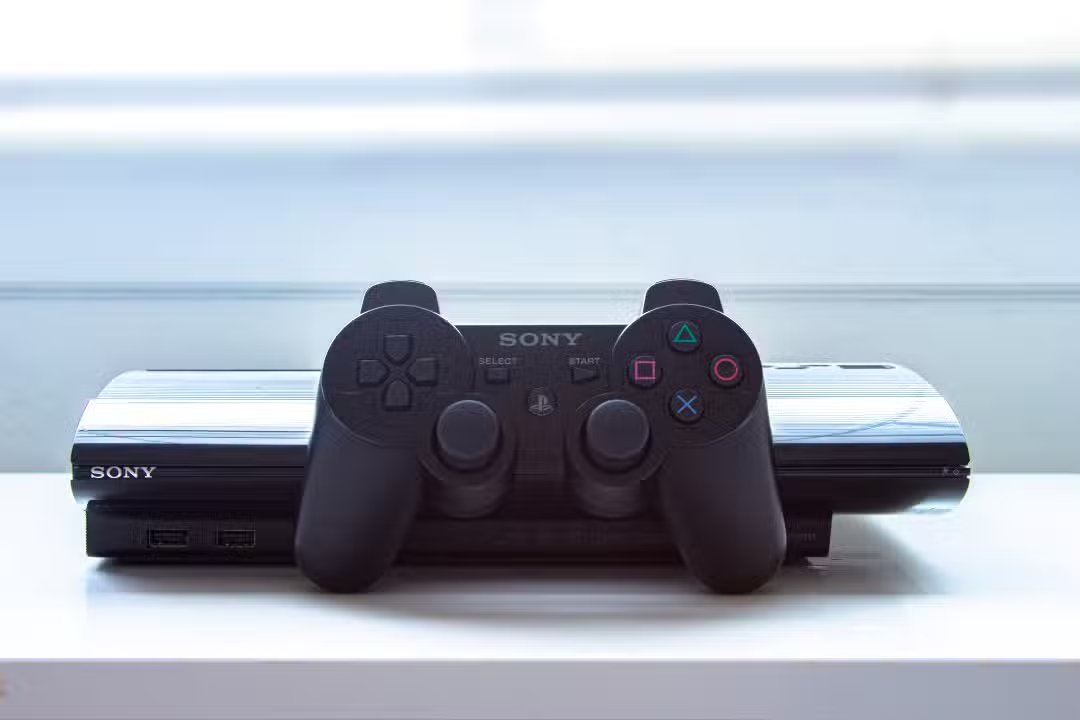
A recent advancement in software engineering has introduced an innovative method for running classic console titles directly on modern computers, eliminating the need for traditional emulators. Desenvolvedores created a static recompilation tool that translates original executable files into formats compatible with current operating systems. Este process bypasses the high hardware demands often associated with running older software on new machines, allowing for deeper integration with computer components.
By converting the code directly to the x86 architecture, the system allows games to operate natively in Windows and Linux environments. The technique bypasses traditional backwards compatibility barriers, offering a direct bridge between past generations of hardware and today’s desktop configurations. The method focuses on converting the executable file before opening it, rather than trying to interpret the data simultaneously while using the software.
This change represents a significant technical milestone for software preservation and accessibility globally. The straightforward approach to converting executable files transforms the way the industry deals with digital heritage, enabling interactive works to survive the obsolescence of their original hardware. The continued development of this technology points to a scenario where dependence on discontinued physical equipment will be drastically reduced.
Complex architecture of the original processor
The console released by Sony in the 2000s used a highly specific processing unit known as the Cell Broadband Engine. Este hardware featured a unique multi-core configuration that was notoriously difficult for developers to program and optimize. The learning curve to extract the maximum potential of this piece required years of dedication from the creative studios.
The architecture relied on a main processor paired with several synergistic processing elements to handle complex calculations. Essa design choice, while powerful for the time, made porting games to other platforms a severe technical challenge during that era. An entire Estúdios needed to train their teams specifically to work with this unconventional structure.
Because the code was heavily optimized for this specific hardware, moving these titles to standard PC architectures required immense computing power. Traditional methods struggled to replicate the exact timing and performance of the original machine. The synchronization between the old processor’s multiple cores rarely aligned with how modern processors distribute their tasks.
Differences between emulation and static recompilation
Standard emulation works by translating instructions from the original console in real time while the game is running. Essa Instant translation consumes significant central processing unit resources and often results in performance bottlenecks or graphical glitches. Softwares known in this segment require very high-cost machines to deliver a minimally fluid experience.
Static recompilation, on the other hand, translates the entire codebase before the software is run by the user. Esse preprocessing creates a native executable file that modern processors, made by companies like AMD and Intel, can read directly. The system analyzes the original executable file and generates new code that has parity with the current architecture, optimizing calculations using modern instruction sets, such as AVX-512.
Significant gains in visual performance and fluidity
Running these files natively unlocks levels of performance that were impossible on the original hardware. Títulos that previously struggled to maintain a stable frame rate now operate with absolute fluidity on standard desktop computers. Eliminating the emulation layer allows the modern graphics card to process graphics without interruptions from the central processor.
Resolutions can be scaled up to 4K without the heavy performance penalties typically seen in emulation software. Esta visual upgrade provides a much sharper image, revealing details in game assets that were previously obscured by low output resolutions. Texturas and three-dimensional models take on new life when displayed on high-definition monitors.



Frame rates are also unlocked, allowing games originally limited to thirty frames per second to reach one hundred and twenty frames per second or more. Este increase in temporal resolution significantly improves input response times and overall gameplay smoothness. Fast-acting Títulos, which previously suffered from performance drops at critical moments, now offer a much more responsive control experience.
Load times are massively reduced due to integration with modern storage solutions like NVMe solid-state drives. The data transfer speeds of today’s drives eliminate the long waits associated with older optical media and hard drives. Transições between scenarios that used to take tens of seconds now occur almost instantly.
Digital preservation of thousands of interactive works
In addition to the immediate benefits of improved performance, this technological advancement plays a critical role in the digital preservation of interactive media. The original library for this particular console consists of over three thousand individual titles, many of which remain trapped on aging physical hardware that is prone to occasional failure. Obras acclaimed by critics and the public run the risk of becoming inaccessible. As optical discs degrade and original consoles suffer from hardware defects, the risk of losing access to a significant part of gaming history becomes a pressing concern for archivists and technology enthusiasts.
By converting these games into native PC applications, the dependency on original and degrading hardware is completely removed. Os arquivos resultantes podem ser copiados, distribuídos e executados em uma plataforma universal que é constantemente mantida e atualizada pela indústria de computadores. Isso ensures that software remains functional and accessible for future generations, safeguarding the artistic and technical achievements of the developers who created it decades ago. Maintaining the code in a format readable by contemporary machines prevents the technical knowledge employed at the time from being lost through the physical deterioration of the original electronic components.
Commercial impact for studios and distributors
The commercial implications of static recompilation extend far beyond the realm of amateur preservation, offering large publishers a highly cost-effective method for monetizing their back catalogs. Historicamente, creating a native PC port of a complex console game required a dedicated team of engineers working for months or even years to rewrite significant portions of the game’s engine and logic. Essa high barrier to entry meant that only the most assured commercial successes received the porting treatment, leaving countless niche or moderately successful titles stuck on obsolete platforms. With the advent of automated static recompilation tools, the financial equation changes drastically. Publishers can now theoretically process their legacy source code or executable files through these tools to generate working PC builds with minimal manual intervention. Isso dramatically reduces development costs and financial risks associated with re-releasing older games. Consequentemente, digital storefronts like Steam or Epic Games Store could see a massive influx of classic titles being officially sold. Isso provides a new revenue stream for intellectual property owners while satisfying consumer demand for high-quality, legal access to nostalgic software. Jogos that defined generations could return to the market without the need for million-dollar remakes, preserving the original vision of the art directors and programmers of the time.
Legal barriers and copyright involved
Despite the technical feasibility of this process, the distribution of recompiled games remains strictly governed by copyright and intellectual property laws. Users must legally own the original software to extract the data and generate the necessary files on their own computers. Unauthorized sharing of already recompiled executables constitutes digital piracy under current international legislation, subjecting offenders to severe legal penalties from the companies that own the brands.
Future of reverse engineering old software
The success of this recompilation method sets a new precedent for how the software engineering community approaches legacy systems. Pesquisadores are already exploring how similar automated translation tools can be applied to other historically complex hardware architectures. Projetos that previously relied exclusively on heavy emulators now have an alternative path that focuses on the efficiency of native code.
As these tools become more sophisticated, the boundaries between different generations of hardware will continue to blur in computing. The goal of the technical community remains the creation of a unified digital environment where any historical software can run seamlessly on contemporary machines. The continuous evolution of conversion algorithms will ensure that the architectural barrier is no longer an insurmountable obstacle to running legacy programs.
Veja Tambem em News (EN)

Research reveals that parents are unaware of how their children use artificial intelligence

Samsung releases new system update with new features for Galaxy Watch 4 users

Digital retail reduces the value of the Galaxy S25 5G smartphone with bank bonuses and device exchange

Amazon’s wireless CarPlay adapter has a 50% discount and high approval ratings from drivers

Zach Cregger’s new Resident Evil ignores games and focuses on an unprecedented story with new characters

Rumor suggests that Nintendo is preparing a special edition of the Switch 2 with a remake of Ocarina of Time

Apple accelerates production of the iPhone 17e and develops new Air model with dual camera system

Epic Games platform releases twelve high-budget games at no permanent cost for PC users

PlayStation 5 Pro price drop accelerates digital retail sales and eliminates global stocks

New Galaxy Watch 9 firmware appears on server and confirms progress in software development

Apple’s commemorative project tests cell phone with 1.1 millimeter edge and curved screen for 2027
