
Spanish tennis player Carlos Alcaraz beats João Fonseca from Rio by double 6/4 and advances in the Miami Open tournament

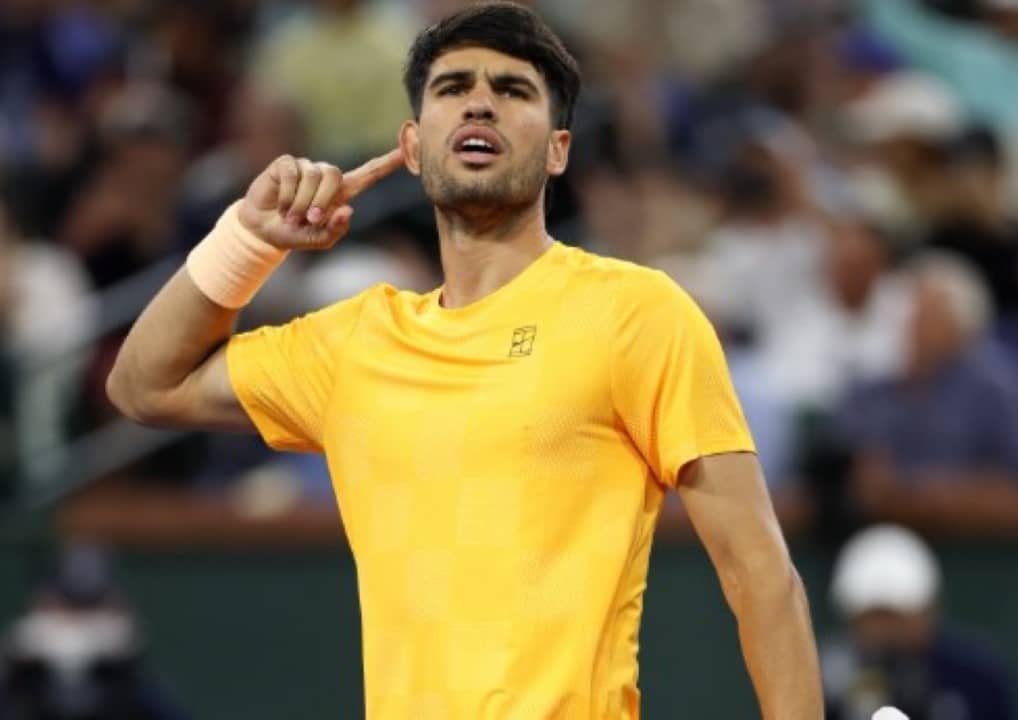
Spanish tennis player Carlos Alcaraz, current leader of the world rankings of Associação of In a match played on the main court of the sports complex, the European athlete overcame Rio’s João Fonseca in a confrontation that required a high level of concentration. The final score of the clash registered identical splits of 6/4 and 6/4, after just over two hours of running time on the official clock.
The duel valid for the second phase of the international competition highlighted two distinct generations of the professional men’s circuit, attracting the attention of experts and fans of the sport. Aos 22 years old, the number one seed had to use all his technical and tactical knowledge to contain the momentum of his South American opponent, just 19 years old. The organization of the event recorded maximum capacity in the available seats at Hard Rock Stadium, highlighting the high demand for tickets for this specific match.
The massive presence of fans in the stands transformed the atmosphere of the stadium, creating a vibrant atmosphere reminiscent of major world championship decisions. The public’s constant support served as extra fuel for the young Brazilian athlete, who currently occupies thirty-ninth position in the world table. Apesar the external incentive, the experience of the leader of the ranking prevailed in the crucial moments of each set played.
Initial strategy and control of actions on the main court
The start of the clash clearly demonstrated the reasons why the European athlete remains at the top of the sport’s international rankings. Logo in the third game of the opening set, the Spaniard managed to break the South American opponent’s serve, establishing an early advantage. The tactic adopted by the favorite involved the execution of extremely angled serves and deep returns, which made it considerably difficult for the opponent to set up offensive plays.
The impressive speed of the ball imposed by the number one seed required quick adaptation on the part of the Rio tennis player. The young competitor tried to respond aggressively with his right shots, even scoring an ace and saving an important break point in the opening minutes of the contest. However, the favorite’s superior game volume and consistency prevailed in the longer and more exhausting exchanges at the back of the court.
Tactical variation and endurance during extended rallies
The dynamics of the match showed some significant variations at the beginning of the second half, when the South American tennis player managed to confirm his serve after an unforced error on his opponent’s return. The Spaniard’s shot into the net generated an immediate injection of confidence in the 19-year-old athlete, who began to risk shots closer to the sidelines. The fans present at the sports complex took the opportunity to increase the volume of the incentive, creating a scenario of pressure for the server.
One of the moments of greatest tension and spectacle occurred during the eighth game, which was largely characterized by extensive rallies and fierce disputes very close to the net. The leader of the ranking had to demonstrate all his characteristic agility to reach short balls and execute precise volleys in situations of extreme body imbalance. The physical effort required on both sides of the court raised the technical level of the match, drawing a standing ovation from the spectators present in the stadium.
The Rio native’s clearly offensive stance became even more evident in the ninth game, when he launched quick attacks that completely took away his European opponent’s reaction time. The confirmation of the serve at this specific stage of the game forced the Spaniard to serve under pressure to close the match, demonstrating the young competitor’s remarkable mental resilience in the face of the biggest name in the tournament today.
Service performance and score consolidation
Consistency in the foundation of the serve proved to be the number one seed’s main weapon to avoid any type of surprise in the final stretch of the clash at Flórida. The statistical record of eight aces throughout the match, added to a very low rate of double faults, guaranteed free points in moments of extreme pressure on the scoreboard. The technical ability to constantly vary the direction and speed of the first serve prevented the opponent from being able to read the plays with due anticipation.
This unpredictability when putting the ball into play kept absolute control of offensive actions in the hands of the European tennis player for most of the time. The efficiency demonstrated in the service games neutralized the rare break attempts by the Brazilian and consolidated the advantage that had been built in the first minutes of each set. The territorial dominance imposed by the favorite forced the opponent to constantly play defensively, wearing him down physically.
The duel concluded with the same technical and mental solidity presented since the first point played on the fast surface of the Hard Rock Stadium. The eighth ace fired by the Spaniard sealed the definitive victory by 6/4 in the second set, ending the match after exactly two hours and nine minutes of running time. The surgical precision when closing the game highlighted the psychological preparation of the current world number one in decisive situations.
The traditional greeting at the net immediately after match point highlighted the deep mutual respect between the two professional competitors. The winner made a point of publicly recognizing the high level of demand imposed by his opponent, praising the Brazilian’s combative stance. The assured classification keeps the favorite on the direct path to winning yet another Masters 1000 level trophy this season on North American fast courts.
Surface transition and planning for the European calendar
The end of participation in the prestigious Flórida tournament marks the immediate beginning of a new and challenging phase in the South American athlete’s competition calendar. The imminent transition from North American fast cement courts to traditional European brick dust will require rigorous physical, technical and tactical adaptations in the coming weeks of training. The Brazilian’s technical team is already working on adjusting the specific movement required by clay, focusing on lateral sliding and the advance preparation of groundstrokes to deal with the ball’s higher bounce.
The official schedule released by the tennis player’s advisors foresees his debut in the coveted Masters 1000 of Monte Carlo, an event of great tradition scheduled for April 5th in the principality. Following the European calendar, the tournament route includes confirmed participation in the ATP 500 of Munique, at Alemanha. Estas competitions are considered fundamental for gaining points in the international ranking and for consolidating the athlete among the main names of the new generation, aiming to prepare adequately for the upcoming challenges of the season.
Trajectory of achievements and consolidation at the top of the sport
The recent trajectory of both athletes helps to accurately assess the relevance of the meeting held on the main court of the sports complex in Miami. The European tennis player arrived at Flórida boasting an impressive resume of twenty-six titles in his professional career, an impressive record that includes seven trophies at Grand Slam and recent major victories, such as at the ATP 500 at Doha and at the Australian Open held in January. Maintaining the isolated leadership of the ranking requires consistent results in large tournaments, justifying the maximum intensity applied since the first round of the competition. On the other hand, the South American competitor arrived at Estados Unidos with extremely impressive results in his South American tour, including the unprecedented victory of the doubles title at Rio Open alongside the veteran Marcelo Melo. The meteoric rise in the world rankings table reflects an early technical and psychological maturity, transforming the 19-year-old into one of the main realities of the new generation of world sport and attracting the attention of major international sponsors.
Focus on physical recovery and next steps in the competition
The victory achieved in straight sets guarantees the number one seed valuable time for physical and mental recovery before their next official commitment. The Spaniard’s coaching staff is now focusing all its efforts on a thorough tactical analysis of possible opponents in the third round. The safe advance in the main draw keeps alive the expectation of a largely dominant performance until the decisive stages of the competition, placing the European in a position of clear advantage for the next few days of intense disputes on the international circuit.



