Version of Starfield for PlayStation 5 debuts with free flight expansion and innovations on DualSense
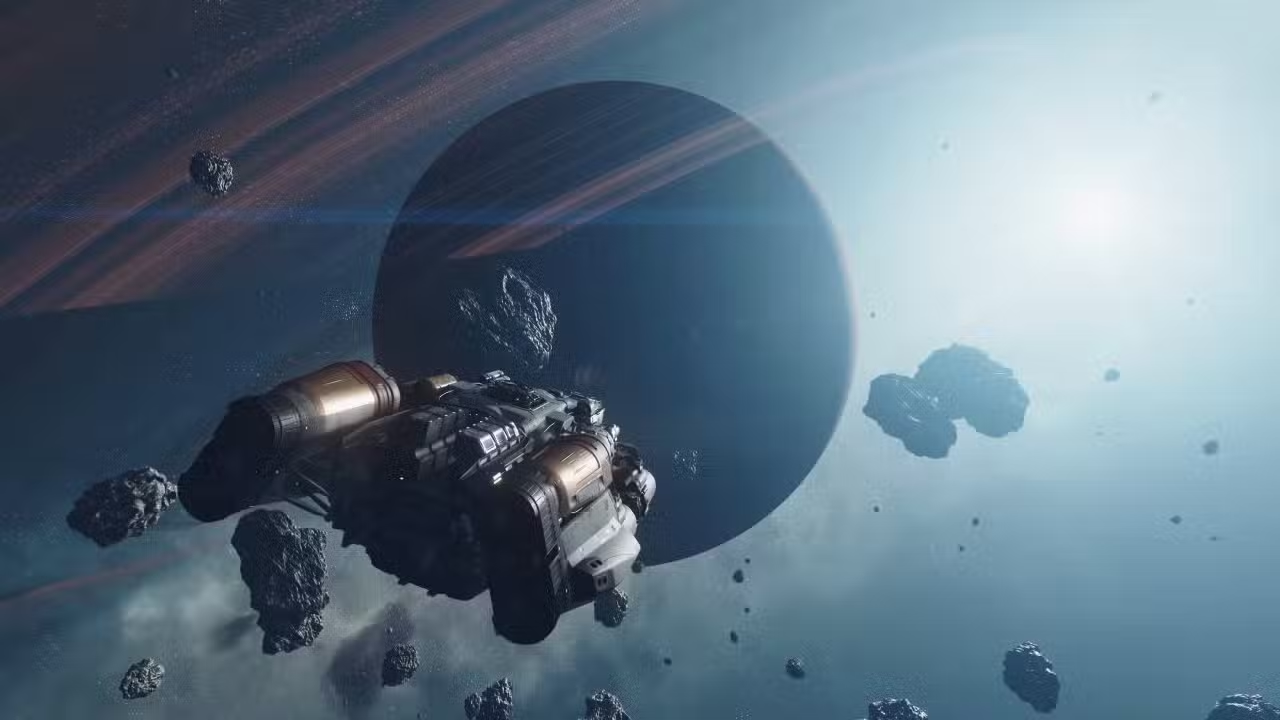
The arrival of the North American developer’s space RPG on the Sony console marks a new phase for the title, which will now reach an unprecedented audience on April 7, 2026. The launch is not limited to a simple software adaptation, but encompasses a robust package of technical innovations, graphical adjustments and profound reformulations of gameplay mechanics.
Along with the debut on the new platform, the developers implemented the free update called Free Lanes, considered the biggest structural change since the project’s original conception. Essa change directly affects the way interplanetary exploration works, removing transition barriers and delivering movement dynamics widely requested by players.
The new features package also sets the stage for all-new additional content, altering combat, navigation and resource management systems on a galactic scale. The launch strategy aims to engage both newcomers to the Japanese ecosystem and veterans seeking new challenges and tools to return to the vast science fiction universe.
Technological integration and advanced control functionalities
The title’s adaptation for modern hardware focuses heavily on sensory feedback during exploration and combat sessions. The engineers responsible for the port calibrated the peripheral’s adaptive triggers to simulate the weight, recoil and mechanical resistance of different categories of heavy weapons and precision rifles.
This layer of tactile interactivity extends to the piloting of spacecraft, where the activation of takeoff thrusters and evasive maneuvers generate specific directional vibrations in the user’s hands. The technical objective is to differentiate the mechanical experience, making each landing on alien soil or confrontation in zero gravity more immersive and physically noticeable.
In addition to the physical response, the system takes advantage of the control’s luminous resources to transmit vital information about the character instantly and peripherally. The light bar dynamically changes color to warn of critical oxygen levels in the spacesuit or exposure to biohazards and radiation in the explored environment.
These visual and mechanical implementations required months of development focused exclusively on the receiving console architecture. The technical team ensured that hardware responses work in perfect synchronization with the events processed on the screen, raising the standard of response to commands and justifying the extra development time for this version.
Exploration overhaul with continuous navigation system
The interplanetary travel component underwent a fundamental change through the Free Lanes update, made available simultaneously to all active platforms on the market. Anteriormente, moving between orbits and solar systems relied on rigid transitions and selection menus, but the new format allows navigation to occur freely and seamlessly through the stellar void. The pilot now takes manual control of the trajectory in real time, which makes it easier to discover abandoned space stations, asteroid fields rich in rare minerals and anomalies that were previously hidden in the system’s pre-defined fast travel routes.
This structural change transforms outer space into a cohesive gaming environment, drastically reducing the fragmentation of the experience caused by frequent loading screens. The sense of scale of the universe is significantly expanded, requiring players to manage fuel consumption and the integrity of deflector shields during longer journeys between the stars. The fluidity added to the flight system meets one of the community’s oldest and most vocal demands, redefining the pace of space exploration and bringing the title closer to the mechanics found in traditional industry flight simulators.
Unprecedented threats and narrative expansion in colonized space
The release schedule includes the simultaneous arrival of additional paid content Terran Armada, which will be sold for US$9.99 in digital stores. The expansion introduces an antagonistic militarized faction that invades peaceful systems, generating a large-scale conflict that destabilizes existing political and commercial alliances between the original factions.



The main narrative of this pack delves into the historical context of the universe, presenting tactical dilemmas that directly impact the security and survival of entire colonies. The invaders have complex political motivations, forcing the protagonist to make decisions that alter the map of galactic influence and the fate of several civilian settlements.
To assist in the fight against this new military force, the package adds a new teammate, specialized in guerrilla and sabotage tactics. The available arsenal is also expanded with the introduction of exclusive warships and Terran technology weaponry, high-level equipment obtained only by completing the central missions of the invasion campaign.
Outpost Optimization and Wildlife Management
The construction of planetary bases received adjustments focused on usability and the integration of long-distance logistics systems. The implementation of interconnected storage containers allows materials collected from different solar systems to be accessed from a single central terminal. Novos architectural modules have been introduced to the engineering catalog, expanding design options to create complex, visually distinctive structures in rugged terrain.
Another relevant addition is the alien species domestication mechanic, which makes it possible to maintain local fauna in facilities built by the player. Algumas of these creatures offer passive mineral resource production bonuses, while others actively defend the perimeter against periodic invasions by space pirates. Missões secondary services focused on the commercial expansion of stations encourage the economic development of each settlement.
Graphics and processing performance on high-end hardware
For users running the software on version Pro of the console, the title offers a range of visual settings designed to make the most of the available graphics processing power. Enhanced support for ray tracing technology ensures accurate reflections on the metal surfaces of ships and highly realistic volumetric lighting in diverse planetary biomes, from scorching deserts to frozen tundra. Players have the freedom to switch between display modes that prioritize refresh rate stability at 60 frames per second, ideal for intense gunfight sequences, or fidelity modes that increase native resolution and microscopic texture detail. The use of ultra-high-speed solid-state storage architecture reduces loading times to fractions of a second, making the transition between the interior of space vehicles and the surface of planets practically imperceptible, maintaining the flow of gameplay uninterrupted even in areas of high density of visual elements.
Deep customization with modular engineering technology
The free update also incorporates the X-Tech system, an advanced equipment and weapon modification tool. Explorers now have the ability to alter specific technical parameters of their spacesuits and firearms, adjusting everything from the power balance of shields to the ballistic behavior and recoil of sniper rifles.
This mechanical flexibility allows the creation of unique configurations, perfectly adapted for missions in environments with extreme gravity or highly corrosive atmospheres. The technical depth added by modular engineering encourages continuous exploration to collect rare materials, driving the game’s internal economy and rewarding the user’s investment of time at workbenches spread across the galaxy.
Commercial perspectives and consolidation of the digital universe
The strategy of providing free structural improvements combined with accessible narrative expansions aims to keep the user base engaged in the long term. The launch on a new platform with wide commercial reach represents a crucial move to solidify intellectual property in the global market, establishing a high technical standard for future additions to the mission catalog. Analistas from the entertainment sector point out that the arrival of the new ecosystem will significantly boost the volume of digital sales, ensuring the viability of continuous support from the development team in the next years of software operation.
Veja Tambem em News (EN)

Research reveals that parents are unaware of how their children use artificial intelligence

Samsung releases new system update with new features for Galaxy Watch 4 users

Digital retail reduces the value of the Galaxy S25 5G smartphone with bank bonuses and device exchange
Amazon’s wireless CarPlay adapter has a 50% discount and high approval ratings from drivers

Zach Cregger’s new Resident Evil ignores games and focuses on an unprecedented story with new characters

Rumor suggests that Nintendo is preparing a special edition of the Switch 2 with a remake of Ocarina of Time

Apple accelerates production of the iPhone 17e and develops new Air model with dual camera system

Epic Games platform releases twelve high-budget games at no permanent cost for PC users

PlayStation 5 Pro price drop accelerates digital retail sales and eliminates global stocks

New Galaxy Watch 9 firmware appears on server and confirms progress in software development

Apple’s commemorative project tests cell phone with 1.1 millimeter edge and curved screen for 2027