
Arrest for feminicide and gunshot to the head: husband of PM Gisele Alves detained after evidence and control messages

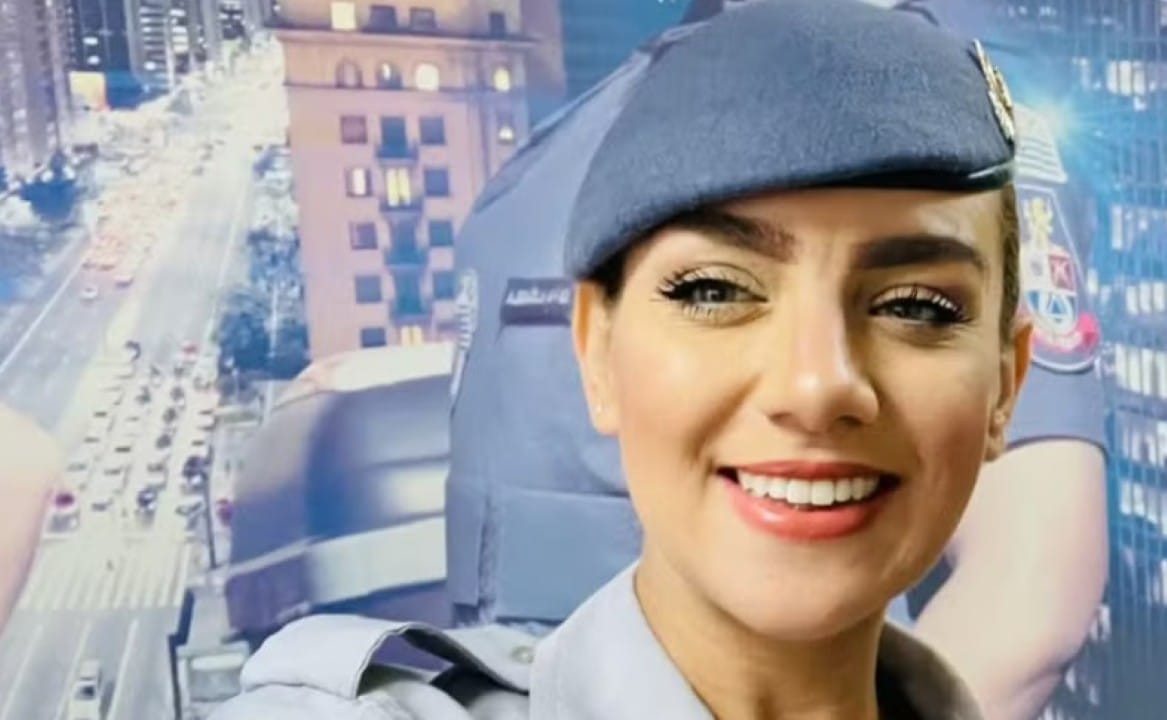
The death of military police officer Gisele Alves Santana, found lifeless in her apartment in Brás, center of Este deployment culminated in the arrest of her husband, lieutenant colonel of PM Geraldo Leite Rosa Neto, about a month after the incident. The case, which captured public attention, is a complex plot of expert reports, contradictory testimonies and messages that expose a relationship marked by control and jealousy.
From the first hours, the official narrative proved fragile in the face of a series of evidence that gradually emerged, directing investigators towards a more serious line of investigation. The transition in the classification of the case reflects the seriousness of the findings and the determination to uncover the exact circumstances that led to the regrettable accident. The complexity of the scenario demanded a meticulous analysis of every detail, from the crime scene to the couple’s history, which gradually deconstructed the initial version.
The work of Corregedoria, Polícia Militar and Polícia Civil revealed a sequence of facts that challenged the initial thesis, culminating in court decisions that redefined the direction of the investigation. With each new piece of information, the case of Gisele Alves Santana gained clearer contours, highlighting a reality of violence and coercion that was hidden. The lieutenant colonel’s arrest represented a crucial milestone, indicating the solidity of the evidence gathered by the authorities.
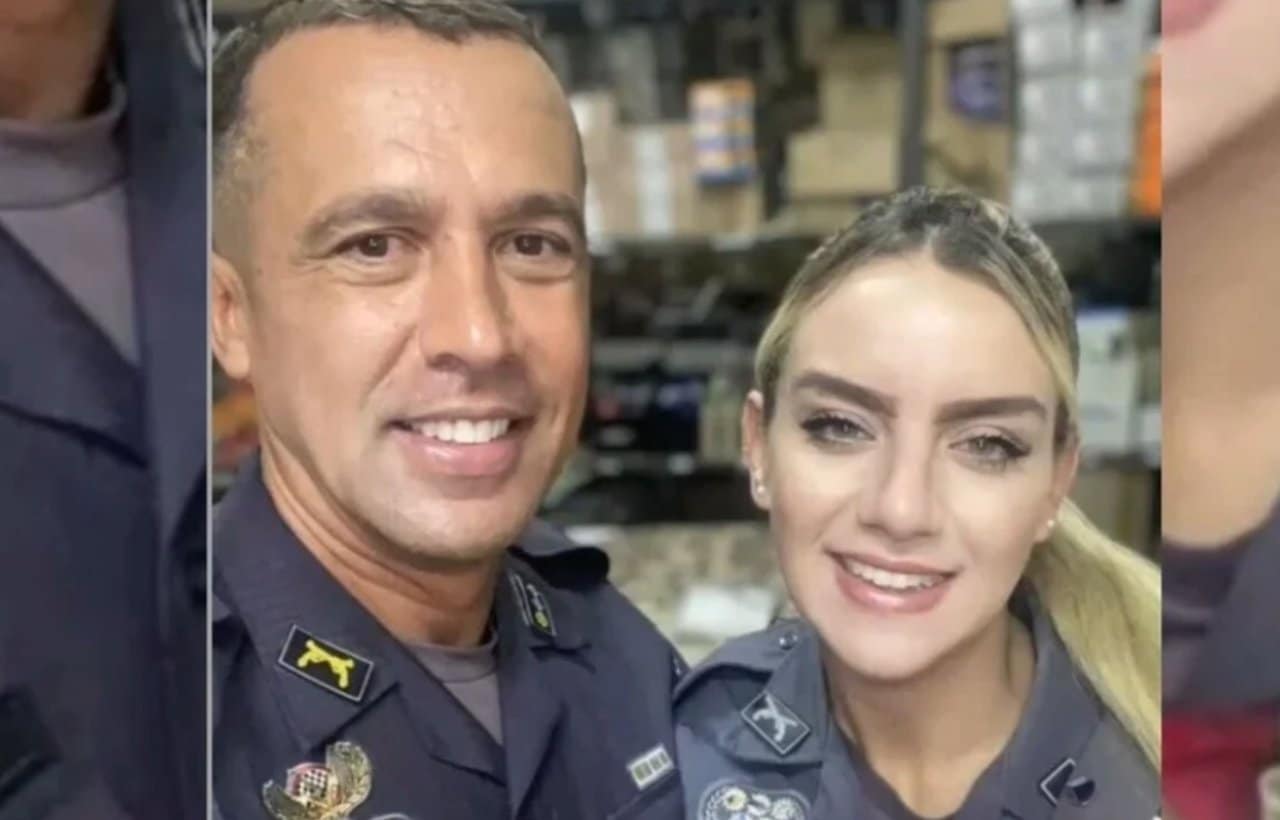
The investigative journey demonstrated the importance of a detailed forensic analysis and attentive listening to witnesses and family members, whose reports were essential for understanding the context. Subsequent developments, including rulings by higher courts, only solidified the perception that the truth about the police officer’s death was deeper and more painful than initially assumed. The chronology of events is crucial to understanding the twist in the case.
Troubled relationship: history of aggression and jealousy
Messages obtained by Corregedoria from Polícia Militar on Lieutenant Colonel Geraldo Leite Rosa Neto’s cell phone cast a dark light on the dynamics of the couple’s relationship, indicating a history of physical aggression and control. On February 6, 2026, thirteen days before the death of The line “You stuck your hand in my face yesterday. Gritou with me today” is a shocking testimony to the verbal and physical violence that permeated the relationship.
In addition to the attacks, Gisele had complained to a friend about her husband’s excessive jealousy, expressing genuine fears about her safety. In an intimate conversation, the police officer said: “You have to control his jealousy. Qualquer kills me. Fica is blind. Essas words, recorded in messages, paint a picture of constant apprehension and fear, revealing the oppressive environment in which he lived and the perception that his life was at risk due to Geraldo’s unstable behavior.
The day of the tragedy and the first investigations
On the morning of February 18, 2026, Gisele Alves Santana was found dead in her apartment at Brás. Segundo the initial record made by her husband, he found her lying on the floor with a gun in her hand and bleeding heavily. The police officer was promptly rescued and taken to Hospital from Clínicas, but she succumbed to her injuries. The case was initially registered as a suicide, based on the testimony of Geraldo, who described the scene and the circumstances that led him to believe that his wife had taken her own life.
Contrary to the initial version, Gisele’s mother gave an impactful statement on the same day, describing her daughter’s relationship as extremely troubled. Ela alleged that the lieutenant colonel was abusive and violent, imposing severe restrictions on Gisele’s behavior and exerting suffocating control over his life. Este testimony brought the first signs that the truth could be very different from what was initially reported, adding a layer of complexity and suspicion to the investigation.
Deviations in the scene and hierarchical confrontation
Two weeks later, on March 20, body camera recordings from other military police officers revealed a tense power struggle at the crime scene. The images show a corporal trying to preserve the place where soldier Gisele Alves was shot, but his authority was challenged by the presence of the victim’s husband, the lieutenant colonel. Este embate hierárquico, que colocou em xeque os protocolos de preservação de evidências, levantou sérias dúvidas sobre a integridade da cena e a possível interferência no processo investigativo, indicando um comportamento inadequado por parte do oficial.
Still on February 20, just two days after the death of Gisele, the police changed the nature of the incident to “suspicious death”, and Corregedoria of Polícia Militar began to closely monitor the investigations. Este step was crucial to deepen the investigation, considering the inconsistencies and new elements that were beginning to emerge. In the same period, anonymous complaints, detailed in an Inquérito Policial Militar (IPM) obtained by TV Globo, brought to light the intensity of the couple’s relationship.
The IPM recorded that Geraldo “has emotional instability” and that it was necessary to investigate the “persecution and threats” suffered by Gisele. The document also stated that the soldier “lived in fear expressed” by the lieutenant colonel’s actions, with reports “witnessed by several witnesses”. Gisele’s family had already corroborated this information, indicating constant fights and persecution by her husband, which was in line with the violence scenario.
Behavior pattern and reconstitution
Additional information that reinforced suspicions against the lieutenant colonel was the revelation that Geraldo had already been convicted of abuse of authority in October 2024. The court decision recognized that he practiced moral harassment when he was still a major, with repetitive actions that aimed to “attain self-esteem and self-determination, as well as his dignity”, causing damage to the work environment. The initial petition for the case detailed a series of episodes classified as moral harassment and persecution by the then major against a subordinate military police officer. Este history of abusive behavior offered a troubling pattern.
The reconstruction of the case, carried out by experts from Instituto of Criminalística (IC) on February 23, took place at the couple’s residence at Brás. Geraldo actively participated in the action, accompanying the experts at each stage of the reproduction of the facts. The presence of the main investigator in the reconstruction was crucial to compare his version with the technical and physical data of the location.
Forensic evidence and rescuer testimony
The initial report on the incident, released on March 3, indicated that Gisele was hit by a gunshot to the right side of her skull. Esta characteristic of the wound is fundamental for the analysis of a suicide versus a homicide, since the proximity of the gun barrel to the skin produces specific marks that are carefully evaluated by experts. The discovery would become one of the pillars of the prosecution’s arguments, contradicting the initial thesis of self-extermination.
On March 6, as determined by Justiça, the soldier’s body was exhumed for a new series of examinations by Instituto Médico Legal (IML). In subsequent examinations, experts identified injuries to the neck region and other parts of the military police officer’s body. Segundo the experts, these injuries were “blunt” and caused “through digital pressure and excoriation compatible with nail stigma”, that is, scratches that indicated nail marks. The findings suggested that Gisele passed out before being shot and that she did not present a defense, reinforcing the investigative line of feminicide.
March 8 marked a significant turning point with the testimony of one of the rescuers who responded to the incident. Conforme Fantástico access, the professional was suspicious of the position of the gun in the PM’s hand, finding the scene strange and deciding to photograph it. The suspicion resided in the fact that the weapon was “well fitted” in Gisele’s hand, in a way that he had never seen in cases of suicide. In the same investigation, other statements from firefighters who arrived at the scene raised questions about the husband’s version.
The officer stated that he was in the shower at the time of the shooting, but the first firefighters who arrived reported that he was dry and that there were no water marks on the floor of the apartment. A sergeant from Corpo of Essas inconsistencies in Geraldo’s testimony, compared with the rescuers’ observations, further weakened his version of the facts.
New images and the turning point in the investigation
A security camera video, which aired on March 10, recorded the moments in which three female police officers entered and left Gisele’s apartment around 10 hours after the incident. A witness told Polícia Civil that the agents went to the location to “clean the apartment”. The presence and actions of these police officers raised questions about the possible contamination of the crime scene and the removal of crucial evidence, increasing the mystery surrounding the case.
On March 11, Justiça of São Paulo ordered the police to investigate the case as femicide, and Lieutenant Colonel Geraldo Leite Rosa Neto was officially considered investigated. Esta decisão ocorreu após o laudo necroscópico, realizado após a exumação do corpo, que apontou as lesões no rosto e pescoço da vítima. The change in the classification of the crime was a formal recognition of the severity and nature of the evidence that pointed to a homicide.
Testimonies and defense of the lieutenant colonel
Gisele’s ex-husband testified on March 13, and, according to lawyer José Miguel of Silva Júnior, representing the soldier’s family, he categorically stated that Gisele “never thought about committing suicide.” Este’s testimony reinforced the perception that the police officer had no history of suicidal ideation, undermining Geraldo’s initial narrative and providing an important counterpoint. The testimony of someone who lived closely with the victim added new weight to the investigation.
Despite the growing evidence, Lieutenant Colonel Geraldo’s defense, represented by lawyer Eugênio Malavasi, maintained the version of suicide. In an interview with g1 on March 14, Malavasi stated that the defense “serenely awaited the development of the investigation of Ele concluded by saying that “this will be proven crystal clear at the end of the investigation”, indicating that the defensive strategy would be based on confidence in his client’s innocence.
Audio presentation and threatening history
On March 16, the lawyer for the soldier’s family presented audio that, according to him, showed that Gisele planned to move out of the apartment where he lived with Geraldo. In the audio, Gisele discussed the search for a house close to her parents’ residence, with the aim of facilitating her work routine and caring for her daughter. In another section, she explained that living closer would help to avoid long commutes before starting her professional activities. Esta revelation suggested that Gisele was looking for a way out of the situation in which he found himself.
Lawyer Miguel Silva also brought to light Lieutenant Colonel Neto’s history of threats and harassment against other women. Ele mentioned the existence of police records and court decisions that indicate episodes of threats against Geraldo’s former companions, in addition to allegations of harassment and persecution against female military police officers who were subordinate to the officer within the corporation. Este’s pattern of aggressive and controlling behavior reinforced the thesis that Gisele was not the only victim of the lieutenant colonel’s actions.
The arrest of the lieutenant colonel and the latest revelations
On March 17, the lieutenant colonel’s request for preventive detention was formalized after Polícia Técnico-Científica attached new reports to the process. The results confirmed that Gisele was not pregnant and had not been drugged. However, experts found the presence of more stains of the soldier’s blood spread throughout other rooms of the apartment, indicating that the place of death was not restricted to the living room and raising more questions about the dynamics of the events.
Justiça Militar ordered the officer’s arrest on March 18. Ele was detained in the morning in an apartment in São José of Campos and then taken to Corregedoria of the PM, before being transferred to Presídio Militar Romão Gomes. Upon arriving at the prison unit, he was greeted with a hug by a fellow PM, an image that sparked several discussions. At the custody hearing, the arrest was maintained, and Geraldo insisted on his version of his wife’s suicide, even mentioning the possibility of taking his own life. Gisele’s family, in turn, celebrated the court decision, seeing it as a step towards justice.
On March 20, the Superior Tribunal of Justiça (STJ) denied the defense’s request for habeas corpus, keeping the officer in custody. On the same day, new messages came to light, reinforcing the investigative line of control, jealousy and abusive behavior. Nestas communications, Geraldo would have made statements that indicated that, as the provider, the wife should “reciprocate” certain behaviors, which highlights the mentality of ownership and control over Gisele. Também began to be debated whether the case would be judged by the common Justiça, in a popular jury, or by the Justiça Militar, a crucial issue for the outcome of the process.
Finally, on March 21, other messages analyzed by the police intensified the scenario of control, threats and demands in the relationship. On the same day, the lieutenant colonel fell ill at Presídio Militar Romão Gomes and had to be taken to a hospital for treatment. The points that raised the most suspicion during the investigation were the long interval between the shooting and the help, the inconsistencies regarding the fact that Geraldo had taken a shower, the lack of desperation on his part and the lack of any attempt to provide first aid to his wife, details that were crucial for deconstructing the initial version of suicide and for the accusation of feminicide.



