
Manufacturer Asus cuts the value of the ROG Ally console to $499 and intensifies global competition


The technology company Asus has officially announced a new price list for its handheld computer aimed at digital entertainment in the international market. The entry-level equipment in the line is now sold for US$499 in the main global retail chains. The change directly affects the version equipped with the standard Ryzen Z1 processor, developed in partnership with AMD. Esta strategic move seeks to reposition the device in a highly competitive scenario in the mobile hardware sector.
The segment of compact computers capable of running high-performance titles has seen continuous growth over the past few months. Diversas technology corporations have directed heavy investments to create platforms that combine portability with advanced processing capacity. The new pricing establishes a more aggressive level of competition against other brands already consolidated on physical and virtual shelves. The financial adjustment meets a growing demand from consumers who are looking for more affordable alternatives to join this ecosystem.
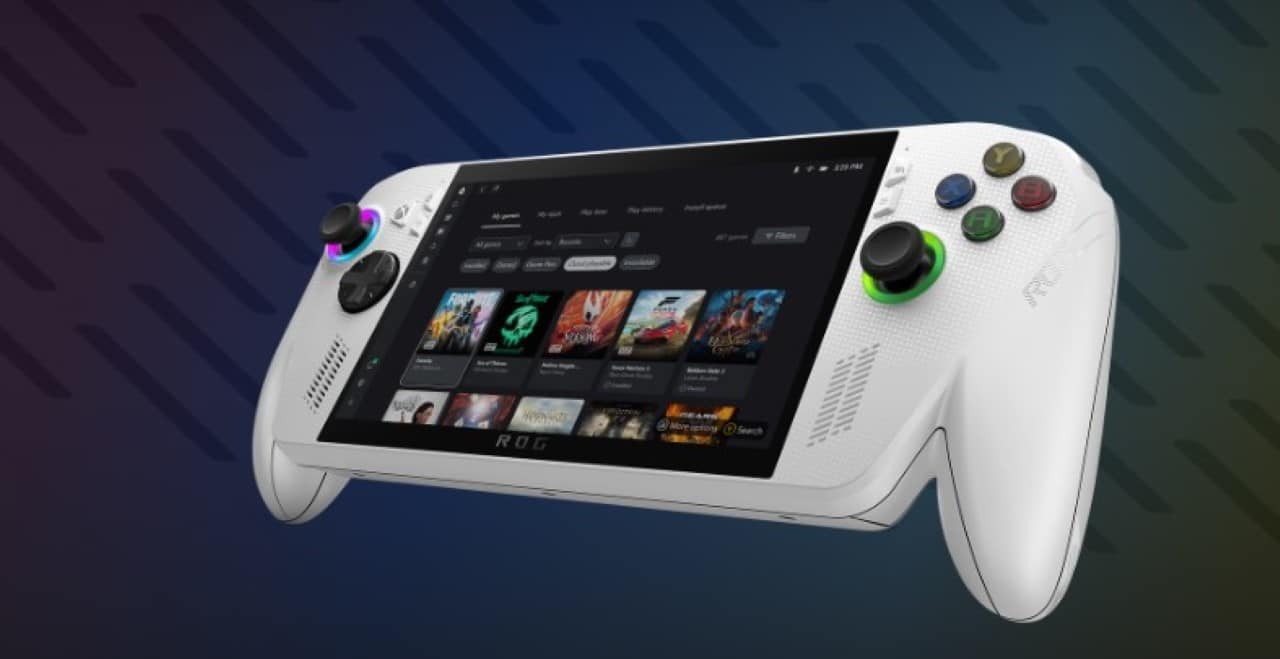
Previously offered at higher prices, the basic model of the Asian device now takes on the position of one of the cheapest options with a native Microsoft operating system. The change comes during a period of stabilization in the global semiconductor supply chain, allowing more flexible margins for manufacturers. Analistas from the electronics market point out that cuts in first generation hardware represent a common tactic to sustain sales volume. The measure also prepares the commercial ground for future updates to the company’s product catalog.
Commercial impact and repositioning in electronics retail
The niche of portable computers in console format has gained significant traction with the recent entry of multiple major competitors on the global stage. The manufacturer’s decision to reduce the acquisition cost of its entry-level model has the clear objective of putting pressure on market shares currently dominated by rival companies. With the new price stipulated, the equipment becomes a financially viable alternative for a much broader demographic of casual and enthusiast consumers. The commercial maneuver also works as an efficient mechanism to dispose of stocks of the version equipped with the standard chip before possible line renewals. Especialistas in retail observe that the five hundred dollar barrier represents a crucial psychological point for the adoption of new hardware platforms by the general public.
The aggressive pricing strategy adopted by the Taiwanese corporation is accompanied by marketing campaigns focused on the device’s versatility as a complete personal computer. Diferente of closed systems, the proposal to deliver a machine capable of performing everyday tasks in addition to entertainment adds perceived value to the consumer’s investment. The expectation of the production sector is that other brands will need to adjust their own price lists in the near future to maintain high competitiveness. The movement generates a ripple effect on distribution networks, which begin to highlight the product in virtual showcases due to its new cost-benefit appeal. Stability in the supply of essential components ensures that the company can meet a possible increase in demand generated by the price cut.
Processing architecture and energy efficiency
The computing core of the version that received the financial readjustment is the Ryzen Z1 processor, designed specifically for the demands of mobile devices. The Este silicon component uses the Zen 4 architecture, with six physical processing cores and twelve simultaneous execution threads. The advanced lithography used to manufacture the chip allows for a high density of transistors in an extremely small physical space. The direct result of this engineering is greater energy efficiency when performing complex tasks.
The flexibility of the processor allows the operating system to switch between different power consumption thresholds, ranging from nine to thirty watts. In profiles configured for low consumption, the chip prioritizes battery life, limiting the maximum operating frequencies of the physical cores. Quando the equipment is plugged in and set to maximum performance mode, the silicon reaches its full data processing potential. Esta thermal and energy adaptation capacity supports the proposed hybrid use of the device.
The integration of power management technologies ensures that the device does not waste resources when running lighter applications. The processor is able to turn off idle sections of the chip in fractions of a second, preserving the battery charge during moments of inactivity. Direct communication between the hardware and the operating system allows for an instantaneous response to user demands. Toda this structure was designed to balance the need for high performance with the physical constraints of a compact chassis.
Graphics performance and visual scaling technologies
The equipment’s image rendering is the responsibility of the integrated graphics unit based on the RDNA 3 architecture. The Este component has four dedicated computing units, delivering processing power capable of running modern titles with adjusted settings. The graphics architecture has been optimized to operate in harmony with the device’s screen, ensuring stable frame rates. The focus of the project is to maintain visual fluidity even in virtual scenarios with a high density of elements.
The image scaling technology developed by the semiconductor manufacturer acts directly at the portable console’s hardware level. Este feature allows games to be rendered internally at lower resolutions and later upscaled to the screen’s native resolution without significant loss of sharpness. Applying this technique drastically reduces the workload on the graphics processor. Consequentemente, the system can deliver superior performance while consuming less battery power.
State-of-the-art graphical instruction support ensures full compatibility with the latest software libraries available on the market. Application developers can take advantage of advanced lighting and shading features without compromising system stability. The graphics unit also has integrated video decoders, making it easy to play high-definition media. Esta feature reinforces the device’s usefulness as a portable multimedia entertainment center.
The visual interface is built around a seven-inch touch-sensitive panel with IPS technology and a resolution of 1920 by 1080 pixels. The screen offers a refresh rate of 120 hertz, responsible for delivering extremely fluid image transitions in moments of fast action. The display reaches a peak brightness of 500 nits, making it possible to use the device in outdoor environments with natural lighting. Protection of the front panel is guaranteed by the application of highly scratch-resistant tempered glass.
Memory and internal storage capacity
The system has sixteen gigabytes of LPDDR5 random access memory, which is soldered directly to the device’s main board. Esta configuration operates at high frequencies, ensuring substantial bandwidth for constant communication between the processor and graphics unit. Dual-channel architecture maximizes data throughput, mitigating bottlenecks when loading heavy textures. Dynamic allocation allows the graphics unit to use part of the system RAM as dedicated video memory as needed.
Primary data storage is provided by an NVMe solid-state drive with a capacity of five hundred and twelve gigabytes in the M.2 2230 format. The component’s sequential read and write rates ensure boot times in the seconds and fast loading of complex applications. Para To overcome space limitations, the product engineering included a memory card reader in the microSD UHS-II standard. Este expansion slot offers a convenient storage upgrade route for managing extensive software libraries.
Thermal engineering and advanced cooling system
Hardware thermal management is accomplished by a proprietary cooling system that utilizes a dual-fan configuration designed to operate efficiently in any physical orientation. The heat generated by internal components is dissipated through heat pipes designed to combat gravity and maintain a constant flow of coolant. The internal structure of the chassis intelligently directs hot air to the exhaust outlets located at the top, keeping heat away from the operator’s fingers during prolonged use. Este exhaust mechanism ensures that the processor maintains high operating frequencies without suffering performance reduction due to overheating, a common problem in compact electronics. Além efficiency in thermal dissipation, the acoustic design of the fans was rigorously optimized to generate the lowest possible noise level during intense data processing loads. The fluid dynamic bearings used in the fans reduce mechanical friction, which extends the useful life of the part and reduces noise emissions into the environment. The device’s housing works together with the cooling system, using polymers that do not retain excessive heat in the areas in contact with the palms of the hands. Sensores of temperature strategically distributed across the motherboard constantly monitors the thermal state and adjusts fan rotation in real time. Integrated control software allows the user to select aggressive or silent ventilation profiles, adapting the machine’s behavior to the environment in which it finds itself.
Integration with software ecosystem
Unlike some competing devices that adopt systems based on Linux, this device runs the full version of Windows 11 natively. The choice of operating system ensures immediate compatibility with all digital distribution stores, third-party platforms and productivity applications. The manufacturer developed a proprietary software layer that acts as an aggregator, facilitating navigation through libraries using only physical controls. The retail package also includes access to subscription services, adding immediate value to the consumer’s newly purchased hardware.
Battery life and ergonomic design
Power supply in portable mode depends on a lithium polymer battery with a capacity of forty watt-hours installed inside the chassis. Device autonomy varies drastically depending on the performance profile selected by the user and the brightness level configured on the screen. The recharging process is carried out via a USB Type-C port, supporting fast charging protocols that restore much of the capacity in a few minutes. The supplied power adapter has enough power to continuously charge the device while operating at maximum load.
The equipment’s chassis was sculpted with a rigorous focus on ergonomics, resulting in a total weight of six hundred and eight grams. The side grips have microscopic textures that increase friction and prevent the device from slipping out of your hands during prolonged sessions. The arrangement of action buttons, analog levers and triggers follows the standard established by the electronics industry, ensuring immediate familiarity. The inclination of the contact surfaces has been calculated to the millimeter to keep the wrists in a neutral position, minimizing the user’s muscular fatigue.




