
Netanyahu intensifies threats against Iran and personally targets leaders after offensive in Israel

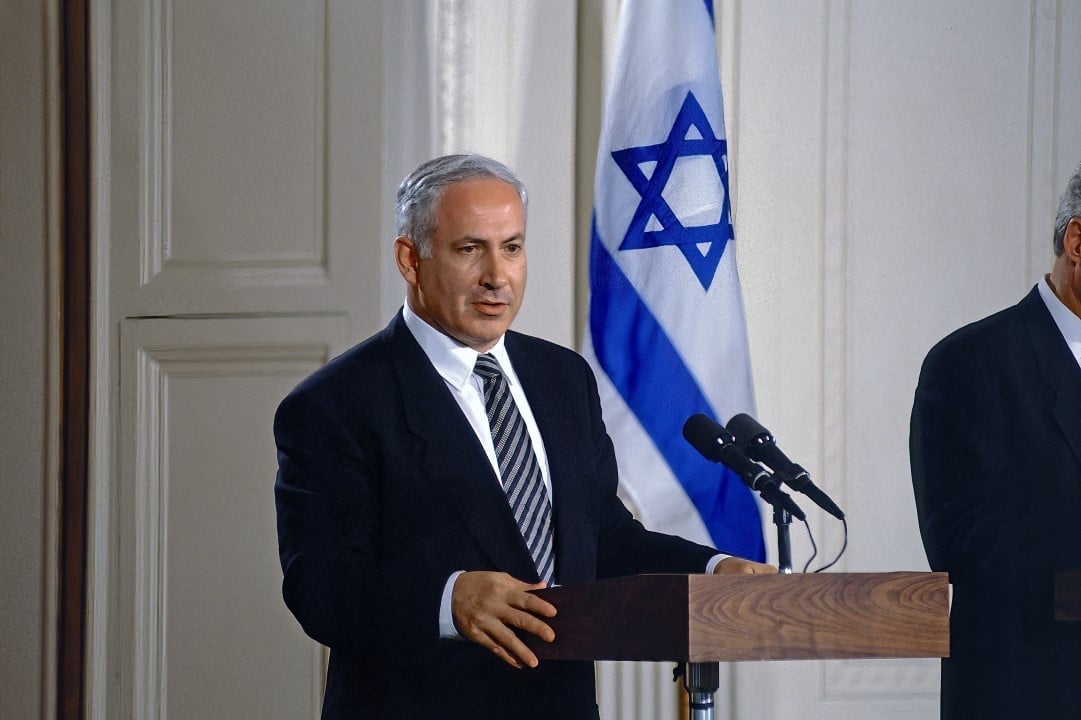
Israel’s prime minister, Benjamin Netanyahu, has drastically raised the tone regarding The strong warning was delivered during a visit to Arad, in the south of Israel, a region recently hit by Iranian missiles. Esta Fierce rhetoric reflects an unprecedented escalation in the already tense dynamics between the two countries, promising significant consequences for regional stability. The declaration of Netanyahu follows a series of events that have contributed to the increase in tensions, including mutual attacks and inflammatory statements from both sides, configuring a highly complex and risky scenario. The Israeli government has reiterated its position of not tolerating aggression, signaling a stance of direct and forceful retaliation against any provocation that threatens its territorial sovereignty.
Netanyahu’s pledge comes a day after the minister of Defesa of Israel, Israel Katz, warned of a “considerable increase” in Israeli attacks. Katz had indicated that the objective would be to target the “Iranian terror regime and the infrastructure” linked to it, expanding the offensive beyond conventional targets.
This coordination between the two leaders’ statements suggests a calculated strategy to send a clear and unambiguously aggressive message to Teerã, underlining Tel Aviv’s determination to confront what he considers to be an existential threat.
Resposta Ampliada Strategy
The Israeli offensive is not just restricted to rhetoric, but manifests itself in concrete military actions on the battlefield. The Israeli Exército received explicit orders to destroy “all bridges” located in the south of the Líbano that could be used for “terrorist purposes.” Esta measure aims to prevent the movement of members of Hezbollah and the movement of weapons to the south, close to the border with Israel, in an attempt to dismantle the group’s logistical capacity. The River
Minister Katz stated that the Israeli armed forces should “accelerate the destruction of Lebanese homes”, comparing this operation to those carried out in certain areas of Faixa and Essa controversial statement and subsequent actions raise serious humanitarian and international law concerns, especially in the context of protracted conflict. The extension of tactics observed in Gaza to the south of Líbano indicates an escalation of violence and a potential increase in the number of displaced people and the destruction of civilian infrastructure, which could further worsen the humanitarian crisis in the region.
Voltages on Líbano and Baixas of Hezbollah
In the midst of this offensive, the Israeli Exército announced that it had eliminated Abu Khalil Barji, appointed as a commander of the Forças Especiais of the Hezbollah. Barji was considered one of the main people responsible for coordinating attacks against the troops of the Forças of Defesa of Israel.
In an official publication, the Israeli military confirmed that the attacks hit the group’s strategic infrastructures in several areas in the south of Líbano, also resulting in the death of two other representatives of the movement.
The region has been the scene of intense fighting and almost daily exchanges of fire between Israeli forces and the Hezbollah since the events that triggered the current round of hostilities in the Oriente Médio, with the local population living under constant threat.
The Ultimato of Trump and the Estreito of Hormuz
Israel’s statements come at a time of increasing international pressure, including an ultimatum from the former president of Estados Unidos, Donald Trump, to reopen Estreito from Hormuz. Trump set a deadline of 48 hours for Irã to release the sea passage, crucial for the transit of approximately 20% of the world’s oil. Caso the canal was not cleared within the stipulated deadline, Trump threatened to “attack and completely destroy” Iranian power plants. Este ultimatum highlights the gravity of the situation and the interconnection of regional crises with the global economy and geopolitics, as the interruption of the flow of oil in Hormuz would have catastrophic impacts on international markets, affecting everything from the supply chain to the value of several global commodities.
At Reação Iraniana at Ameaças
In response to the American ultimatum, the Irã promised to retaliate against any American offensive with the same intensity. The spokesman for the operational command of the Iranian Exército, in a statement published by the Fars news agency, declared the country’s firmness.
The statement stated that “if the Iranian fuel and energy infrastructure is breached by the enemy, the entire energy, information technology and desalination infrastructure of the Estados Unidos and the regime in the region will be attacked.”
The Cenário of Escalada and Seus Riscos
Economically, the disruption of oil and gas supplies through crucial shipping routes such as Estreito to Hormuz would cause a shock to global markets. Resultaria soaring energy prices and global economic instability, with serious ramifications for the international economy.
From a humanitarian perspective, an expanded conflict would result in an unimaginable catastrophe, with millions of people displaced from their homes. Civilian infrastructure, including hospitals and schools, would be destroyed, leading to public health crises and widespread famine in the region.
Politically, the escalation could redraw the geopolitical map of the region, with the rise or fall of regimes and the change of strategic alliances. Intervention by external powers, seeking to protect their interests, could further complicate the conflict scenario.
Furthermore, the risk of proliferation of weapons, including nuclear weapons, would be high, making the region even more dangerous and unpredictable. The credibility of international institutions would be tested to the maximum, with the capacity for global mediation called into question.
Appeals for Desescalada Urgente
The international community has a fundamental role in seeking urgent diplomatic solutions to de-escalate tensions and avoid the most catastrophic scenario, prioritizing dialogue and collective security in the region.



